Unveiling the Past: The Board Game in Walila
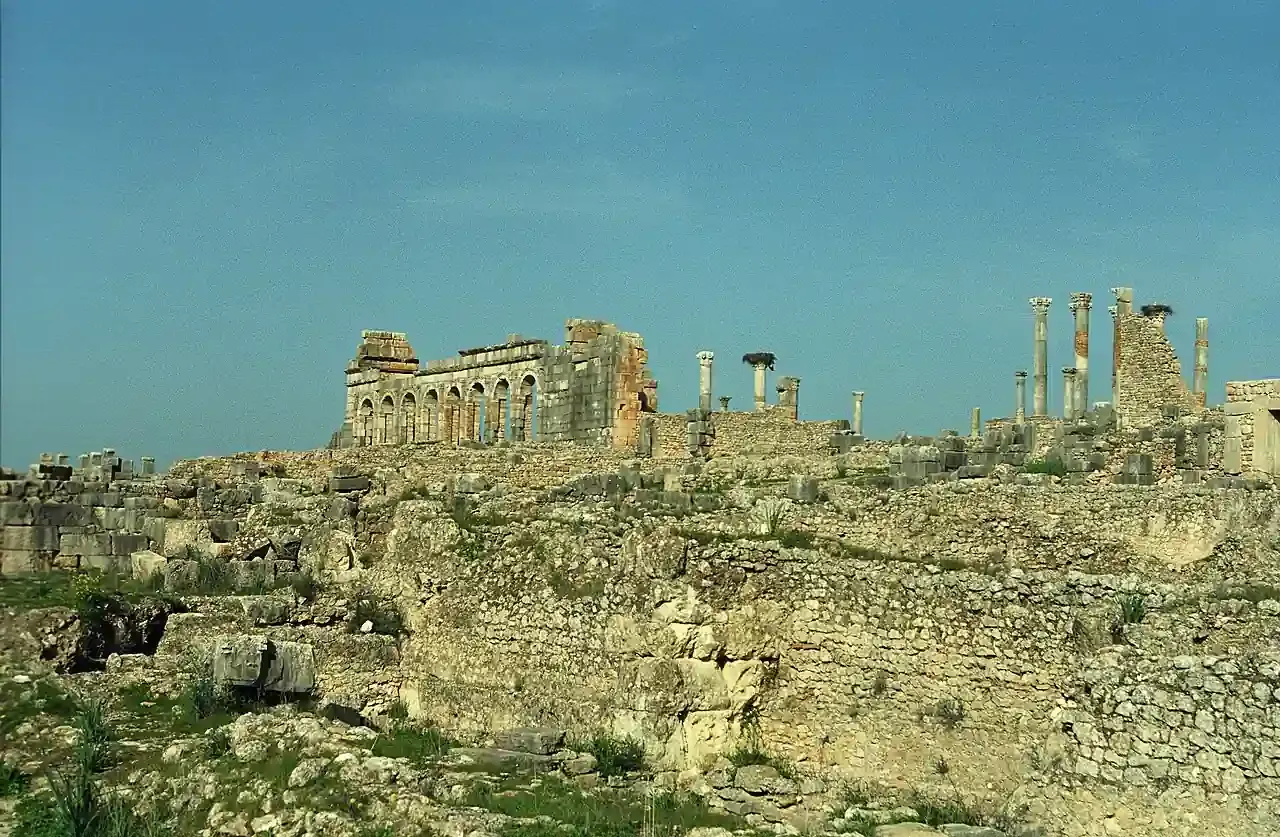
A remarkable archaeological discovery in the ancient city of Walila, known as Volubilis, has provided significant insights into the social activities of early Islamic society. A team of archaeologists unearthed a stone-carved game board dating back to between the late 8th century and the 10th century within the remains of medieval public baths. This find is one of the few securely dated examples of such game boards from the early centuries of Islam in North Africa, shedding light on the leisure activities and social interactions of people during this time.
The game board, intricately carved into the upper step of the cold-water pool in the hammam, features three rows with at least thirteen holes each. Experts believe it was used for playing tab or sig, a strategic game still played by residents in North Africa and the Middle East today. Researchers assert that, if the board indeed served for playing tab/sig, it represents the oldest evidence of this game in North Africa, indicating its historical significance in the region may be far more extensive than previously thought.
Historical Context and Cultural Significance
Walila, during Roman times known as Volubilis, thrived as a city. Initially, it served as the capital of the Roman province of Mauretania Tingitana and later became the heart of the first Islamic successor state in the area, the Idrisid dynasty, following the Muslim conquest of North Africa in the early 8th century. Archaeological excavations have revealed that even before Idris I's arrival, the city was a vital agricultural center, minting its own copper coins and engaging in trade networks with the Mediterranean.
With the Idrisids' establishment, Walila experienced rapid growth, as the new rulers constructed a residential complex outside the city walls, which included multiple buildings with courtyards and a hammam. It is in this bathhouse that the game board was discovered, highlighting the significance of these public baths not only as places for maintaining cleanliness and health but also as social hubs, despite some religious controversies regarding nudity and eroticism associated with them.
The hammam itself is a modest structure, measuring approximately 243 square meters, built with reused stone and brick. Water was channeled from a nearby river, and the design of the hammam featured a long room for undressing leading into a cold room with a pool. The game board's placement at the entrance of the pool suggests that players could sit on the steps while engaging in their game, making it a visible and accessible part of the bathing experience.
This discovery of the game board provides a rare opportunity to examine an artifact that was directly integrated into the structure of a bathhouse, offering a glimpse into leisure activities during the medieval Islamic period. The board's specific design and dimensions have led researchers to consider two primary candidates for the game played: mancala and tab/sig. However, the configuration of the holes suggests that it was more likely used for tab/sig, reinforcing the notion that these games were an intrinsic aspect of social life in the hammams of the time.
The significance of this find extends beyond mere entertainment; it emphasizes the role of public baths as places for social interaction and leisure, where games were not only accepted but potentially encouraged as part of the communal experience. As the study highlights, there is an urgent need for comprehensive documentation and exploration of gaming practices in the Islamic Mediterranean, as many artifacts like this game board offer valuable insights into social behavior and the use of public spaces.
As reported by labrujulaverde.com.