A Special Tribute to Mustapha Zbah in Fes
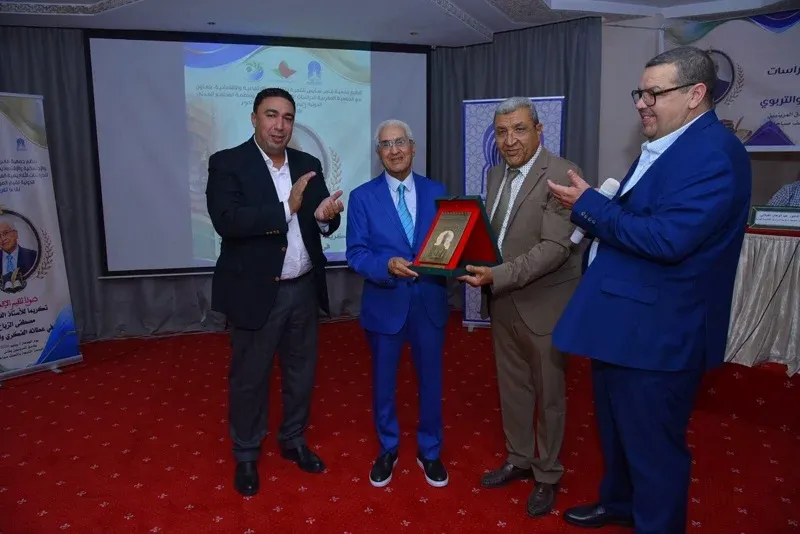
In the historic city of Fes, Morocco, an exceptional tribute was paid to the esteemed academic Mustapha Zbah, highlighting his remarkable contributions over decades that have enriched intellectual thought and nurtured generations. The honoring event was organized by the Fes Saïs Association for Cultural, Social, and Economic Development in collaboration with the Moroccan Association for Arab Academic Studies and the International Civil Society Organization for Citizenship, Development, and Dialogue. The theme of the event was "The Comprehensive Intellectual and Authentic Educator," underscoring Dr. Zbah's unique standing as a multifaceted Moroccan intellectual, blending scholarly rigor, literary talent, and a profound commitment to humanistic values.
Throughout his illustrious career, Mustapha Zbah has produced a diverse array of works spanning literature, education, cultural studies, and linguistics. Despite the challenges of his numerous responsibilities, his prolific writing has continuously flowed, embodying both deep academic insight and active engagement in the field. His intellectual journey marries the rich heritage of Islamic civilization with an enlightened openness to contemporary realities, making him a quintessential model of a well-rounded scholar.
A Collective Tribute Through Literary Works
This tribute coincides with the release of a collective book titled “Preserving Human Values: A Tribute to Dr. Mustapha Zbah in his Literary, Educational, and Cultural Achievements.” Coordinated by Abdullah Bansar Al-Alawi, this work features contributions from Moroccan and international academics and researchers who have explored various aspects of Zbah's scholarly, literary, educational, and managerial endeavors.
Among the notable topics addressed in the collective work are Zbah's significant contributions in the Comoros Islands, where he played a pivotal role through his position at the Islamic Educational, Scientific and Cultural Organization (ISESCO) in developing educational curricula in Arabic, restructuring the educational system, and promoting its Arab Islamic heritage, which ultimately facilitated its accession to the Arab League through collective effort.
The book also delves into Zbah's scholarly efforts in Andalusian studies, examining the intellectual, political, and literary legacy of the Almoravids, alongside his poetic contributions. This comprehensive account offers a deeper understanding of his multifaceted impact on the academic and cultural landscape.
As reported by hespress.com.