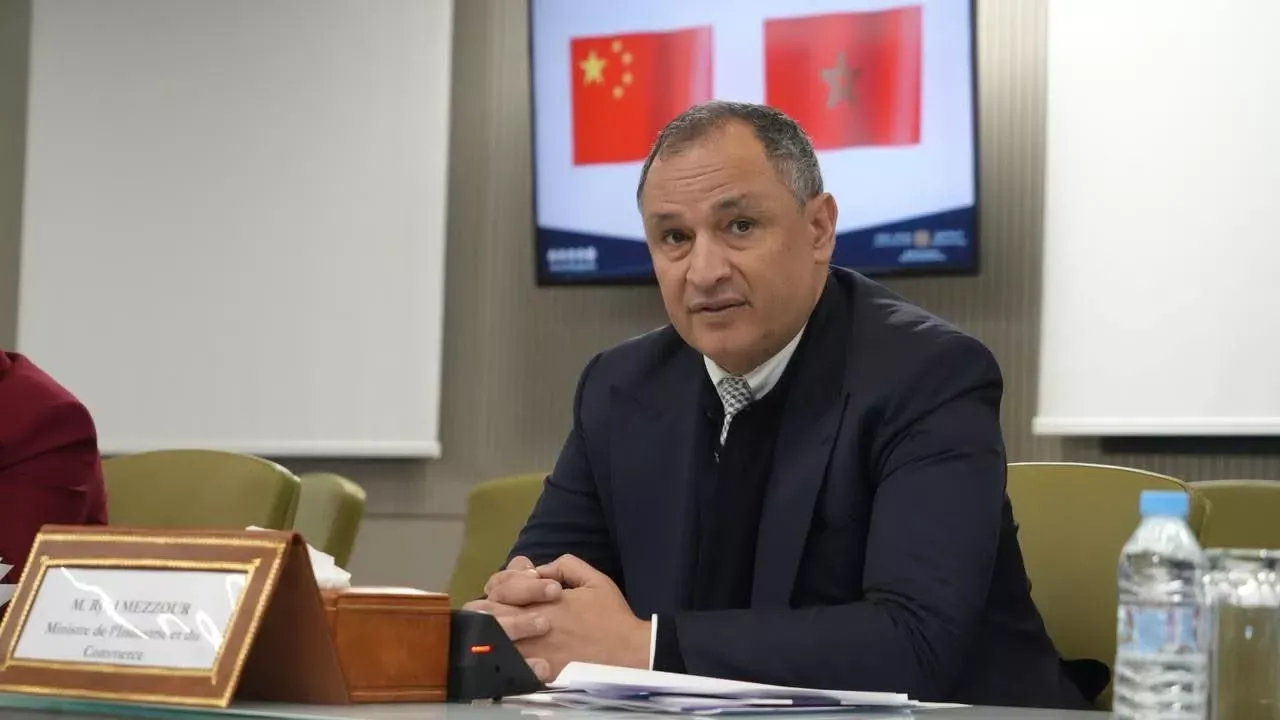
The expansion of China's industrial development beyond its borders is causing concern in Brussels, particularly as Morocco has become a focal point for Chinese investments. According to Maroš Šefčovič, the European Commissioner for Trade, as reported in the Financial Times, these Chinese establishments in Morocco have become a "big, big problem" for the European economy.
Hervé Jouanjean, an expert in international trade at Cassidy Levy Kent, corroborates Šefčovič's statements, highlighting that these concerns have already led the EU to take action. In March 2025, the European Commission announced tariffs of up to 31.45% on imports of aluminum wheels from Morocco, specifically targeting Dika Morocco Africa, a subsidiary of the Chinese supplier Dicastal. These anti-subsidy duties were instituted because the company was accused of receiving benefits on two fronts: it supposedly took advantage of support mechanisms in China under the Belt and Road Initiative, such as preferential loans and state guarantees, while also benefiting from incentives and subsidies granted by Morocco under investment agreements with local authorities.
Unfair Competition and Trade Relations
The issue of unfair Chinese competition is at the forefront of discussions in Brussels. Jouanjean noted that this topic would be a key point of debate during the European Council meeting in mid-June. Ursula Von der Leyen, President of the European Commission, is expected to propose solutions that would allow for more structured and systemic responses to this Chinese issue, which is affecting tens of thousands of jobs across the EU. Given that Morocco and the EU are essential trading partners, Jouanjean emphasizes the need for caution to ensure that the situation does not adversely affect their excellent relations. While Morocco manages its affairs independently, the European stance is clear: they cannot accept manipulation of rules that would create difficulties for European businesses.
This European concern arises within the context of a new EU industrial acceleration bill aimed at revitalizing European industry. Proposed by the European Commission on March 4, this initiative seeks to expand the definition of "European" countries to include those with which the EU has free trade agreements, such as Morocco. This proposition has sparked controversy among certain European industrialists and unions, who question the implications of extending the "made in the EU" label to products from these nations.
Jouanjean explains that while the inclusion of complementary products from non-EU countries is welcome, strict criteria should be met for foreign products to benefit from the "made in the EU" status. According to the free trade agreement, specific product origin conditions must be established, and these requirements are even more stringent in the proposed industrial acceleration bill. Jouanjean expresses doubts regarding the compliance of products from these new Chinese investments with these criteria.
Commercial Considerations and Future Implications
Jouanjean urges that if the Moroccan government observes the EU implementing numerous anti-dumping measures on Moroccan exports, it could jeopardize relations between Rabat and Brussels. He notes that while this situation is undesirable, it remains a business matter rather than a political instrument. If a pile-up of anti-dumping duties provokes political reactions, it is vital to recognize that the EU is merely applying the law. Both the EU and Morocco utilize these trade defense instruments, as demonstrated when Morocco previously imposed anti-dumping duties on Tunisian school notebooks.
Nevertheless, the EU does not wish for friction with the Moroccan government. Jouanjean emphasizes that if Chinese investments come under unfair conditions, it could destabilize Morocco-EU relations, which is contrary to the EU's desire for stable and fair partnerships. Currently, instances of applying compensatory duties are minimal, yet the intensification of Chinese investments in Morocco in recent years raises concerns about future developments. Although the EU aims to avoid worsening relations, the explicit mention of Morocco in the mobile.telquel.ma. article may irritate Rabat, as it undermines the government's efforts to attract foreign investors.
In recent years, Morocco has strengthened its industrial attractiveness to foreign investors, notably through state assistance. The same subsidies targeted by the European Commission in the case of aluminum wheels have historically benefited companies like Renault. The new investment charter, which provides subsidies of up to 30% of the investment amount for non-strategic projects, is essential for Morocco's industrial development. If these incentives were neutralized, Morocco's competitiveness and attractiveness would inevitably weaken.
Moreover, if Chinese investments create jobs, they also facilitate the transfer of technologies and expertise. The investment agreements negotiated include two main conditions for obtaining subsidies: the amount invested and the number of permanent jobs created. This investment strategy aims to support industrial upgrading, which would align with the origin requirements stipulated in the free trade agreement and the industrial acceleration bill.
While Moroccan subsidies played a role in the imposition of anti-dumping duties on aluminum wheels, it is primarily the Chinese subsidies that caused concern. Additionally, the EU faces another challenge: the lack of processing within Morocco, which would ensure the preferential origin of products. To export to Europe and evade trade defense instruments, Morocco must focus on increasing local transformation. It is not enough to simply assemble products; a minimum level of local transformation, around 45% to 50%, is required for products to be considered Moroccan. Once classified as Moroccan products, they can be exported to Europe and the United States without tariffs under free trade agreements.
The Gotion High Tech gigafactory in Morocco exemplifies this necessity for local transformation. The project aims to comply with origin rules and achieve a sufficient integration rate to access Western markets. Announced in 2023, this significant Chinese investment in the automotive sector has attracted additional Chinese companies to Morocco, particularly in the automotive industry in the Tanger Tech free zone.
As Morocco navigates its role between two giants, the Chinese investors accelerating its industrialization and the vigilant European partner, it must focus on developing its industrial maturity to ensure a balanced relationship that benefits all parties involved.