
Discovering Monument Valley: A Natural Wonder
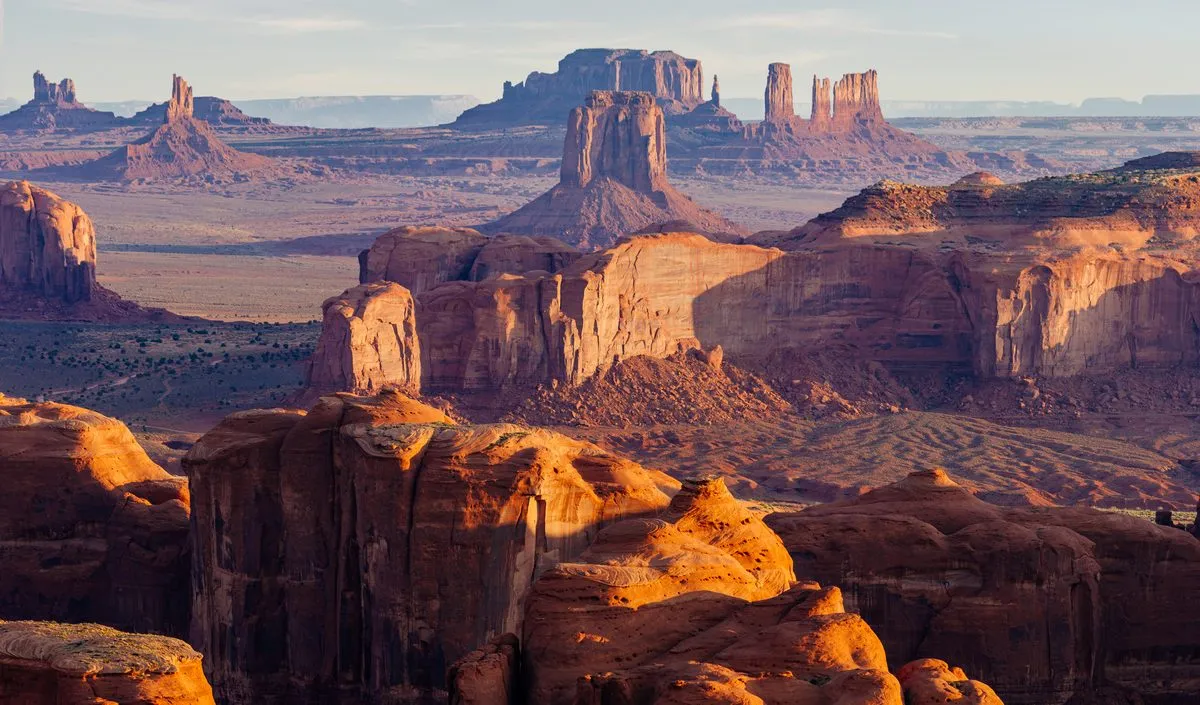
Nestled along the border of Arizona and Utah, Monument Valley captivates visitors with its stunning red rock formations and rich cultural history. This striking landscape, characterized by towering sandstone buttes and dramatic vistas, is steeped in the mythology of the Navajo people, who believe these rocky spires are remnants of formidable creatures that once roamed the earth, vanquished by legendary heroes. The iconic red sandstone, with its deep hues, evokes a sense of the dramatic history that this land has witnessed, including the bloodshed of ancient battles.
Spanning approximately 380 square kilometers, Monument Valley Navajo Tribal Park is renowned for its immense buttes, which can soar up to 300 meters above the valley floor. The term 'butte' originates from French, meaning 'mound' or 'hill', yet it fails to encapsulate the grandeur of these colossal formations, which feature sheer sides and distinctive flat tops. Among the most recognizable are the West and East Mitten Buttes, which resemble a pair of mittens facing each other, and other remarkable structures like Elephant Butte, Three Sisters, and The Ear of the Wind, a natural arch that is accessible only through exclusive guided tours.
The Geological Marvel and Wildlife of Monument Valley
While the folklore of monsters adds a layer of intrigue to the region, the reality of Monument Valley's formation lies in the intricate processes of tectonic movement and erosion. Once a low-lying basin, the Colorado Plateau, where this sandstone region is located, has been gently uplifted over millions of years, resulting in the valley floor now reaching elevations of up to 1500 meters above sea level. The erosion process has created isolated pillars of rock, leaving behind a landscape of stunning natural beauty. The rust-red color of the sandstone is attributed to iron oxidation, while streaks of gray-blue indicate the presence of manganese oxide.
Despite its desert-like appearance, the climate in Monument Valley can be surprisingly mild during the summer, with average temperatures hovering in the mid-30s Celsius. However, winter months can be harsh, with temperatures plunging to -18 degrees Celsius. The valley is home to a diverse array of wildlife, including reptiles such as rattlesnakes, along with wild horses, bighorn sheep, mountain lions, and coyotes. Birds of prey, like the golden eagle and red-tailed hawk, are common sights soaring above the rugged terrain. Vegetation is sparse, dominated by the resilient purple sage and a few stunted juniper and cottonwood trees that manage to thrive in the arid environment.
The Navajo refer to this spectacular region as Tsé Bii' Ndzisgaii, translating to 'valley of the rocks', a name that reflects the landscape more accurately than the term 'monument' assigned by European explorers. The Navajo people, pastoralists believed to have migrated to the Southwest in the 15th century, safeguarded this land for centuries before it became known to outsiders in the 19th century. The valley gained significant notoriety in the 1930s when Harry and Leone Goulding established a trading post and captured the attention of Hollywood. Their photographs led legendary filmmaker John Ford to shoot his iconic Western film, _Stagecoach_, in the valley, propelling both the film and its star, John Wayne, into the limelight, while showcasing the breathtaking backdrop of the Utah-Arizona landscape.
Since then, Monument Valley has been featured in numerous films and artistic endeavors, solidifying its status as an American cultural icon. Today, it attracts over 350,000 visitors annually, yet it remains a sacred site for the Navajo Nation, part of their expansive 65,000 square kilometer reservation. The Navajo Nation Parks and Recreation department manages this unique landscape, offering guided tours that provide insights into its cultural significance and natural wonders. Some sensitive sites, like The Ear of the Wind, require special permission to visit, ensuring that these treasured locations are preserved for future generations. Experiencing the vibrant red rocks against the backdrop of the expansive blue skies is an unforgettable journey into the heart of this extraordinary land.
As reported by discoverwildlife.com.