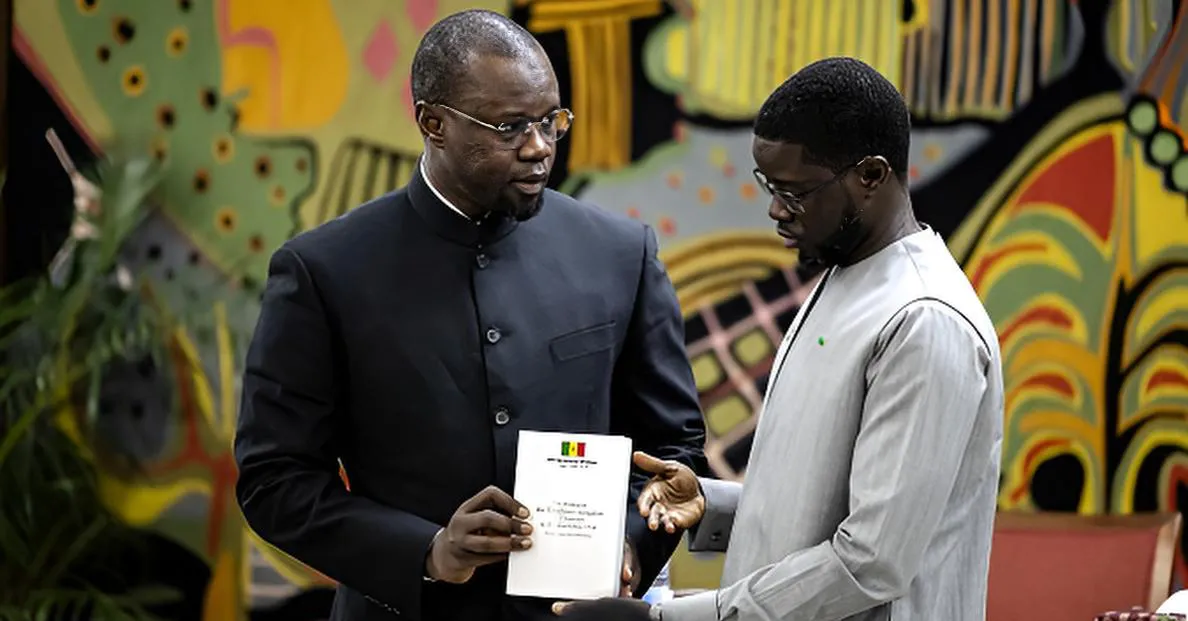
Political Turmoil in Senegal Following Ousmane Sonko's Ouster
The recent dismissal of Senegalese Prime Minister Ousmane Sonko has escalated from a routine governmental reshuffle into a profound political crisis that threatens to reshape the balance of power in Dakar. This event marks a critical test for the leadership of President Bissau Diomai Faye, as the implications of Sonko's removal are closely monitored by Morocco, given Senegal's strategic importance in the region. The sudden presidential decision to terminate Sonko’s position and dissolve the entire government has exposed significant fractures within the reformist coalition that brought Diomai Faye to power in the 2024 elections. It has also reignited a sensitive debate regarding the true authority in Senegal—whether it resides with the constitutionally elected president or the popular leader who has galvanized political mobilization on the streets over recent years.
Within mere hours of the announcement, the streets of the capital, Dakar, transformed into a rallying point for Sonko's supporters, reminiscent of the violent protests that swept Senegal between 2021 and 2023. During that period, Sonko emerged as a political symbol for a disenchanted youth generation, dissatisfied with traditional elites, French influence, and the distribution of wealth and energy resources.
The Struggle for Legitimacy and Stability in Senegal
The current crisis reveals that the coalition which politically dethroned former president Macky Sall has struggled to evolve into a coherent authority capable of governing the state with the same unity exhibited during the opposition phase. Since Diomai Faye ascended to the presidency, an unspoken conflict between two factions within the government has gradually become apparent. One faction, led by the presidential palace, advocates for a more pragmatic institutional approach that emphasizes expanding alliances and reassuring international partners and economic institutions. In contrast, Sonko's faction clings to a rhetoric of political revolution and popular mobilization, resisting a return to traditional governance methods.
As months passed, disputes over appointments, alliance management, and economic issues morphed into a silent political confrontation regarding the actual center of decision-making within the state. This tension intensified particularly after Sonko retained considerable influence within the Pastef party and among the Senegalese populace, despite Diomai Faye's presence in the presidential palace. Recent statements from the Senegalese president regarding his constitutional authority to appoint and dismiss the prime minister served as a direct message to Sonko, following which the crisis erupted publicly after Sonko's remarks in parliament concerning political funding, leading to swift dismissal decisions that effectively ended the coexistence within the executive branch.
From Morocco's perspective, the ongoing developments in Senegal are not merely an isolated internal affair but are directly related to the dynamics of West Africa and the future of one of the kingdom's most significant traditional allies on the continent. Senegal has consistently been one of the most supportive African nations of Morocco, particularly regarding strategic issues related to territorial integrity. Moreover, Dakar serves as a key political and economic partner for Rabat in the western part of the continent, whether through financial and investment cooperation or through diplomatic coordination within the African Union and regional organizations.
In recent years, Morocco has also established a growing economic presence in Senegal across various sectors, including banking, real estate, telecommunications, fertilizers, and energy, making any long-term political upheaval in Senegal a matter of keen interest for Moroccan stakeholders. The sensitivity of the crisis is exacerbated by the tumultuous regional context in the Sahel and West Africa, where several countries have experienced military coups and severe political tensions in recent years, while Senegal has maintained its reputation as a model of democratic and institutional stability.
The dismissal of Sonko opens the door to several complex scenarios, with the most prominent being the possibility of resolving disagreements within the state and ruling party institutions through a reallocation of power and preventing a public split. However, the likelihood of deepening conflict within the Pastef party looms larger, especially with Sonko's enduring popularity and ability to mobilize the streets, potentially leading Senegal into a prolonged phase of political polarization leading up to the presidential elections in 2029.
The current Senegalese crisis underscores that the transition from opposition to governance remains one of the most challenging tests for protest and populist movements in Africa. The alliances that succeed in toppling regimes do not always manage to govern with the same degree of cohesion, a development that Morocco closely monitors, given its direct interest in the stability of one of its most important strategic partners in West Africa.
As reported by 24saa.com.