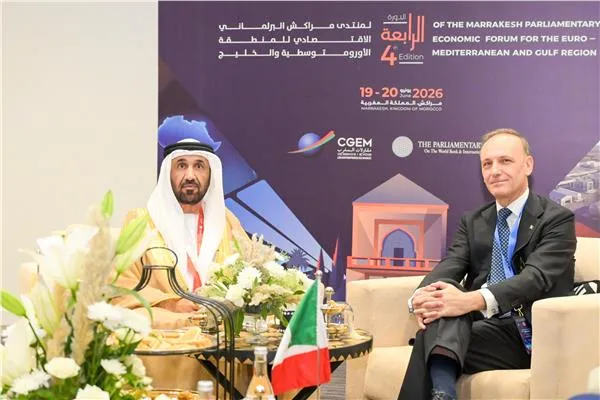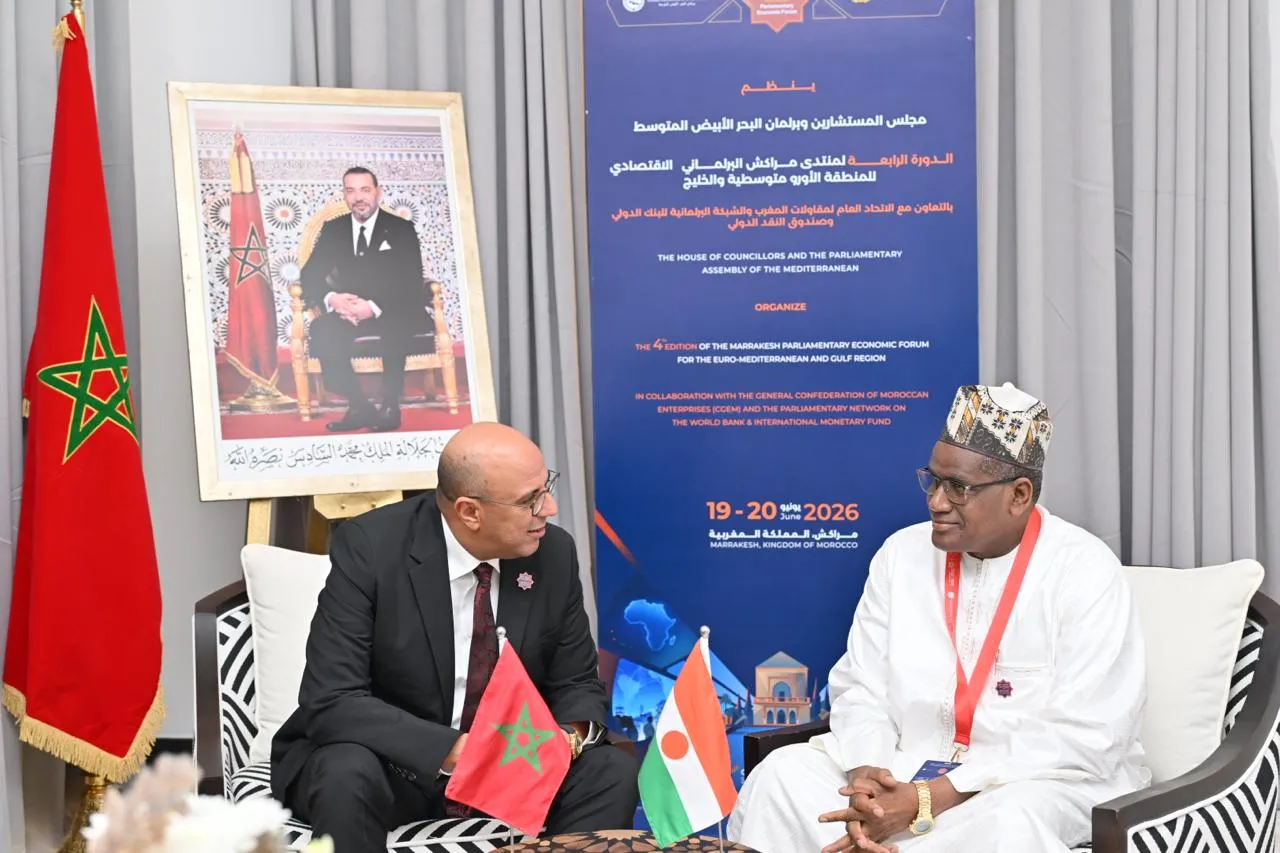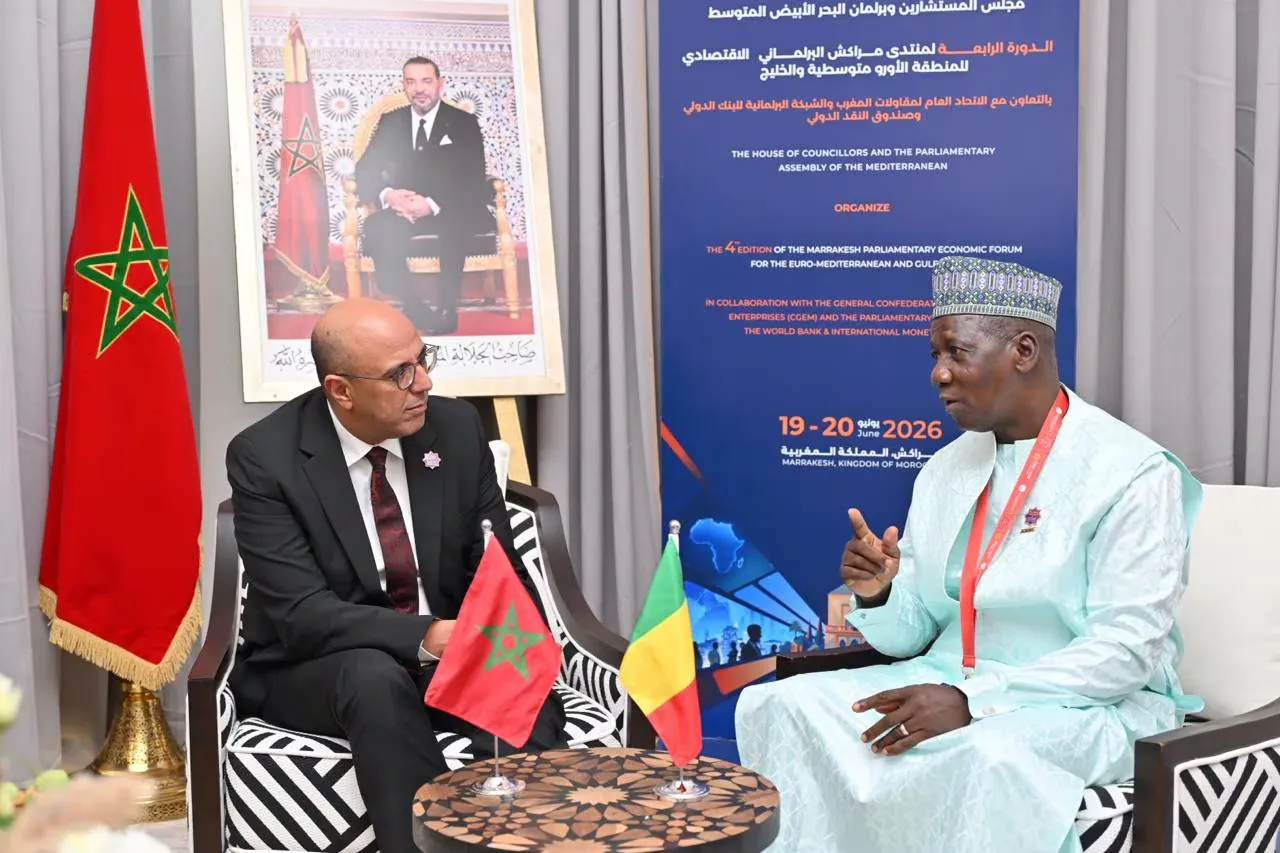
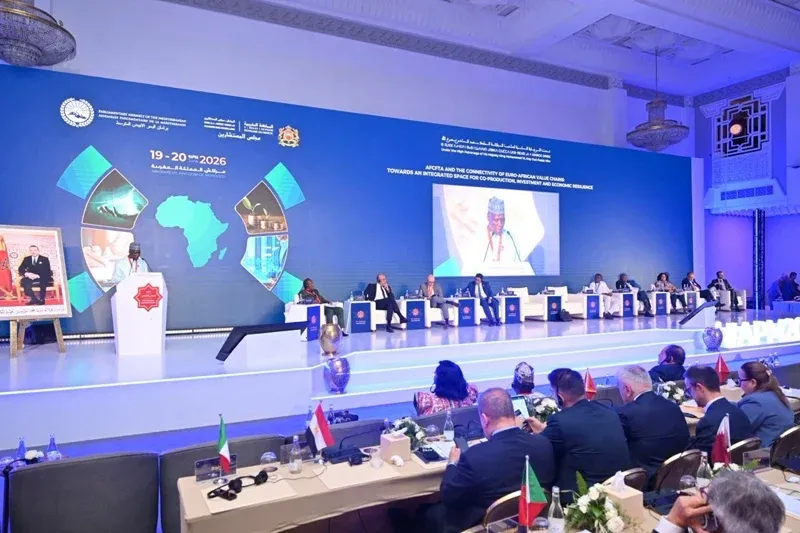
Recent insights from government officials, parliamentarians, and international organizations have highlighted numerous challenges that hinder the effective implementation of the African Continental Free Trade Agreement (AfCFTA), also known as "ZLECAF." These challenges include disparities in infrastructure, logistics, customs systems, and a lack of regional integration. These observations were made during a special session dedicated to Africa, focusing on the theme of "The African Free Trade Area and Linking Euro-African Value Chains: Towards an Integrated Space for Joint Production, Investment, and Economic Resilience." This session took place as part of the second day of the Marrakech Parliamentary Economic Forum for the Euro-Mediterranean and Gulf region, organized by the House of Councillors and the Parliamentary Assembly of the Mediterranean on June 19 and 20.
Omar Hajira, the Secretary of State for Foreign Trade, emphasized that geopolitical tensions and the fragmentation of global supply chains are reshaping the economic landscape between Europe and Africa. He stated that in light of these changes, building a Euro-African joint production space is not merely an enticing opportunity but an urgent strategic necessity. Hajira further elaborated that the prospects offered by the continental free trade area are extremely promising, predicting that the actual implementation of these agreements could lead to a 45% increase in intra-African trade by 2045, equating to an additional $276 billion. Currently, trade among African nations accounts for only 13% of the continent's overall trade, but it is expected that African exports will rise by 7.3%, amounting to approximately $246 billion.
To develop integrated Euro-African value chains, Hajira noted that a solid geographical, logistical, and institutional foundation is essential. He highlighted Morocco's potential to play a pivotal role in this context, owing to its strategic geographical location and its robust economic ties with Europe. Morocco boasts 12 agreements with 100 countries, granting access to markets with 3 billion consumers, while maintaining deep-rooted connections within its African environment through active South-South cooperation.
Mamadou Satiqi Diakite, the President of the High Council of Territorial Communities in Mali, pointed out the significant challenges facing ZLECAF, particularly in securing supply chains and promoting sustainable development as a basis for resilience. He noted that several African nations, including Mali, have implemented public policy programs in recent years to enhance investments in strategic sectors. However, the outcomes have fallen short of expectations due to insufficient aggregation of initiatives and investments at the continental level. Lahcen Haddad, a member of the House of Councillors and an expert in economic and social development, remarked that the success of ZLECAF relies less on the agreements and ratifications themselves and more on their execution.
Haddad explained that reducing tariffs is merely the first step; effective customs systems and trade facilitation are crucial. Addressing infrastructure deficits in transportation, logistics, energy, and digital connectivity is paramount. He emphasized that ZLECAF also carries profound geopolitical significance. In an increasingly fragmented global economy marked by supply chain disruptions and strategic competition, the size of the market becomes critical. A more integrated African market could enhance the continent's economic sovereignty and resilience.
Shereef El-Gabali, Chairman of the African Affairs Committee in the Egyptian Parliament, highlighted the need for an effective payment system among African nations, referring to the African Payment and Settlement System (PAPSS), which has yet to be implemented as intended by the African Export-Import Bank. He also pointed out the disparities in industrial development levels among African countries. Bana Ibrahim, Chairman of the Geopolitical Committee of the Advisory Council for Reconstruction in Niger, stressed that a market alone does not create manufacturing. Without energy, infrastructure, effective logistics, long-term financing, skilled human resources, and robust institutions, the African Continental Free Trade Area will, unfortunately, remain below its potential.
Brett Reiner, the Deputy Director for North Africa at the International Monetary Fund, noted that there is a genuine opportunity for North Africa to contribute to building stronger Euro-African value chains, not just for trade, but also for joint production, investment, job creation, and resilience across these regions. However, he cautioned that trade patterns remain too narrow, with North Africa primarily trading with Europe, while connections with Sub-Saharan Africa are limited. Furthermore, he observed that North Africa's participation in value chains remains superficial, primarily driven by raw materials and basic goods, with insufficient integration in production networks that utilize these raw materials to create intermediate and final goods and build higher added value. Although some countries, notably Morocco and Tunisia, have made strides over the past decade, North Africa still lags behind other regions, such as the Gulf Cooperation Council and ASEAN countries, in terms of integration into value chains.
Reiner concluded that now is the time to seize the opportunity; Europe requires safer and cleaner energy, while Sub-Saharan Africa needs reliable and affordable electricity, as millions still lack access. North Africa possesses hydrocarbons and exceptional renewable energy potential. Analysis from the International Monetary Fund indicates that if North Africa reduces its tariffs and non-tariff barriers in line with the average of the free trade area, it could see a 10% increase in its backward linkages, meaning a 10% increase in its participation in value chains.
As reported by hespress.com.