Cultural Cooperation between Morocco and the IMA: A New Chapter
In recent days, Morocco has witnessed a vibrant array of cultural events that underscore the importance of artistic initiatives with a social purpose, ranging from music festivals to literary encounters and humor performances. From Paris to Azilal, cities like Rabat, Fès, Casablanca, and Marrakech have become hubs of cultural exchange, where artists, institutions, and creators collaborate to promote dialogue between cultures, foster creative innovation, and enhance access to artistic expression.
The development of cultural and creative industries was the focal point of a recent meeting in Paris between Mohamed Mehdi Bensaid, Morocco's Minister of Youth, Culture, and Communication, and Anne-Claire Legendre, President of the Arab World Institute (IMA). This meeting marked the first since Legendre's appointment and laid the groundwork for a roadmap aimed at strengthening cultural ties between Morocco and the IMA. Both parties expressed a desire to expand their long-standing collaboration into areas deemed strategic for the future of creative endeavors, including animation, comic books, Arabic literature, cinema, and new forms of cultural creation. The overarching goal is to facilitate the movement of works, talents, and expertise across the Mediterranean.
This initiative aligns with the backdrop of strengthened diplomatic relations between Rabat and Paris, particularly following French President Emmanuel Macron's state visit to Morocco. Several cultural projects are already in development, including exhibitions focusing on themes such as marriage, the Alhambra, and the history of medical knowledge. According to Bensaid, culture should be viewed both as a public service and as an economic sector capable of generating value, employment, and new opportunities for Moroccan creators.
Theater: Giving Voice to the Invisible
In Rabat, the Higher Institute of Dramatic Art and Cultural Animation (ISADAC) hosted the presentation of "Théâtronissa," an innovative initiative aimed at introducing the art of drama to women working in the cleaning services of the institution. Developed over several months through training and theatrical workshops, this project has culminated in the play "Zeman," which draws inspiration from the personal experiences of its participants. The performance delves into their memories, aspirations, daily struggles, and reflections on the passage of time.
Beyond the artistic experience, the initiative has provided a space for listening and psychological support. Guided by ISADAC students, the participants have discovered the stage as a venue for expression, confidence, and empowerment. According to Latefa Ahrrare, the director of ISADAC, this project illustrates the theater's potential to bridge artistic education and social reality, highlighting women who are often absent from cultural representations while honoring their dignity and journeys.
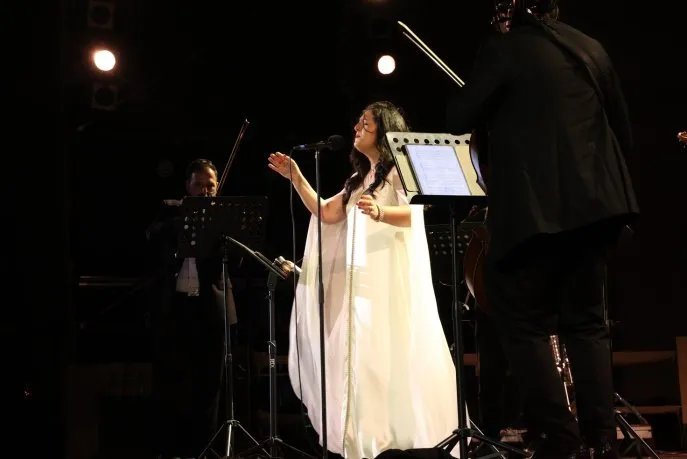
In Fès, the 29th edition of the Festival of Sacred Music of the World has continued to offer audiences moments of artistic dialogue between traditions, spiritualities, and cultures. An evening dedicated to female voices brought together artists from Lebanon, Morocco, Germany, India, and the High Atlas region of Morocco. Performances by Ghada Shbeir, Nabila Maan, Kaushiki Chakraborty, the German group Bodies, and the Ahwach Issafen ensemble showcased the diversity of female musical expressions.
One of the festival's highlights featured British artist Sami Yusuf at Bab Al Makina, accompanied by musicians from various countries, including Nabila Maan and the monchid Ismaïl Boujia. His performance took the audience on a musical journey through Sufi, Andalusian, and Eastern traditions, with songs like "Madad," "Mawlana," and "Hasbi Rabbi" resonating deeply with the audience. Additionally, the Franco-Swiss saxophonist Léon Phal transformed the Jnane Sbil Garden into a space of sonic contemplation with his project "Stress Killer," blending contemporary jazz, improvisation, and African influences, inviting spectators to slow down in an era characterized by constant acceleration.
In Casablanca, the third edition of Comediablanca affirmed the public's enthusiasm for Moroccan stand-up comedy. The final performance of "Jeux de société" by Jalil Tijani drew a full house at the Mohammed V Complex. Through a range of characters inspired by everyday life, the comedian explored the multifaceted nature of Moroccan society, alternating between French and Darija to present a perspective that is both tender and critical of contemporary behaviors, habits, and contradictions. The festival also emphasized knowledge transfer by organizing masterclasses for young talents and humor enthusiasts.
Meanwhile, in Marrakech, the Marrakech Comedy Festival featured Nordine Ganso, a rising star in French-speaking stand-up. His show "Violet" intertwined family narratives, personal memories, and reflections on the multiple identities comprising his Congolese, Moroccan, and Algerian heritage. His humor, rooted in self-deprecation and audience engagement, confirmed the growing significance of stand-up as a cultural expression and a dialogue space between generations.
In a celebration of literature, the city of Azilal launched the 17th edition of the Regional Book and Publishing Fair, themed "The Voice of the Mountain: A Heritage, Historical, and Civilizational Depth Addressing the Soul and Spirit." This event gathered publishers, booksellers, writers, and cultural stakeholders around a shared ambition: to bring books closer to citizens. Located in Aït Achour Square, the fair aims to promote the cultural heritage of mountainous regions while fostering reading and intellectual exchanges. Over several days, literary meetings, debates, book presentations, and cultural activities will enliven this edition.
Through these diverse events, Morocco reaffirms the vitality of its cultural scene and its ability to facilitate a dialogue between heritage, contemporary creation, social innovation, and international openness.
As reported by quid.ma.