Exploring the Vibrant City of Casablanca
Casablanca, often regarded as the financial heartbeat of Morocco, is not just a city; it is an experience that seamlessly blends culture, modernity, and authenticity. Famous for being immortalized in the classic Hollywood film that shares its name, Casablanca stands as a treasure trove of surprises waiting to be discovered. The city showcases a striking Art Deco architectural influence, harmoniously merging the fast-paced life of a metropolis with rich history, tradition, and art, all set against a backdrop where the past coexists with contemporary life.
The very name 'Casablanca' originates from Spanish, meaning "white house," a nod to the coastal structure that served as a maritime landmark for traders and sailors centuries ago. Today, this heritage is evident in the city's landscape, characterized by a multitude of light-facade buildings that dot the skyline and echo its historical roots. Many Brazilian travelers first set foot in Morocco through Casablanca, thanks to direct flights from São Paulo's Guarulhos International Airport offered by Royal Air Maroc. Despite the increasing influx of Brazilian tourists, Morocco remains largely perceived as an exotic destination, often overshadowed by the romanticized image of Marrakech, popularized by the 2001 telenovela 'O Clone' aired on Globo TV.
Why You Should Visit Casablanca
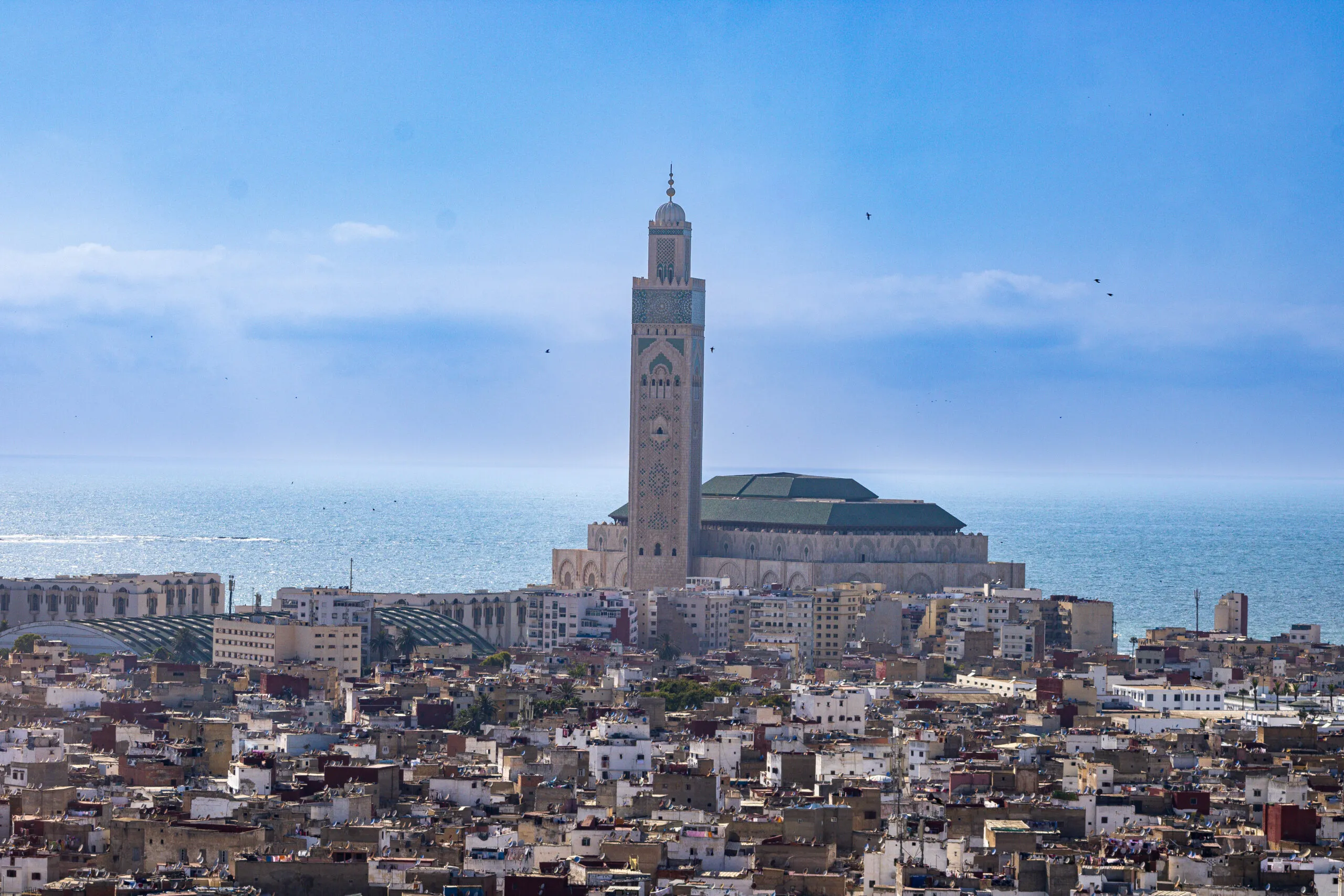
Unlike the version of Casablanca crafted in the 1942 Hollywood classic, the real city is cosmopolitan, modern, and business-oriented. Interestingly, the film was not even shot in Casablanca, and it wasn't until years later that Rick’s Café, an establishment inspired by the fictional bar in the movie, was established to cater to the cinematic nostalgia of visitors. Casablanca is also home to the Hassan II Mosque, the largest mosque in Morocco, which can accommodate up to 100,000 worshippers. This architectural marvel not only impresses with its scale but also with its stunning oceanfront location, as part of the structure is built over the Atlantic Ocean. The mosque's minaret, standing at 210 meters, is the tallest in the Islamic world and dominates the cityscape, symbolizing its religious and cultural significance.
However, the charm of Casablanca extends beyond its iconic landmarks. The city’s Medina reveals a different side, characterized by narrow, winding streets surrounded by ancient walls, still pulsating with the rhythm of daily life. Here, one can find bustling markets, shops selling garments, leather goods, spices, and small workshops, all thriving in a space where haggling remains a vital part of the experience. A crucial tip for visitors: credit cards are not universally accepted, so it’s wise to carry Moroccan dirhams, although euros and dollars are commonly welcomed in local commerce. It's also essential to be aware of exchange rates and to expect change in dirhams.
The pace of life shifts dramatically just a few kilometers away at Ain Diab's Corniche, where the more relaxed side of Casablanca unfolds, featuring restaurants, cafes, and clubs along the Atlantic coast. As dusk falls, the promenade fills with locals and tourists alike, creating an inviting atmosphere. No visit is complete without indulging in the city’s culinary delights. The Dar Dada, located close to the Medina near Arsa Garden, is set in a traditional riad that boasts a simple exterior, hiding a beautifully designed interior with patios, corridors, and rooms adorned with intricate zellige mosaics and carved wood. Diners can savor authentic Moroccan dishes, such as a uniquely prepared couscous served with vegetables and spices, the exquisite pastilla—a pastry that harmoniously blends sweet and savory flavors—and baghrir, a light, holey pancake often served with honey and butter, complemented by live belly dance performances.
Casablanca is a destination that welcomes everyone throughout the year. The ideal times to visit range from March to May when the weather is perfect for walking, while the heat from June to August pushes life to the beachfront. From September to November, temperatures become more stable, and from December to February, the city maintains a lively atmosphere with fewer tourists, providing a more local experience. The city is easily navigable, with a blend of both Western attire and traditional clothing observed among its residents, reflecting a liberal dress code. Casablanca exemplifies a destination that embraces diversity, with active participation from women in public life and a narrative of coexistence that aligns with the Moroccan monarchy's principles, allowing cultural differences to flourish while respecting local customs.
As reported by mercadoeeventos.com.br.