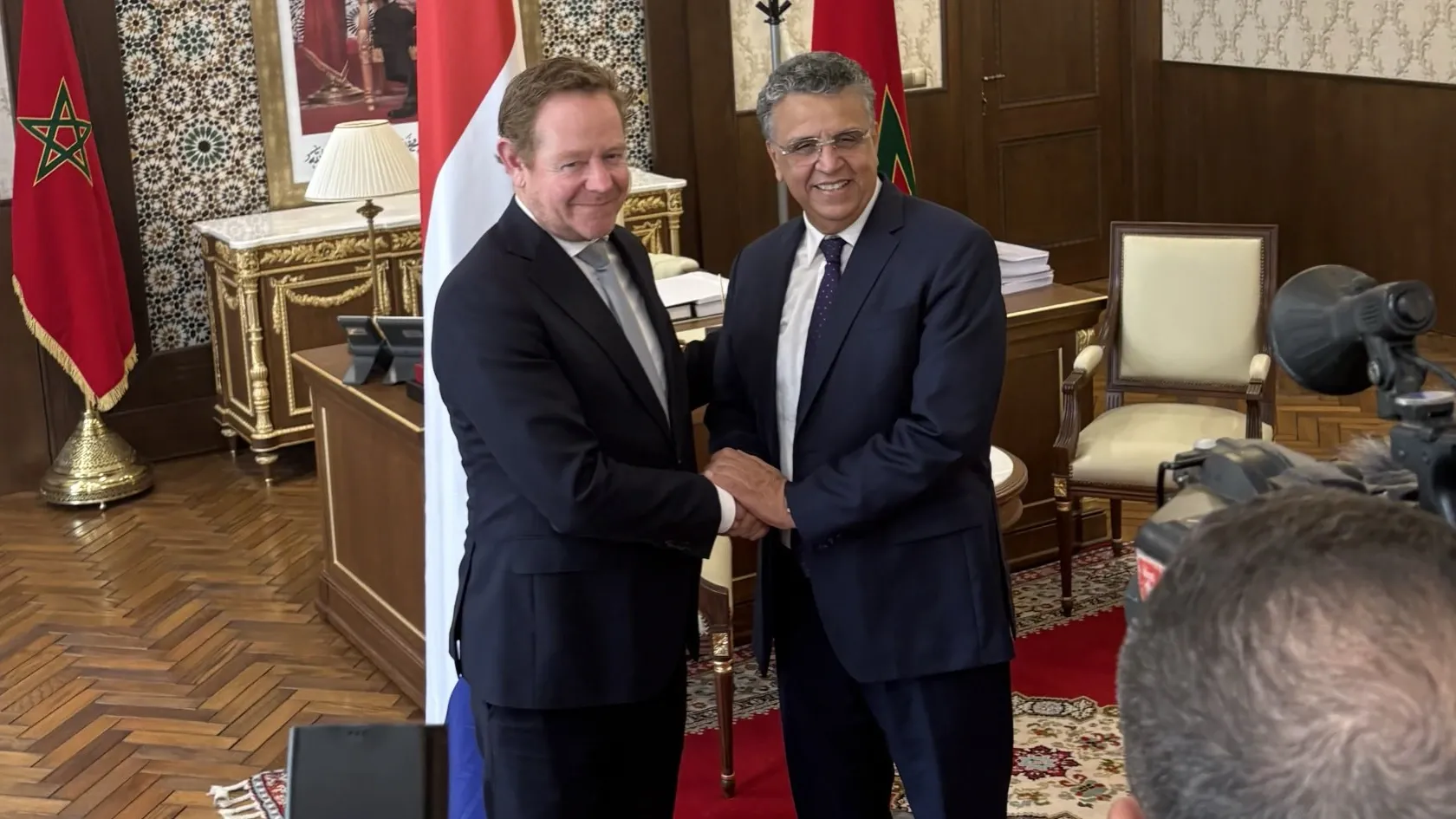
Marrakech – In a significant move towards enhancing international judicial cooperation, the Dutch House of Representatives, known as the Tweede Kamer, overwhelmingly voted last week in favor of an extradition treaty with Morocco. This landmark agreement, which was signed in Rabat in December 2023, saw opposition only from the Party for Animals and Denk, highlighting the broad political support for the initiative.
The treaty has already received ratification from Morocco’s parliament and is expected to be finalized pending a vote in the Dutch Senate, where the considerable majority achieved in the House makes rejection appear unlikely. This agreement stipulates that either nation can request the extradition of individuals suspected or convicted of crimes that carry a prison sentence of at least one year in both countries. The offenses covered by this treaty include serious crimes such as murder, manslaughter, various forms of violent crimes, and money laundering.
Justice Minister David van Weel described the treaty as a significant step in stripping criminals of the “safe haven” they have previously enjoyed. The Netherlands has established a similar agreement with the United Arab Emirates and is currently in negotiations for an extradition treaty with Colombia. Van Weel emphasized the commitment to intensifying efforts against criminal activities, declaring, “We are going to turn up the heat on them everywhere.”
Despite the treaty’s robust framework, there remains a notable limitation: Morocco traditionally does not extradite its own citizens, including those with dual nationality. However, Van Weel reassured that the treaty obligates Morocco to prosecute its citizens domestically should extradition not be possible. “If they do not extradite, the treaty contains an obligation to hand the case over to their own public prosecution service,” he explained, underscoring the potential deterrent effect this could have on criminals.
VVD MP Ulysse Ellian expressed optimism regarding the treaty’s impact, particularly in relation to high-profile criminals linked to the notorious drug lord Ridouan Taghi, who is currently serving a life sentence for orchestrating a series of murders. His sister, believed to be residing in Morocco, is among those targeted by prosecutors. Public prosecutor Ferry van Veghel confirmed that several organized crime groups under investigation have suspects living in Morocco, suggesting that even without physical extradition, the treaty carries considerable deterrent value. “They really do not want to be prosecuted in Morocco and end up in prison there,” Ellian noted, with Van Veghel agreeing on the treaty’s broader implications beyond mere extradition.
The roots of this bilateral cooperation can be traced back to a tragic incident in 2017, when two Dutch hitmen, allegedly acting on Taghi’s orders, mistakenly killed the son of a Moroccan judge in Marrakech. Both perpetrators received death sentences from a Moroccan court, illustrating the severe consequences of organized crime in the region.
Samira Jadir, a correspondent for NOS in Morocco, pointed out that the shockwaves from this incident resonated in Morocco similarly to the assassinations of lawyer Derk Wiersum in 2019 and crime journalist Peter R. de Vries in 2021 in the Netherlands. Despite a cooling of diplomatic relations between Rabat and The Hague at that time, organized crime emerged as a shared concern, leading to Morocco’s pivotal role in Taghi’s arrest in Dubai in 2019. Since 2021, relations have improved, marked by the establishment of police cooperation and the positioning of a permanent Dutch public prosecutor at the Dutch embassy in Rabat.
In conjunction with the treaty approval, Parliament also passed a motion mandating the Netherlands to refuse extradition when there are indications of politically motivated prosecutions. Van Weel confirmed that human rights considerations will be carefully evaluated before any extradition takes place, ensuring that the treaty aligns with the Netherlands' commitment to uphold justice and human rights standards.
As reported by moroccoworldnews.com.