Grain Collection Exceeds Expectations
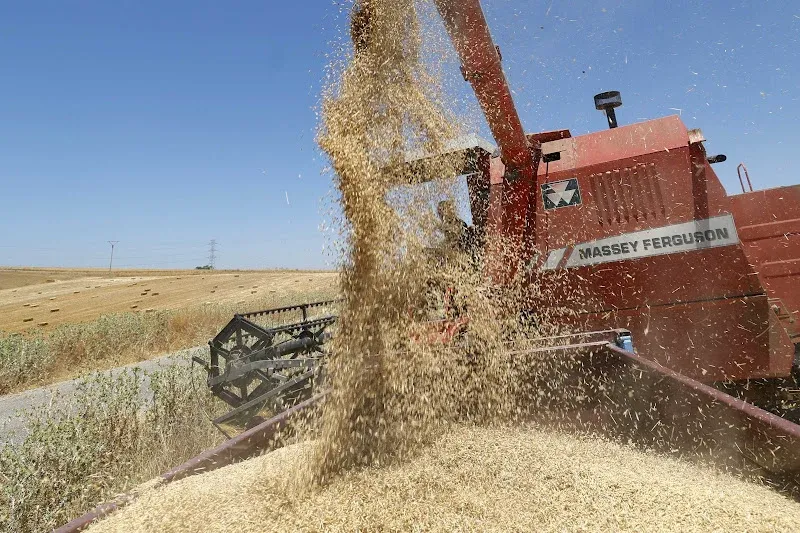
On Tuesday, the Moroccan Ministry of Agriculture, Fisheries, Rural Development, Water and Forests announced during a session at the House of Councillors that by June 15, 2026, the collected quantities of grain have surpassed 100,000 quintals per day, particularly noted during the second week of June. Approximately 84% of these quantities are sourced from the regions of Casablanca-Settat, Fes-Meknes, and Marrakech-Safi. Minister Ahmed Bouari, while addressing questions from council members, especially those from the ruling majority, emphasized that the National Office for Cereals and Pulses is closely monitoring the collection, marketing, and quality control of grain products. He stated that the current challenge is not only to achieve a good harvest but also to enhance the efforts of farmers, improve the marketing conditions of national products, strengthen storage capacities, and establish a system that is more resilient to future climatic and economic fluctuations.
Strategic Approach to Wheat Marketing
In discussing the marketing of domestic soft wheat, Minister Bouari highlighted the government's approach which prioritizes national products to bolster food security in Morocco. He noted that this strategy is implemented through a joint circular for the marketing of soft wheat, which focuses on setting a reference price of 280 dirhams per quintal for specified quality wheat directed towards industrial mills. Furthermore, he mentioned that this approach includes a temporary suspension of customs duties on soft wheat imports for two months, specifically for June and July 2026. Additionally, a binding agreement will be established between the state and professionals to ensure the collection of at least 15 to 20 million quintals of domestic soft wheat. The government plans to introduce an additional mechanism to build strategic reserves, which will involve a storage subsidy of 3 dirhams for every two weeks for each quintal of locally stored soft wheat.
This initiative, as outlined by Bouari, aims to foster the creation of a reserve stock of 8 million quintals of local production, thereby enhancing the coverage of national needs from six months instead of three. This strategic shift represents a significant step toward reinforcing national food sovereignty by transitioning from immediate needs management to building a sustainable strategic reserve capable of securing the country's requirements under various circumstances.
The Minister also indicated that the ministry continues to enhance storage capacities by establishing local storage units capable of holding nearly 2 million quintals, increasing the investment support for storage infrastructure from 10% to 25%, and developing a comprehensive national system for strategic grain reserves. He underscored that bolstering storage capabilities and strategic reserves is a fundamental initiative to strengthen national food security and improve Morocco's resilience to crises and international market fluctuations.
Minister Bouari reassured that all necessary measures have been taken to support farmers and ensure that harvesting, collection, and marketing operations are conducted under optimal conditions. He reminded attendees that the harvesting and marketing processes have begun gradually, with preliminary data indicating good production levels ranging between 15 and 57 quintals per hectare, depending on the region.
He also emphasized that the grain harvest season is a crucial milestone in the national agricultural cycle and a pillar of the country's food security. The current agricultural season is particularly significant as it represents a recovery phase for the agricultural sector after consecutive years of drought, showcasing the resilience of Moroccan farmers and the revival of production dynamics. This agricultural season has benefited from favorable climatic conditions, with cumulative rainfall reaching approximately 571 mm by June 12, 2026, marking a 94% increase compared to the previous season and a 45% increase compared to the average of a typical year.
As reported by hespress.com.