For over a month, football will dominate conversations, media coverage, and the emotions of people around the world, even influencing state calculations. The World Cup represents a unique interlude where the planet seems to set aside its troubles to focus on a ball, national colors, and dreams of victory. This competition possesses a remarkable power, captivating audiences to the extent that they yearn for it to restart indefinitely. As soon as it is mentioned, it becomes a topic of conversation once again. Football wields an influence over the world that few cultural or political phenomena can claim.
Forty-eight nations have placed their hopes in the hands of twenty-six players each, individuals who have triumphed over qualification hurdles to raise their flags high in the global hierarchy. Behind them stand entire communities, bearing expectations, aspirations, and a quest for recognition that transcends the boundaries of the playing field. Players step onto the pitch alone, yet they carry with them the weight of their history, frustrations, ambitions, and sometimes even the scars of their nations.
This burden of responsibility is not measured in minutes of play, not even when matches extend to one hundred and twenty minutes; it is measured by the intensity of collective passion—a passion that can drain, sometimes even devastate, yet in exceptional instances, leads to the pinnacle of success. The former Libyan leader Muammar Gaddafi criticized in his "Third Universal Theory" in the "Green Book" the notion that a minority participates in sports while the majority settles for mere spectatorship. According to his perspective, crowds should have invaded the fields, relegating professional athletes to the stands.
History has shown the limitations of this view, as Libya has not emerged as a great sporting nation or a model of popular competition. The Libyan masses have not embraced a culture of sporting challenge or democratic political confrontation. However, Gaddafi may have unintentionally recognized an essential reality: sporting competitions are no longer the exclusive domain of players. On an international scale, they mobilize entire nations. Anthems, flags, media coverage, and collective emotions play an integral role in these confrontations. The very vocabulary surrounding the sport borrows heavily from military terminology: attack, defense, counteroffensive, tactics, strategy, and even fatal blows.
Football has evolved into a unique form of confrontation between nations—a symbolic war where the weapons are passes, dribbles, and shots. Goals may not spill blood, but they can bring forth tears or wound the pride of entire peoples. No other sport has achieved such a level of popularity. Even the United States, long attached to its own team sports, has succumbed to the passion for football and now boasts a national team capable of competing with historic powerhouses.
This popularity can be attributed to social, sporting, and political factors, coupled with a considerable economic dimension that has transformed football into a sector of investment, a tool for projection, and, at times, a substitute for successes achieved in development, innovation, or international power. It is within this demanding universe that Morocco has risen to the global elite. Its presence in the World Cup is neither a gift nor a twist of fate; it is the result of long-term effort, consistent progress, and an ambition driven by an entire nation.
The Kingdom faces the world's top teams, armed with its players, fans, dreams, and renewed confidence. Most importantly, it does so because it has earned the right to be there. Morocco is among the countries that have integrated sports, particularly football, into their development strategy. The Moroccan reform and modernization project, the foundations of which were laid and objectives defined by King Mohammed VI, is characterized by a comprehensive vision where different areas of action complement and interact. Sports occupy an essential place in this vision as an instrument of progress.
At the individual level, sports foster a positive sense of national belonging, rooted in pride for Moroccan identity, without exclusion or excess. It also promotes a culture of excellence based on merit, competition, and effort, far removed from deception, intrigue, or artifice. Physical training remains inseparable from moral education that reinforces the national values of a country drawing from its deep history and fully willing to contribute to universal ideals of peace, solidarity, and cooperation among peoples.
While there have indeed been episodes of violence among local club fans in Morocco, these outbursts stem from various realities, including excessive regionalism and social fragilities among some youths drawn to violent behavior, as well as the consequences of rapid urbanization that has not been adequately supported economically and socially. However, these manifestations have never marked international competitions. The celebrations of the national team’s victories, both in Morocco and abroad, have always been characterized by overwhelming enthusiasm without descending into humiliation of adversaries or disdain for others. When the national team is defeated, Moroccans know how to contain their disappointment, soothe their pride's wounds, and maintain their confidence in future successes.
The final of the African Cup of Nations held in Morocco was a remarkable example of this. The world witnessed how Moroccan fans refused to respond to provocations from some Senegalese fans present in the stadium. They chose not to allow these sporting incidents to affect human, economic, or political relations between the two countries. During that same edition of the African Cup, Morocco was also targeted by a smear campaign aimed at tarnishing the Kingdom's image and compromising the success of this continental event.
It was evident that this campaign was conducted in an organized and premeditated manner. Some Western media even revealed that a hostile Maghreb country to Morocco had allocated nearly six million dollars over the course of a year for a global plan to discredit the Moroccan organization of the competition. Nevertheless, the success of this African Cup was officially recognized by the African authorities themselves. In their final assessments, they praised the quality of the organization and the exceptional nature of the welcome extended to delegations and fans.
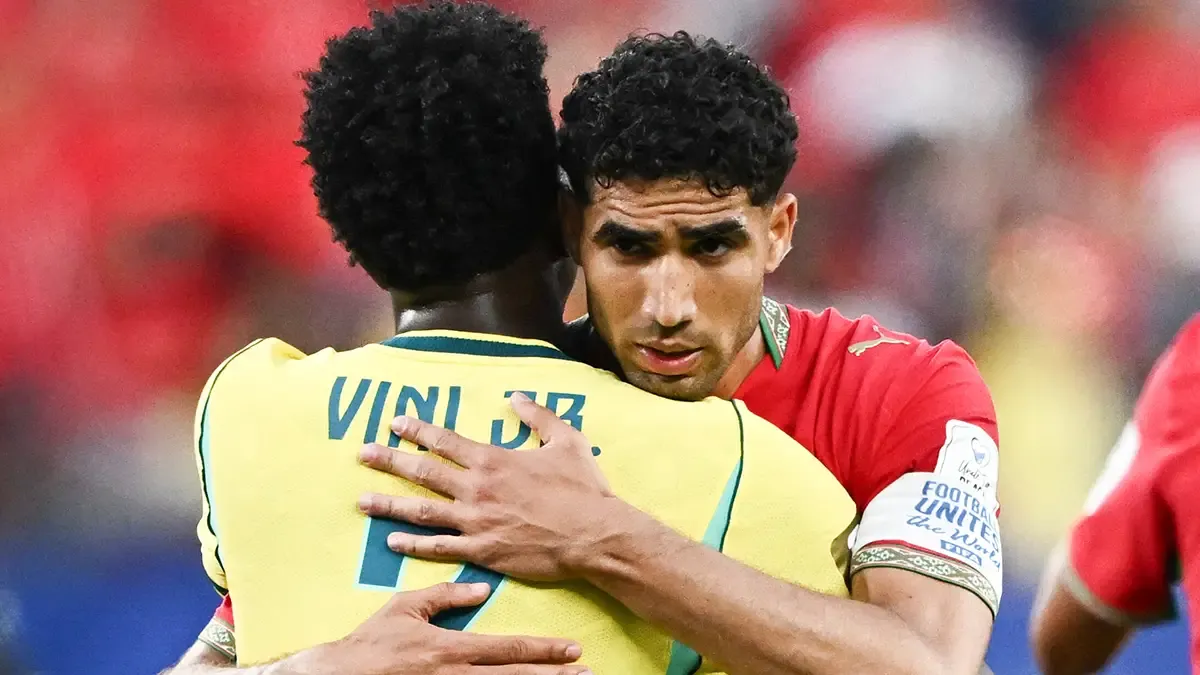
In response to these attacks, Moroccans, both at the state level and within civil society, opted for moderation. They refused to respond to provocations or be drawn into a spiral of emotional reactions. Today, Morocco approaches the World Cup with the mindset of a participant convinced of its worth. The national team enjoys immense respect worldwide following its exceptional trajectory in the Qatar World Cup. This team is forged by the ambition to win, aspiring to play a leading role within this global elite, not only because it has undergone high-level preparation but also because it represents a country that has lifted football from the margins, improvisation, and random management.
The Kingdom now sees sports as one of the engines of its global success, alongside other economic and social development projects. There is no doubt that Morocco's participation in this World Cup will be remarkable. Observers are already keen to see how the Kingdom will confirm its place among the great nations of world football. Regardless of the final outcome, this presence will represent a new success in a long series of achievements. The essential factor is that these advancements are accompanied by a clear awareness of the obstacles that still line the country’s path. These brakes, resistances, and difficulties may slow its progress, but they cannot halt it, as the achievements made reinforce one another within the national collective.
Thus, Morocco steadfastly continues its path toward consolidating the unity of its territory and its people. More than half a century after choosing fidelity to its history and national constants, it now reaps the fruits of a diplomacy based on reason and consistency. More than 140 countries now understand Morocco's national stance and support its peaceful proposal for resolving an artificially maintained conflict. With this support, these states recognize Morocco in its entirety and wish to participate in its development dynamic.
Today, Morocco occupies a prominent position on the African continent. In the industrial sector, it has reached a level that places it among the most competitive economies in Africa, making it highly attractive to numerous African partners. This influence is based on a doctrine of cooperation founded on the principle of mutual benefit, which guides its relations with countries across the continent.
For the third consecutive year, the Kingdom also hosts the Marrakech Platform, organized in collaboration with the United Nations, bringing together African intelligence services. Nearly forty security agencies from the continent participate, demonstrating the trust placed in Moroccan expertise in the fight against terrorism. This recognition is not a result of complacency; it stems from operational effectiveness and internationally acknowledged security preparedness. This effectiveness draws its strength from the clarity of the reformist and modernizing project driven by King Mohammed VI.
The U.S. ambassador to Morocco also highlighted this dynamic during the celebration of American Independence Day in Rabat, asserting that Morocco is a strong U.S. ally and that President Donald Trump firmly supports the resolution process regarding the Sahara issue based on Morocco's autonomy proposal. This declaration serves as a clear indicator of the influence Morocco has gained on the international stage. According to this interpretation, the U.S. Administration does not establish strategic alliances or grant support to actors it considers weak. It is the solidity of Morocco, the credibility of its decisions, and the scope of its capabilities that structure its foreign relations and determine how its partners perceive it.
These elements are just a few examples among the recent advancements that, in the author's view, demonstrate the accumulated successes of the Kingdom across various domains. They illustrate a national context from which the Moroccan national football team draws inspiration to fuel its confidence, strengthen its determination, and pursue its aspiration for excellence. The national team does not evolve in a vacuum; it reflects a country immersed in a broad transformation process driven by ambition for progress, projection, and recognition. The players donning Morocco's colors on the World Cup pitches, therefore, carry much more than just a jersey; they embody a collective will to succeed.
Thus, Morocco approaches this competition with the serenity of those who have earned a place among the best and with the ambition to confirm that their feat was not an exception but rather an expression of their trajectory—one that, in the author's opinion, associates sporting success with a broader dynamic of development, influence, and confidence in the future.
As reported by atalayar.com.