The Sino-Moroccan Partnership: A Beacon of Hope in Green Energy
As the conflict in Iran escalates, exerting significant pressure on global energy markets and trade routes, Morocco is emerging as a pivotal player in China’s evolving green industrial initiative. The Kingdom is rapidly transforming into a center for renewable energy infrastructure, electric vehicle (EV) supply chains, and strategic logistics networks, particularly around the Tanger Med port. Chinese companies are expanding their presence in Morocco, aiming to bolster their resilience against geopolitical disruptions. Nevertheless, despite ambitious goals for decarbonization and a surge in foreign investments, Morocco's ongoing reliance on imported hydrocarbons and its aging electricity infrastructure pose significant challenges to achieving energy security. This article delves into how the Sino-Moroccan partnership is both strengthened and limited by the shifting geopolitical landscape.
The convergence of Rabat's green ambitions with Chinese technological expertise has fostered a burgeoning partnership aimed at enhancing Beijing's energy resilience while accelerating Morocco's decarbonization efforts. As the Iranian conflict continues to test global systems, Chinese renewable projects in Morocco hold significant promise, albeit with inherent limitations that may mitigate Rabat's vulnerability to energy disruptions from the Gulf. Despite these challenges, Chinese firms integrated within the local ecosystem are well-positioned to take advantage of Morocco's rise as an essential hub in the realignment of global trade.
Morocco was the first African nation to join China’s Belt and Road Initiative (BRI) in 2017, leading to a remarkable increase in Chinese foreign direct investment (FDI) in the Kingdom, which surged by over 61% to reach approximately 513.3 billion USD in 2023. This rapid growth has been primarily driven not by traditional development finance but by private enterprises aligning their overseas strategies with Beijing’s national priorities, focusing on the globalization of its renewable energy sector and the consolidation of the green value chain, from mineral extraction to the production of electric vehicles and batteries. In this environment, Morocco has become an appealing destination for Chinese firms at the forefront of the green transition.
Notable investments from Beijing include significant stakes in Morocco's renewable infrastructure, such as the Noor solar power plant in Ouarzazate—the world's largest concentrated photovoltaic facility—and a wind turbine blades manufacturing plant in Nador that caters to both domestic and export markets. These strategic investments have established Chinese companies as critical players in Morocco's transition toward a greener economy. Additionally, the Kingdom's vast phosphate reserves—a crucial component for EV batteries—combined with its integrated automotive ecosystem led by industry giants like Stellantis and Renault, have further attracted Chinese EV and battery manufacturers.
Rabat's proactive policy framework has played a vital role in facilitating synergies between local agencies and foreign investors. The 2020 Draft Law No 40-19 granted local authorities unprecedented autonomy over renewable project planning, while the 2022 Investment Charter made the Kingdom more appealing by offering territorial investment incentives. The emergence of Tanger Tech City, an industrial free zone co-developed by SATT and the state-owned China Communications Construction Company (CCCC), has attracted investments from battery manufacturers such as BTR and Shinzoom, alongside other prominent players in the EV components sector.
From a Chinese perspective, relocating parts of its EV production capacity to Morocco presents a potential strategy to navigate trade restrictions imposed by the European Union and the United States, with which Rabat enjoys free trade agreements. However, simply increasing production and domestic value addition does not automatically lead to local value creation and could provoke public discontent. Therefore, as the Sino-Moroccan green partnership deepens, it is crucial to incorporate local sourcing requirements into investment discussions to promote technological linkages and benefits that can advance Morocco's national priorities and decarbonization goals meaningfully.
Nonetheless, these industrial advancements unfold within a geopolitical framework where Morocco's persistent energy vulnerabilities and China's continued dependence on Gulf supply routes remain unresolved. The significance of Sino-Moroccan collaboration in green transition industries must be evaluated in light of the growing geopolitical instability. As the Iran War alters China's strategies in the Middle East and North Africa, this partnership is framed as both a means of enhancing energy resilience and a challenge due to structural dependencies. While Rabat's green energy pathway is strategically advantageous, it has not yet provided sufficient structural alternatives to Gulf imports for either its domestic market or Beijing. Nevertheless, Morocco's role as a regional hub may secure it a favorable position in the realignment of global trade throughout Africa, particularly concerning Chinese green value chains.
Despite Rabat's aspirations to become a net exporter of renewable energy, including green hydrogen and its derivatives, it heavily relies on imported coal, oil, and gas for approximately 90% of its energy requirements. According to data from the International Energy Agency (IEA) in 2022, renewables accounted for 17% of the country's electricity generation, yet only 8.17% of final consumption. This discrepancy underscores a considerable gap between production and usage. Although large-scale projects like the Noor solar plant generate sufficient energy to supply over a million homes, electricity remains costly in Ouarzazate due to outdated, hydrocarbon-dependent grids that hinder the distribution of solar energy to local communities.
These structural limitations exacerbate Morocco's energy vulnerabilities amid rising oil prices and deteriorating economic conditions. Similarly, China's green strategy will be affected—albeit to a lesser extent—depending on the duration of the conflict, as its renewable initiatives may either stall or decelerate in partner nations absorbing the long-term costs of the Gulf-North Africa conflict. Consequently, for Beijing, the motivation to deepen its green collaboration with Rabat during this period is less about pivoting from Gulf projects and interests, but rather about consolidating an expanding partnership amid a constellation of strategic investments in the region to diversify energy sources and enhance its own resilience. In this context, Morocco serves as a complementary node within a broader Chinese risk diversification strategy.
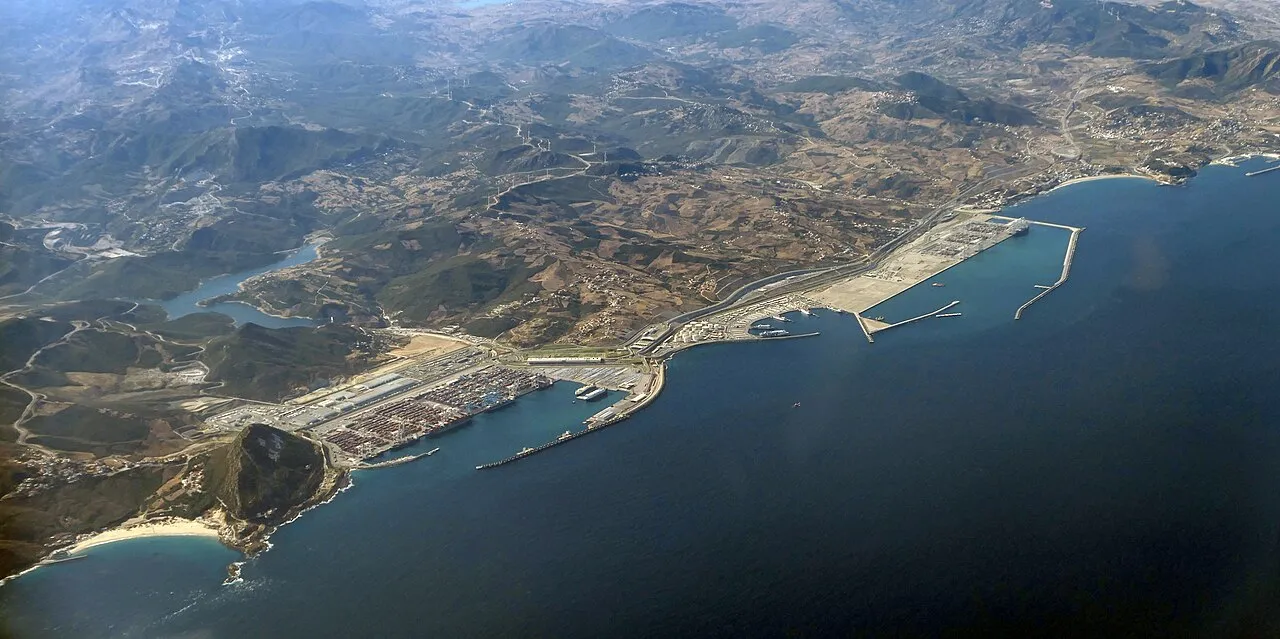
As the current crisis accelerates the trend of rerouting trade through the Cape of Good Hope—viewed as safer than the Strait of Hormuz and the Red Sea—Tanger Med stands out as one of the few African ports capable of seizing this opportunity. With its substantial container capacity and hinterland connections, the port also serves as a strategic asset for Chinese firms operating in the adjacent Tech City. As a flagship BRI project, the Tech City not only boosts Rabat's growing role in global connectivity by seamlessly integrating logistics with industrial capacity, but it may also allow Beijing to retain a degree of supply chain fluidity amid the volatility of traditional trade routes and ensure its leading position in green value chains.
By leveraging its strategic location between continents, actively enhancing superior logistical infrastructure, and attracting foreign investments, Morocco has effectively established itself as a crucial link in China’s BRI—all while adhering to its foreign policy of strategic multipolarity. Within this framework, the alignment of Rabat's green ambitions with Beijing's leadership in renewable technologies has nurtured a steadily growing partnership where Chinese firms play a vital role in Morocco's burgeoning energy industries.
While the Iran War further incentivizes the strengthening of this existing cooperation, Sino-Moroccan renewable projects still face constraints due to Rabat's structural reliance on hydrocarbon imports and outdated electricity grids that currently cannot redistribute clean energy effectively throughout the country or for export. Consequently, the development of energy resilience within the bilateral relationship is of immense significance but may be hindered by Rabat's exposure to Gulf disruptions and price fluctuations that could persist even after the conflict subsides. As the principles of strategic redundancy begin to replace those of mere efficiency in supply chains, Tanger Med and the Tech City will increasingly serve as essential nodes in global trade. Chinese green technology firms integrated within the local ecosystem are uniquely positioned to reap the benefits of Morocco's ascent in both regional and global connectivity.
As reported by stimson.org.