AI's Impact on Work and Value in the Modern Era
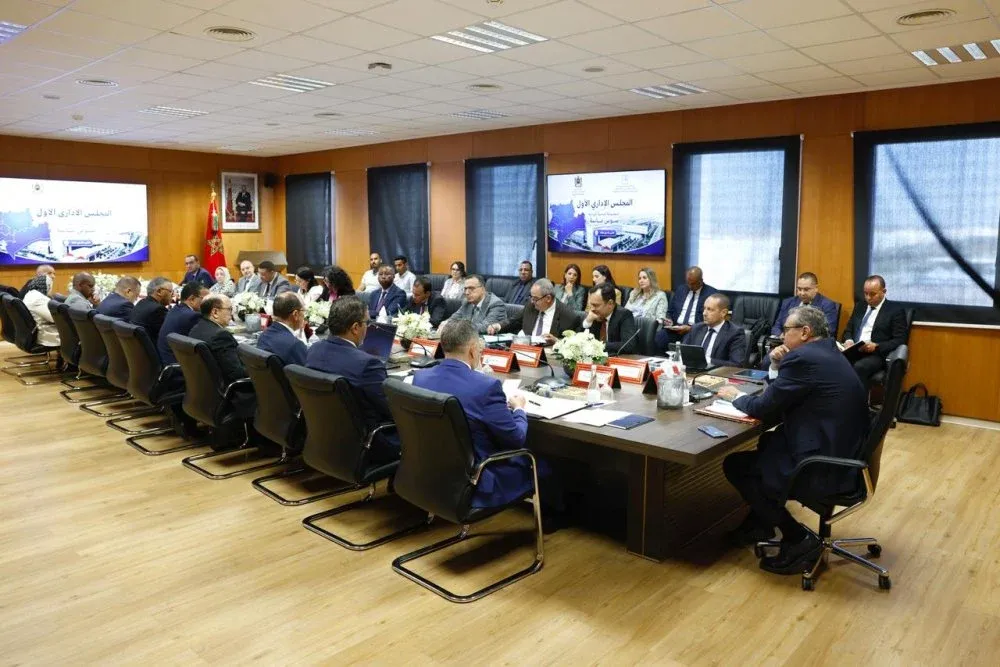
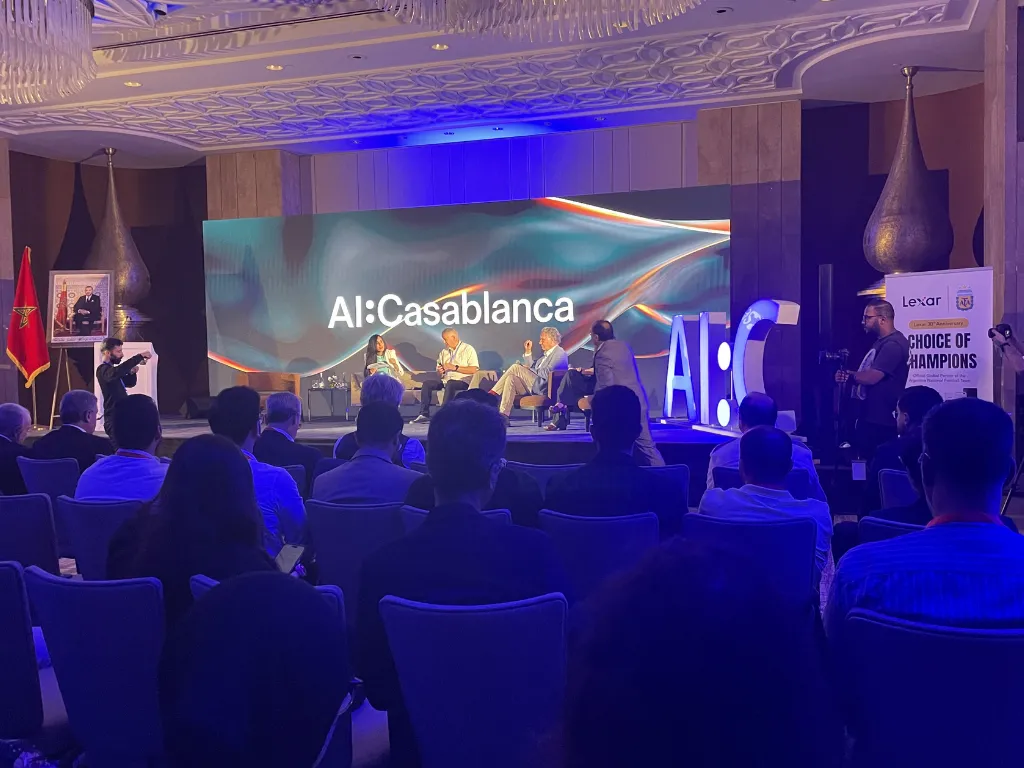
On May 23, during the event titled "AI: Casablanca - Human Work in the AI Era," a diverse group of public decision-makers, entrepreneurs, data experts, and technology leaders gathered to tackle a pressing concern: understanding the shifts already occurring in the workforce due to artificial intelligence. The discussions revealed a critical observation that transcended mere conversations about innovation and productivity gains; artificial intelligence is not just transforming tools, but it is fundamentally redefining professions, value chains, hierarchical relationships, corporate competitiveness, and the broader positioning of economies within the new global landscape of technological power.
In a dynamic environment where terms like "sovereignty," "technology," "speed," "adaptation," and "transformation" resonated throughout the room, Morocco stands at a pivotal moment. It must decide whether to merely adopt technologies developed elsewhere or actively participate in the construction of this new algorithmic economy. As technological cycles accelerate, the risk extends beyond failing to innovate; it now encompasses a structural disengagement from the global economy.
The Urgency of Adaptation in the Age of AI
The urgency of the situation was underscored by Industry and Commerce Minister Ryad Mezzour, who posed a challenging question to the attendees: "Does work itself still have a future?" He painted a picture of a world where cognitive boundaries are being crossed, factories are becoming almost entirely automated, and even intellectual professions are beginning to feel unstable. He highlighted alarming trends, such as the dismissal of 30,000 engineers and consulting firms slashing their workforce by half, signaling a significant shift in the employment landscape. Behind the allure of technology lies a genuine "survival question," prompting individuals and organizations to forge their own individual and collective AI strategies to prevent this newfound power from being monopolized by a select few.
Amidst the more dire scenarios, another narrative emerged, largely shared by the speakers: AI does not necessarily doom human work; rather, it shifts the locus of value within human labor. Anas Mbasso, founder of EKINOX, Moovance, and Athenyx, summarized this sentiment succinctly, indicating that while the pace of change is rapid, it often veils a sense of overwhelm and vulnerability. AI is not just answering questions anymore; it is now moving towards assisting and executing tasks. This shift from a response logic to an execution logic raises profound questions about human distinction in a landscape of abundant productivity. "When productivity becomes plentiful, what sets us apart as humans?" he asked, challenging the audience to reconsider their roles in this evolving context.
As the discussions progressed, it became evident that the answer to navigating these changes lies not in technical skills alone but in deeply human capacities such as judgment, creativity, systemic vision, influence, emotional intelligence, and critical thinking. Meryem Benjelloun from Holmarcom emphasized that the value is shifting towards soft skills, pointing out that companies often make a fundamental error by viewing AI transformation solely as a technological issue. She asserted, "The challenge is not just about technology. It involves processes, governance, and, above all, the human element." This perspective was echoed by Dominique Lahaix, founder of Ecairn, who urged businesses to identify their genuine strategic value before their intelligence is absorbed by technological platforms, warning that codifying expertise is now a strategic defense act in what he termed an "economic and technological war."
Throughout the event, it became increasingly clear that Morocco cannot afford to observe this transformation from a distance. Abdellatif Maâzouz, president of the Casablanca-Settat region, noted that AI is already a concrete lever for territorial transformation. He illustrated how the revision of the regional development program, which previously took weeks, could now be accomplished in just a few days through data exploitation and new algorithmic tools. "Artificial intelligence can enhance quality of life, making it simpler and more efficient," he stated, while also highlighting the essential prerequisites for such transformation: connectivity, digitization, skill dissemination, and widespread access to digital infrastructure.
Amidst the discussions, entrepreneurs, consultants, managers, and young professionals expressed a mix of enthusiasm and concern, fully aware that the debate has shifted from whether AI will arrive to how quickly they can adapt to it. Behind the technological demonstrations and forward-looking speeches lies an emerging reality for businesses: employees are using AI, often without frameworks, governance, or coherent strategies. Dominique Lahaix cautioned that if companies do not swiftly establish a clear vision and consistent applications, they risk losing control over their own transformation.
Jan van de Poll, founder of Transparency Lab & Praioritize, emphasized that the core issue is not solely technological but organizational. He noted that while companies possess vast amounts of data on their results, they have little understanding of how work is genuinely performed. For AI to enact sustainable transformation, organizations must better comprehend human behaviors, processes, and workplace cultures. Ultimately, the first edition of AI in Casablanca illuminated a crucial truth: the future of work will not solely be shaped in Silicon Valley laboratories, but also in the capacity of businesses, regions, and individuals to redefine their own value in a world where intelligence is, as Abdellatif Maâzouz put it, "practically limitless."
As reported by laquotidienne.ma.