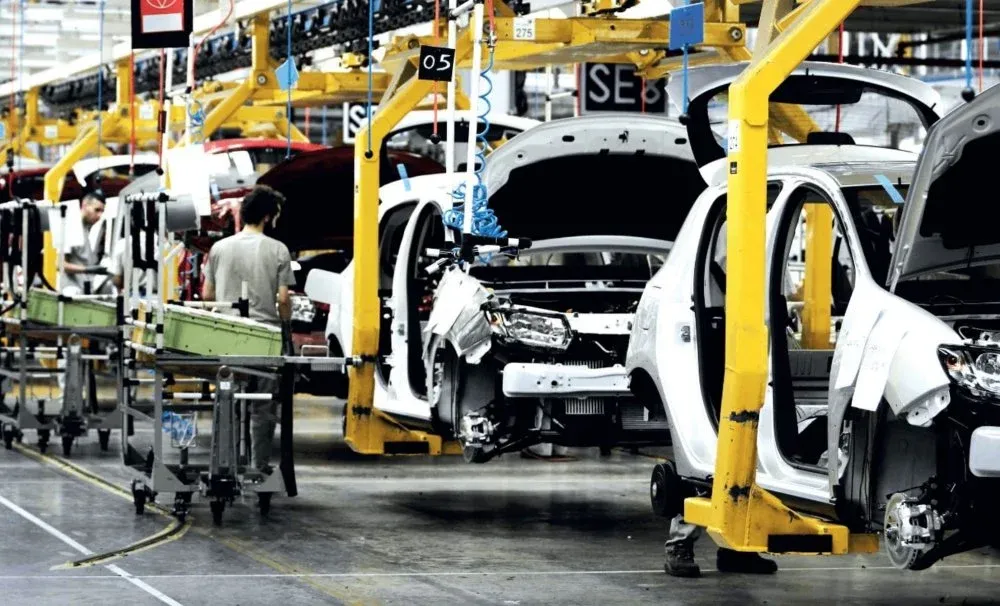
In the competitive landscape of industrial development financing for the Rabat-Salé-Kénitra region, Rabat Région Émergence (RRE) strategically aligns itself with a German-African collaboration. This regional development company is actively seeking the services of an expert consultancy that will be responsible for constructing and submitting its application to the Initiative for Industrial Manufacturing in Africa (IFE). This investment mechanism is managed by the KfW Development Bank on behalf of the German government and aims to foster industrial growth across Africa. At the heart of this initiative are two complementary sites designated for modular rental industrial buildings, known as 'Ateliers relais'. These spaces are designed to provide Moroccan small and medium-sized enterprises (SMEs) with ready-to-use facilities, eliminating the barriers associated with land acquisition. The Industrial Hub of Bouknadel, which will feature an extension of 18,712 square meters, and the more compact Aïn Johra Industrial Park, spanning 5,757 square meters, will serve as the foundational pillars of this offering.
The IFE initiative is part of a larger German effort, dubbed the 'Special Initiative for Decent Employment for a Just Transition', spearheaded by the Federal Ministry for Economic Cooperation and Development (BMZ). Its primary ambition is to collaboratively develop quality jobs in eight partner African countries, including Morocco, alongside the private sector and institutional project leaders. The grant aims to reduce the capital costs of essential industrial infrastructures, in exchange for commitments related to employment metrics and adherence to environmental and social governance (ESG) standards set by KfW. RRE has set an ambitious yet deliberately structured financial target: to secure between 50% and 75% of the eligible investment as a direct subsidy. This grant ratio, to be precisely calibrated at the beginning of the consultancy engagement, would significantly lower the rental prices offered to SMEs and enhance the economic viability of this model from the operational phase onward.
As the clock ticks, RRE faces a pressing deadline. The submission date for the concept note—the first filter of the IFE—has been set for June 30, through the 'SmartME' portal. Consequently, RRE mandates that the consultancy mission commence immediately following the contract award, allowing only a week to produce this condensed document, comprising 8 to 12 pages, along with the initial technical, financial, and environmental documentation. The complete application, known as the Full Project Proposal (FPP), will only be requested by the IFE in the fourth quarter of 2026, following a waiting period of six to ten weeks after the concept note's validation. This subsequent submission is significantly more comprehensive, requiring a detailed implementation plan across thirteen sections, a thorough financial model, an ESG dossier, architectural plans, and reports from qualified technical studies. The selected consultant must incorporate and finance a licensed architect and a qualified technical study provider, whose fees are expected to be included in the overall proposal. The due diligence phase will take place through iterative discussions with IFE analysts, stretching from the first to the third quarter of 2027, prior to the signing of funding agreements.
RRE’s ambitions extend beyond merely securing a grant. The terms of reference explicitly state a 'transfer objective': equipping the regional development company’s teams with all tools, models, and processes generated during the consultancy mission to ensure their independence during the execution phase. All financial models must be delivered in an editable spreadsheet format, with unprotected cells, visible formulas, and accessible macros.
Ultimately, this initiative represents a significant bet on the industrial attractiveness of the Rabat-Salé-Kénitra region. Beyond the administrative mechanics, the project reflects a broader territorial ambition. The model of modular rental workshops—tailored for SMEs—has proven effective in lowering entry barriers to the manufacturing sector. In Bouknadel, the industrial activity zone is currently being developed, while in Aïn Johra, the land is already available. These two sites are thus functionally complementary within the industrial ecosystem of the capital region. Should the IFE application succeed, RRE would join the still limited circle of Moroccan project leaders who have secured direct subsidies through this German mechanism, sending a strong signal regarding the international positioning of the Rabat-Salé-Kénitra region in terms of industrial attractiveness.
As reported by lematin.ma.