
Transforming the Battlefield: Morocco and Israel's Strategic Alliance
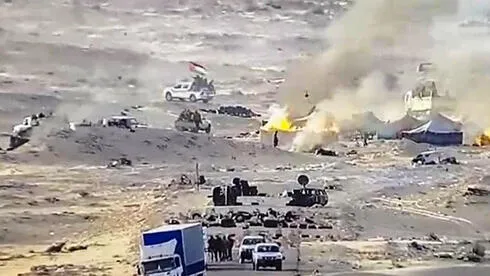
In a striking turn of events in the remote desert landscape of Western Sahara, a critical miscalculation by senior commander Lahbib Mohamed Abdelaziz has resulted in his demise, highlighting the profound implications of Morocco's recent diplomatic normalization with Israel. Abdelaziz's failure to recognize the depth of this relationship, which encompasses more than just trade and civilian interactions, has led to a seismic shift in the rules of engagement. The fatal response came unexpectedly through an advanced loitering munition developed by BlueBird Aero Systems, an Israeli defense contractor, marking a significant escalation in the ongoing conflict.
The long-standing dispute over Western Sahara, which has persisted for over fifty years, remains largely unnoticed on the global stage. While Morocco exercises control over the majority of the territory, the Polisario Front has maintained its operations primarily from the Tindouf refugee camps in Algeria, bolstered by Algerian military and diplomatic support. This support has allowed the separatist group to conduct guerrilla attacks against Moroccan positions, exploiting the expansive desert terrain for tactical retreats. However, the geopolitical landscape has dramatically shifted following Morocco's normalization of relations with Israel, as established through the Abraham Accords in late 2020, and the resulting security architecture has begun to take shape.
The New Era of Warfare and Regional Security
The Abraham Accords were initially portrayed as a monumental achievement in diplomacy and economic cooperation, fostering bilateral tourism and trade. Yet, the less visible aspect of this normalization is the robust security collaboration that has emerged in the shadows. As Morocco has invested in advanced military technologies, particularly from Israeli defense firms, the capabilities of its armed forces have been significantly enhanced. The introduction of BlueBird systems, particularly the Twin Thunder loitering munition, has enabled Moroccan forces to execute precision strikes against mobile enemy units, fundamentally altering the dynamics of the conflict. The operational success of these autonomous systems, which have previously demonstrated their effectiveness in other conflict zones, underscores the strategic advantage gained by Morocco in its efforts to counter the Polisario Front.
The elimination of Abdelaziz, a seasoned commander with decades of experience, signifies more than just a tactical victory; it serves as a testament to the newly acquired capabilities of the Moroccan military to penetrate areas previously deemed safe for Polisario leaders. This shift has created an atmosphere of heightened vulnerability among militant commanders, who now recognize the grave risks associated with their operational leadership amidst advanced Israeli-supported targeting systems. The ramifications of this new reality extend far beyond the battlefield, impacting the strategic calculations of Algeria, which has long supported the Polisario movement under the assumption that its proxy warfare would remain insulated from high-tech attrition. The evolving military landscape has dismantled this assumption, compelling Algeria to confront a Moroccan military partner empowered by sophisticated drone technology and comprehensive intelligence cooperation.
The recent developments serve as a critical indicator of the broader implications of Middle Eastern normalization. The partnership between Morocco and Israel transcends mere diplomatic gestures, evolving into a functional security alliance fortified by shared technology, integrated defense strategies, and a unified approach to regional threats. This transformation challenges the narrative that critics of the Abraham Accords have long promoted—suggesting that such normalization produces more symbolic gestures than substantive military capabilities. The decisive strike in Western Sahara stands as a powerful rebuttal, exemplifying the operational effectiveness of the bilateral accords and the tangible outcomes of this strategic partnership.
As countries in the region observe these developments, the strategic implications reverberate throughout the Maghreb and beyond, influencing the calculations of both state actors and militant groups alike. The successful integration of Israeli defense technology into Moroccan military operations marks a pivotal moment, redefining the military balance in conflicts where adversaries once operated with relative impunity. It underscores the potential for normalization agreements to reshape regional security dynamics profoundly and permanently.
As reported by ynetnews.com.