
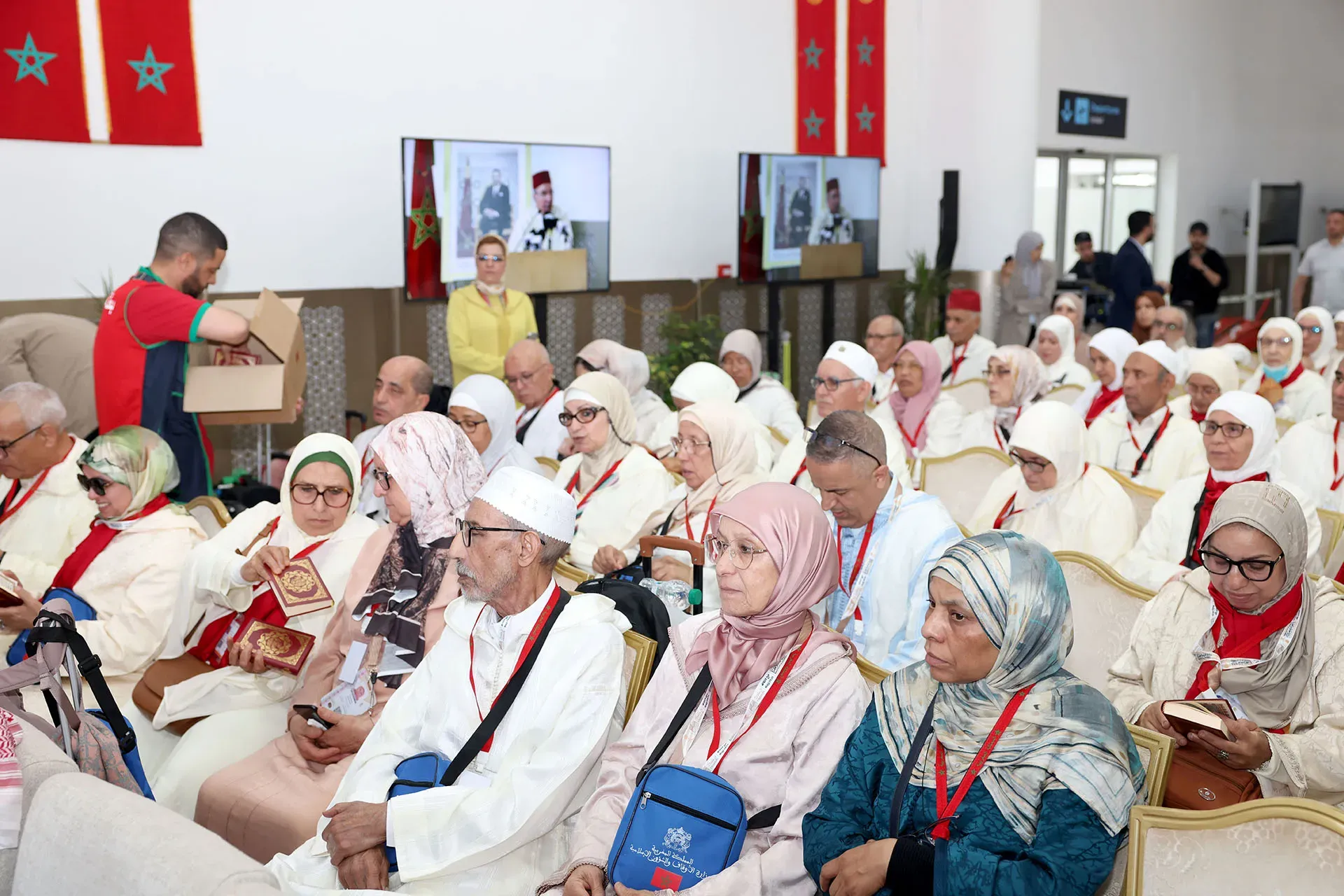
The Essence of Hajj in Moroccan Culture
The pilgrimage, or Hajj, holds a profound spiritual significance in the hearts of Moroccans, symbolizing a transformative journey from the constraints of sin to the expanses of forgiveness. It encapsulates not just a geographical transition from the western realms of the Islamic world to its eastern territories but also an essential spiritual odyssey. Since the advent of Islam in Morocco during the first century of the Hijra, the act of pilgrimage has been embedded in the collective consciousness of the Moroccan people. Historical records, traveler accounts, and the observations of Orientalists, along with texts detailing the various kingdoms and routes, affirm that Moroccans have traditionally embarked on this sacred duty, often traveling on foot, either individually or in groups. They undertake this sacred journey, which can last for months or even years, confronting the arduousness of the road and the threats posed by bandits with unwavering faith.
As they traverse treacherous paths, pilgrims face the harrowing risks of death, hunger, thirst, illness, and the potential for getting lost, challenging their endurance in a journey that cannot merely be measured by geographical distance or challenging terrains. Instead, it is measured by their ability to rise above the dangers of desolate lands and turbulent seas, striving for deeper spiritual connections as their souls often reach sacred sites before their bodies do. This profound relationship with the divine aids them in overcoming the obstacles that lie before them on their way to the sacred house of God. In this context, the barren desert transforms into a rich landscape filled with symbols guiding them towards divinity, facilitating a reconnection with their innermost selves and with God, making the pilgrimage a 'rebirth' that crowns the challenges of their journey.
The Organization of Moroccan Pilgrimages
In response to the perils of the pilgrimage route, organized caravans known as the 'Moroccan Hajj Caravan' emerged. These gatherings, referred to by historians as 'the Hajj caravan', 'the group of pilgrims', or 'the Prophetic caravan', were often named after the regions from which they departed, such as 'the Fez caravan', 'the Sijilmasa caravan', or 'the Marrakech caravan'. The first documented Moroccan Hajj caravan is the 'Salhi caravan', which journeyed from Asfi, Morocco, to Mecca and back. It was named after its founder, Abu Muhammad Saleh Al-Majri, a Sufi scholar born in 550 Hijri, who established lodges and sanctuaries between Morocco and Hijaz to protect pilgrims after many had adopted the principles of 'removing harm' and 'security is a prerequisite for obligation' due to escalating dangers.
Legal opinions emerged suggesting that the obligation of pilgrimage might be waived for the inhabitants of Morocco and Al-Andalus due to the perilous journey and lack of safety, as noted by scholars such as Ibn Rushd and Abu Bakr Al-Turtushi. Despite these challenges, the caravans continued for centuries, evolving into a social organization that transcended geographical and social boundaries. These caravans included pilgrims from various social strata, ranging from princes and scholars to judges, state officials, merchants, and common people, illustrating the essence of Hajj, where social distinctions fade, and equality becomes an existential experience that reconnects individuals to their purest moments.
This phenomenon resembles what British anthropologist Victor Turner referred to as 'communitas', denoting equality and solidarity during religious rituals, where individuals perceive themselves as part of a united community transcending class distinctions and narrow affiliations, striving towards a spiritual horizon where 'sacred symbols work to unify the moral spirit of the group'. The Moroccan caravan thus became a vehicle for building social solidarity and reproducing a shared consciousness among pilgrims of diverse backgrounds, where faith and belonging are renewed, and the collective strength is periodically rejuvenated.
Moreover, the values held by Moroccan pilgrims extended beyond solidarity among themselves; they also encompassed their fellow believers. Historical sources recount that Salah al-Din al-Ayyubi's army, during its conflict with the Crusaders, notably in the Battle of Hattin and the liberation of Jerusalem, was bolstered by Moroccans among its ranks, renowned for their steadfastness on land and prowess at sea. Following the French campaign, the people of Egypt looked towards the Hajj season for support from Moroccan pilgrims traveling by land from Cairo or by sea via Alexandria to assist them against Napoleon's forces.
Historical accounts reveal that Moroccan pilgrims arriving in Giza on 6 Dhu al-Qi'dah 1213 Hijri (April 11, 1799) sparked rumors among the populace, leading many to believe that twenty thousand Moroccans had come to liberate Egypt from the French. However, the actual caravan comprised only around 700 pilgrims, highlighting the fear instilled in the French commanders by this small group. This is corroborated by a letter from Cairo's Governor, General Dugua, to Napoleon Bonaparte, expressing grave concerns about rumors suggesting that the Moroccan residents in Egypt were conspiring, in collusion with the Moroccan caravan, to incite a rebellion against the French.
Napoleon ordered stringent measures against any Moroccans wishing to remain in Egypt, as indicated in his correspondence with the Cairo Governor dated August 14, 1799, emphasizing his apprehensions about the Moroccans and their quick removal from Egypt. Yet, the very next day, he received the head of the Moroccan caravan as they passed through Cairo, delivering a letter to the Sultan of Morocco at the time, Moulay Suleiman, filled with reverence and admiration. He expressed commitment to providing assistance to the pilgrims, demonstrating the complexities and fears surrounding the Moroccan presence during this period.
Thus, the Moroccan pilgrimage on foot is an integral part of the historical narrative between Morocco and the East, where the journey transcends mere obligation and encompasses noble goals such as scientific exchange, meeting fellow believers from diverse backgrounds, and offering their scholarly and military expertise in defense of their territories. This cultural and intellectual exchange has allowed Moroccan pilgrims to become woven into the social and cultural fabric of regions like Egypt, Hijaz, Palestine, and Greater Syria, facilitating a rich tapestry of mutual cultural enrichment and collaboration.
Ultimately, the pilgrimage embodies a profound spiritual journey where weary feet carry the light of meaning through the shadows of place, championing values of patience, compassion, humility, solidarity, equality, selflessness, and proximity to God. The journey of the pilgrim within the realm of Islam becomes a spiritual school and a humanistic movement, teaching the importance of living for others before oneself, allowing for encounters with the essence of self in a geography of the soul that elevates nothing above the divine.
As reported by aljazeera.net.