The Strategic Importance of Morocco in Franco-Moroccan Relations
As the Middle East navigates through one of its most perilous and unstable periods in recent decades, characterized by regional wars, energy tensions, threats to trade routes, and a resurgence of power dynamics, France is recognizing more than ever the significance of its historical partners in the Arab world and the Mediterranean basin. Among these partners, Morocco undeniably stands out.
This context gives full weight to the recent announcement of an upcoming state visit by King Mohammed VI to France in the coming months. This announcement was made on May 20 in Rabat by the Moroccan and French foreign ministers, Nasser Bourita and Jean-Noël Barrot. Furthermore, both capitals have confirmed the preparation of a future Moroccan-French treaty, described as a groundbreaking political and legal text intended to structure bilateral relations "for decades to come." A meeting of the Franco-Moroccan high joint commission is also scheduled to take place in Rabat next July, serving as further evidence of a significant acceleration in the rapprochement between the two nations.
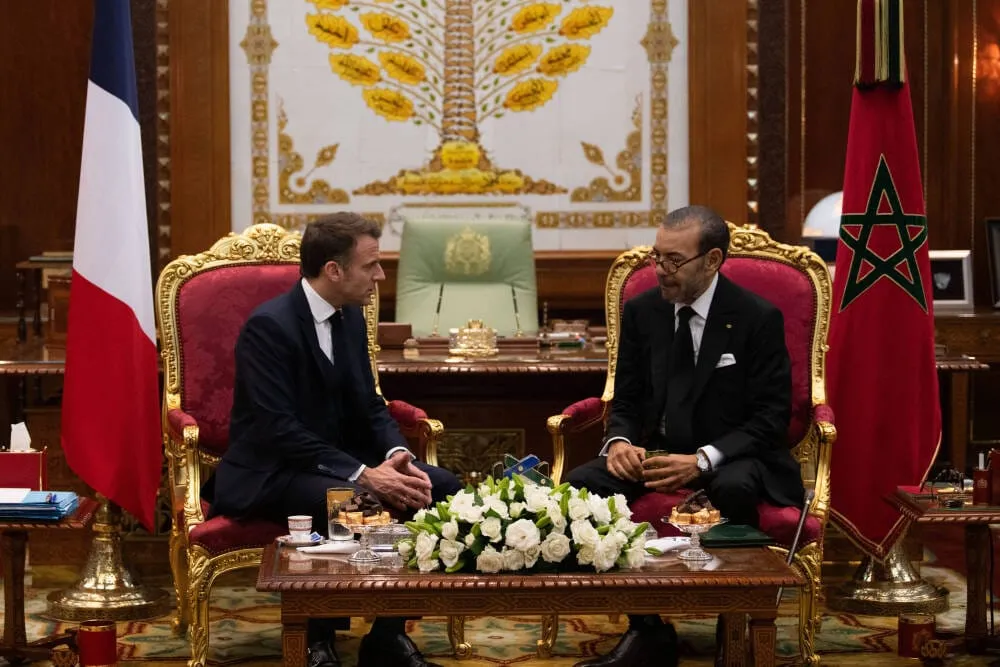
This announcement comes a year and a half after Emmanuel Macron's state visit to Morocco from October 28 to 30, 2024, at the invitation of the Moroccan monarch. Accompanied by a substantial political, economic, and cultural delegation, the French president aimed to open a new chapter in Franco-Moroccan relations following several years of diplomatic cooling. This visit marked a vital return to a strategic realism between Paris and Rabat, particularly in a global context where reliable alliances are becoming increasingly rare and fragile.
Reviving Strategic Realism in Franco-Moroccan Relations
In Rabat, the two heads of state signed a declaration that established a "reinforced exceptional partnership" between the two countries. Beneath the diplomatic terminology, this represented a true exclusive political treaty, innovative and significantly structuring for the future of both nations. The recent announcement of a future bilateral Franco-Moroccan treaty further confirms the intention to build a durable strategic relationship that far exceeds traditional sectoral cooperations.
Security, investments, energy transition, Africa, immigration, infrastructure, and industrial cooperation are just a few of the areas that Paris and Rabat have clearly prioritized in their agendas. French Minister Jean-Noël Barrot even highlighted that this future treaty would be the first of its kind concluded by France with a non-European country, underscoring the exceptional nature now attributed to the relationship with the kingdom.
This dynamic also reflects a profound shift in French strategic vision. In a context where the European Union often struggles to speak with a unified voice on major international issues, France has a vested interest in establishing a direct strategic bridge with Morocco, bypassing the cumbersome community frameworks, especially on security, economic, energy, and migration matters. Paris recognizes that Rabat represents much more than just a regional partner; it is an essential strategic anchor between Europe, Africa, and the Arab world.
One year later, the effects of this renewed relationship are already becoming tangible. The most notable marker is undoubtedly France's gradual repositioning regarding the Moroccan Sahara issue. After several years of diplomatic ambiguity and silent tensions between the two capitals, Paris has increasingly signaled its alignment with Rabat's positions. In his address to the Moroccan Parliament on October 29, 2024, Emmanuel Macron stated that "the present and future of the Sahara are framed within the context of Moroccan sovereignty." This significant declaration marked the definitive return of strategic rapprochement between the two nations.
However, this revival extends well beyond mere diplomatic concerns. The presidential visit of October 2024 resulted in the signing of approximately forty economic and strategic agreements worth over 10 billion euros in investments and joint projects. Initiatives in railway transport, green hydrogen, port infrastructure, sustainable agriculture, the automotive industry, energy, innovation, and academic cooperation clearly demonstrate Rabat and Paris's commitment to building a relationship geared towards the next thirty years.
Morocco is reaffirming its role as an indispensable strategic platform between Europe and Africa. The Tanger Med port, now one of the largest Mediterranean port hubs, symbolizes the rise of a kingdom that has understood the importance of logistics, trade corridors, and economic sovereignty in the future world.
The forthcoming royal visit of Mohammed VI to France is set to mark a new phase in this strategic consolidation. In the current climate of global tensions, France appears to have fully grasped that it can no longer afford to weaken its few solid partners in the Arab and African worlds.
The anticipated resumption of the Franco-Moroccan high joint commission, scheduled to convene in Rabat next July for the first time since 2019, sends a powerful signal in this regard. It demonstrates a clear political will from both sides to reactivate the institutional cooperation mechanisms that had gradually slowed down in recent years.
Security cooperation remains one of the essential pillars of this renewed relationship. In a context marked by the persistent threat of terrorism, migratory tensions, and Sahel instability, the exchanges between French and Moroccan services remain among the most effective and structured in the region. Over the years, Morocco has established itself as a central player in Euro-Mediterranean security, thanks to an approach that combines intelligence, territorial control, international cooperation, and institutionalized religious policy.
Beyond geopolitics, the Franco-Moroccan relationship is also grounded in an exceptional human reality. The connections between the diaspora, entrepreneurs, students, artists, cultural cooperation, and familial ties are among the strongest and most profound between any country and France. King Mohammed VI maintains a personal and constant interest in France, closely following its political life. This longstanding attachment partly explains the ability of the two nations to quickly rekindle dialogue despite past tensions.
This unique relationship between Paris and Rabat is not merely a temporary alliance dictated by immediate interests. There exists a shared historical memory, sometimes complex and often passionate, but deeply rooted over time. Morocco is not just a neighbor to the south; it has become one of the last reliable historical partners of Paris in the Mediterranean and African spheres.
Thus, the upcoming state visit of Mohammed VI to France could signify much more than a mere diplomatic thaw; it may herald the official entry into a new historical phase of Franco-Moroccan relations, founded on strategic realism, common interests, and a shared geopolitical vision of the forthcoming regional balances.
As reported by latribune.fr.