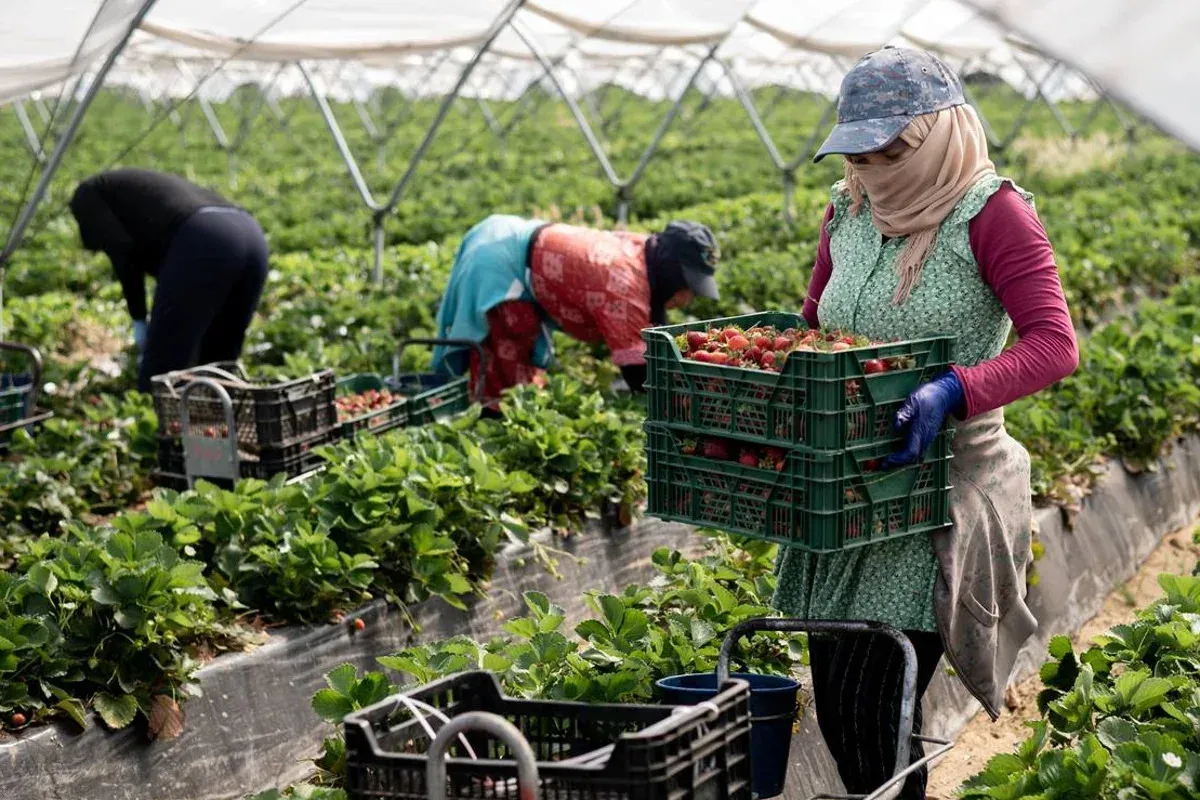
The plight of Moroccan seasonal agricultural workers in Huelva has once again come to the forefront following the tragic death of a worker identified as Hakima. This incident has sparked renewed outrage regarding the dire and often life-threatening conditions that countless migrant workers, particularly women, face in Spain's agricultural sector. Hakima, a mother of four from Sidi Kacem, Morocco, had only been in Spain for about 40 days to participate in the annual harvest season when she succumbed to heatstroke, a consequence of the extreme temperatures prevalent in the region.
Reports indicate that after returning from a strenuous work shift, Hakima completed her daily routine—showering, preparing food for her family, and going to bed—before she tragically passed away in the early hours of the morning. The Moroccan Union of Labor (UMT) highlighted the severe conditions under which these workers labor, pointing out that heatstroke had previously claimed the life of another Moroccan worker in 2019. The UMT, alongside the Andalusian Association for Human Rights (APDHA), has voiced vehement criticism regarding the inhumane working environments that exist within the agricultural sector, insisting that no individual should lose their life in pursuit of an honest living.
The APDHA has called on the authorities to prioritize health protection and occupational safety measures as essential, non-negotiable elements of labor rights. They stressed that Hakima's death should not be regarded as just another statistic but rather a wake-up call to the systemic issues plaguing agricultural labor. The UMT has condemned the continuous violations and discrimination faced by seasonal workers, expressing that the current state of affairs reflects a shocking disregard for human dignity and life.
In response to this tragedy, the UMT is demanding immediate action from the Moroccan Ministry of Employment and the National Agency for Employment Promotion (ANAPEC). They have called for stringent oversight of labor contracts in collaboration with Spanish authorities and adherence to international labor standards, particularly those set forth by the International Labour Organization (ILO) that protect against violence and discrimination in the workplace. The urgency of addressing the living and working conditions of rural women in Morocco also remains a significant concern, as many are forced to migrate in search of better opportunities, often under perilous circumstances.
In light of Hakima's passing, social organizations and labor rights activists are actively working to reach out to her family in Sidi Kacem. Their objective is to provide support in navigating the aftermath of this tragedy, including obtaining necessary medical documentation and exploring potential legal recourse. Advocates argue that this incident cannot be viewed in isolation, as it underscores the myriad challenges faced by migrant workers, including long hours, oppressive heat, inadequate housing, and the precarious nature of their immigration status. They are appealing to anyone who may have connections to Hakima's family to assist in this outreach effort.
Hakima's untimely death has left four children without a mother, prompting rights organizations and labor unions to urge both public authorities and agricultural enterprises to bolster labor and health protections to avert further tragedies in Spain's fields. The fight for better conditions and the protection of migrant workers' rights continues as stakeholders push for systemic change and accountability.
As reported by moroccoworldnews.com.