
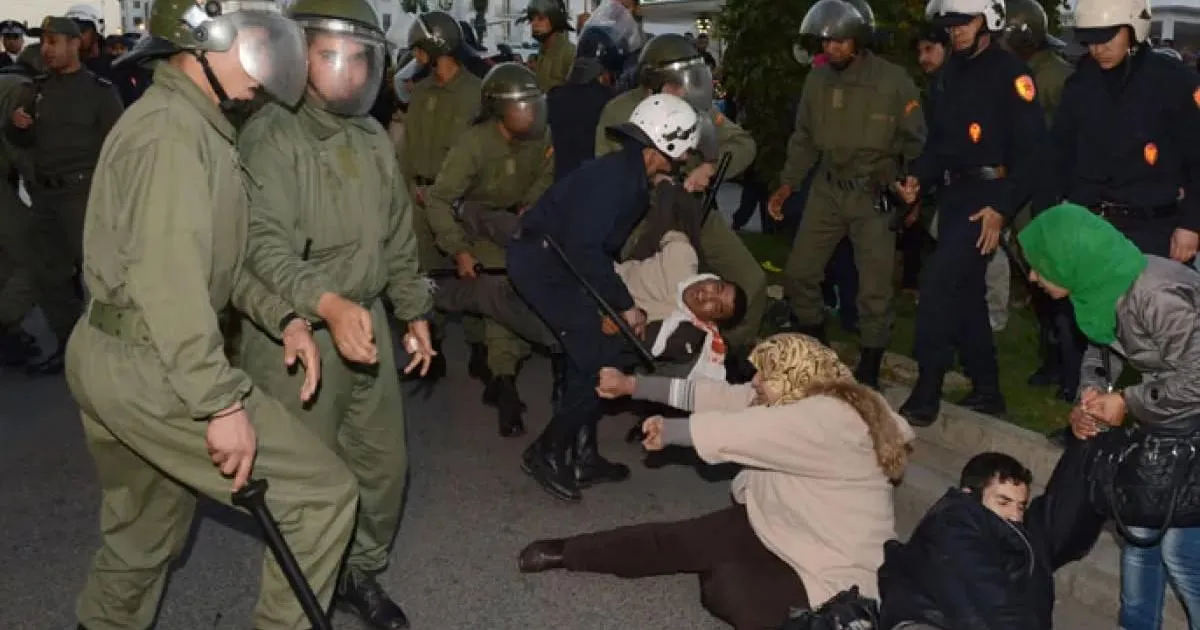
In recent days, numerous villages and rural areas across Morocco have witnessed significant protests and demonstrations despite government repression and security limitations. These mass movements are a reaction to the systemic marginalization, injustice, and dire living conditions faced by the people, alongside the escalating water crisis resulting from mismanagement of the nation's water resources.
Among the most notable protests reported by media outlets is the ongoing public outrage in the villages of the Azilal region. Residents from several villages undertook long marches towards local government offices, voicing their grievances against isolation, deteriorating road conditions, the difficulty of obtaining construction permits in rural areas, and the absence of basic necessities for a dignified life. The security forces attempted to encircle and block the march at a narrow mountain pass; however, the protesters remained resolute, threatening to organize further demonstrations until the hardships in their region are addressed.
In addition, residents of Ait Imdiwal and Ait Mansour in the same region also organized marches, with Ait Imdiwal experiencing a significant demonstration followed by another in Ait Mansour and yet another in the area of 'Al-Masa' last Thursday. Unique protest methods were employed by the residents of the mountainous Douar Tilmi in the Midelt region, who conducted a collective march on donkeys and mules, navigating the rough terrain while expressing their discontent over the poor state of the road connecting Imilchil to Tounfit, which they have dubbed the 'road of death.' The demonstrators also voiced frustrations over the inadequate and often non-existent telephone and internet services in the area.
Among the harrowing scenes circulated by media and social networks was the case of a pregnant woman in critical health being transported in traditional means in the Ahançal area of Azilal, highlighting the struggles faced by residents in these regions. A video that circulated widely depicted the woman's family and companions relying on a wooden coffin, typically used for transporting the deceased, as an ad-hoc means of transportation due to the rugged mountain paths that rendered timely ambulance access impossible. This shocking image has drawn widespread condemnation from citizens, emphasizing the stark disparities in development across the country amidst rampant corruption and the oppressive nature of government authorities.
Moroccan human rights organizations have condemned the recurrence of such incidents in Azilal and other regions, indicating a structural issue that transcends individual accidents, confirming the inadequacies of healthcare services and the limited availability of emergency medical transport in mountainous areas. They assert that the street protests in Morocco are not merely fleeting; rather, they represent a genuine cry of anguish against marginalization. This situation pertains to the most basic elements of human dignity, and these public demonstrations reveal a painful reality endured by many regions within the kingdom.
The organizations criticized the security repression tactics employed by the government in response to these protests, emphasizing that the demands raised by the demonstrators are neither unreasonable nor extravagant. They merely reflect the fundamental requirements for a decent life, which are guaranteed by various international human rights laws and agreements. It is unacceptable, they argue, for citizens to be compelled to take to the streets to demand access to safe roads, schools, and hospitals while substantial budgets are allocated to projects that do not serve the genuine priorities of the populace.
The 'water crisis' and frequent interruptions in drinking water supply continue to plague vast areas of Morocco, including Berrechid, Settat, Khmisat, Boulemane, Taounate, and Kenitra, despite winter rainfall. This situation is attributed to the government's poor management and its ongoing waste of water resources, which are being exploited by foreign entities at the expense of the nation's water security.
As reported by entv.dz.