Eid al-Adha: A Sought-After Celebration
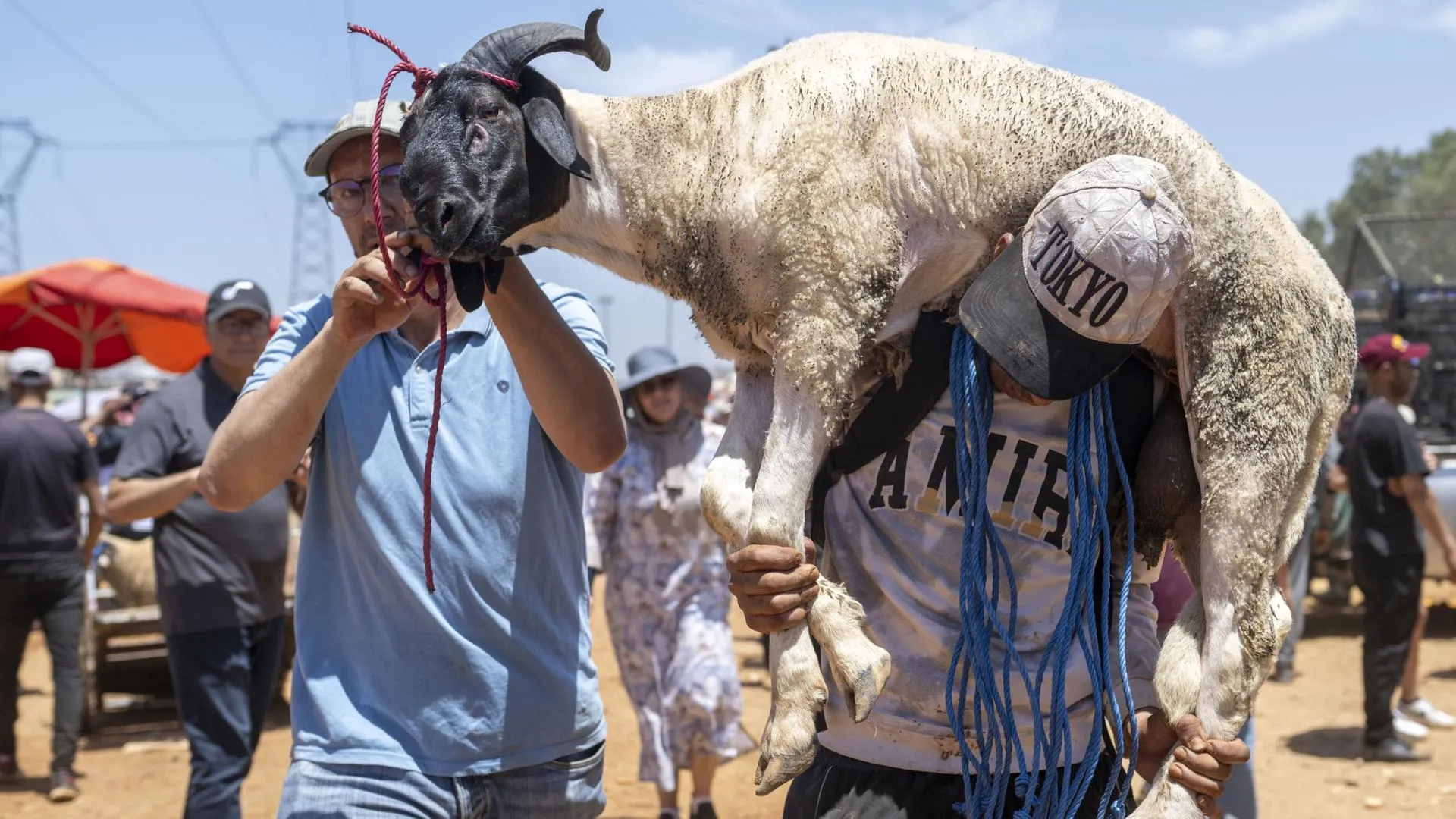
Muslims around the globe are joyously observing Eid al-Adha today, a significant Islamic festival marked by the tradition of sacrifice. In Morocco, this year’s celebration is particularly special, as it can be conducted once again, thanks to a plentiful supply of sheep. Unlike last year, when the festivities were curtailed due to severe drought, the atmosphere is vibrant with excitement and hope.
Mustafa, a local shepherd, stands proudly with his flock of sheep nestled in the shade of a house, surrounded by a small hedge of branches. The animals are quietly munching on blades of grass, awaiting potential buyers. Mustafa has transported 100 sheep from the mountainous regions of Morocco to this coastal area in a small truck. As he grips one of the sheep by its horns, he confidently states, “This one costs about 2,500 Dirhams,” which is roughly equivalent to 250 Euros. He is optimistic that by the time Eid al-Adha arrives, all his sheep will be sold, as the high-quality meat sourced from the mountains is in great demand among local customers.
The sale of sheep during this festive period constitutes a significant portion of Mustafa’s annual income, providing him with the means to cover expenses for animal feed, veterinary care, and his own livelihood. Across Morocco, there is a palpable sense of relief and joy as the populace prepares to celebrate this year’s Eid al-Adha without the restrictions faced in the previous year, a decision made by the king in response to the lack of livestock due to the extreme weather conditions.
Tradition and Community in the Time of Eid
Zara, a resident of the desert town of Jorf, is also in search of a suitable sheep for her family. “There are three of us in the family. Thank God, things are better than last year. There is plenty of feed for the livestock,” she remarks, reflecting the improved conditions. The livestock population in the country has rebounded, with government officials, including Prime Minister Aziz Akhannouch, announcing that there are approximately 33 million sheep available, potentially rising to 40 million—a record for Morocco, underscoring the nation’s high production levels.
Last year, Moroccan Muslims faced the unfortunate reality of sacrificing sheep during Eid al-Adha due to the drought, which severely limited the available livestock. The act of slaughtering an animal for Eid holds deep religious significance in Islam, symbolizing faith and obedience. As sociologist Rachid Touhtou explains, the tradition originates from the story of Ibrahim, who, according to the Quran, was commanded to sacrifice his son. In lieu of his son, God provided a sheep from the heavens, leading to the establishment of this enduring custom.
Beyond its religious implications, Eid al-Adha is a celebration of sharing and family. Many individuals travel to rural areas, leaving the cities largely deserted, with shops, restaurants, and banks closed for the holiday. This year, the number of pilgrims and celebrants has even surpassed that of the previous year, showcasing the resilient spirit of the community.
Side Muh Quadiri, who emigrated from Morocco to Germany over 30 years ago, fondly recalls the magic of these days when his entire family would gather in the south of Morocco. “It was particularly special when it fell during the summer. We would gather on rooftops with kerosene lamps, creating beautiful memories that will always hold a special place in my heart,” he reminisces.
Today, millions of Muslims worldwide, whether in Wuppertal, Rabat, Jorf, or the mountains of Morocco, are united in celebration, exchanging heartfelt greetings of 'Eid Mubarak'—a traditional salutation for this cherished festival.
As reported by tagesschau.de.