Financial Overview and Beneficiary Demographics
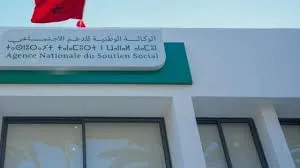
Since its launch in 2023, Morocco's Direct Social Support Program has disbursed a staggering total of 51 billion dirhams by the end of 2025. According to the final report from the National Agency for Social Support, approximately 4 million families have benefited from this program during this period, with an impressive 60% of these families coming from rural areas. This initiative highlights the government's commitment to addressing poverty and providing necessary support to vulnerable populations. Notably, financial assistance aimed at protecting children from various risks accounted for a significant 64.2% of the total funds, benefiting about 5.5 million children from 2.45 million families.
Furthermore, the amounts allocated for the targeted assistance reached 18.2 billion dirhams, specifically aimed at 1.47 million families. This assistance package includes 1.7 million elderly individuals, reflecting the program's broader goal of safeguarding against the risks associated with aging as well. The agency emphasizes the effectiveness of the targeting system implemented through the Unified Social Register, which has shown a concentrated effort to support vulnerable groups, as cumulative data by the end of December 2025 indicates that 84% of beneficiaries belong to lower-income social classes.
Geographical Distribution of Support and Performance Indicators
The report also notes that densely populated regions have captured a significant share of beneficiaries, with regions such as Marrakech-Safi accounting for 16.1%, Fez-Meknes at 15.7%, and Casablanca-Settat at 13.7%. This concentration is closely linked to the high levels of multidimensional poverty observed in some of these areas, particularly in rural and semi-urban settings. Thus, the geographical distribution of beneficiaries showcases an interaction between demographic determinants and socio-economic factors, as stated in the report. However, there are notable disparities between regions when it comes to the types of assistance provided. The targeted assistance is most prevalent in the Souss-Massa region, where it accounts for 42.5% of the total beneficiaries, followed by Drâa-Tafilalet at 41.3% and Guelmim-Oued Noun at 39.8%.
In contrast, the assistance dedicated to child risk protection is predominantly concentrated in urban and densely populated areas, particularly in Casablanca-Settat at 68.9%, Marrakech-Safi at 65.4%, and Tangier-Tetouan-Al Hoceima at 64.6%. Regarding performance indicators, the acceptance rate of applications has significantly increased from 45.5% at the program's inception in December 2023 to an impressive 91.9% by the end of 2025. This rise can be attributed to improved outreach and efficiency in processing applications. Conversely, the rejection of applications is predominantly due to a 61% rate linked to changes in the family's social and economic status.
In this context, the agency clarified that 42% of rejections stem from enrollment in family compensation systems under new professional statuses, while 19% are related to surpassing the economic and social threshold. Interestingly, demographic factors such as changes in family composition or characteristics of its members account for a smaller proportion of rejection cases. Overall, the Direct Social Support Program exemplifies a robust mechanism for redistributing resources and fostering social justice in Morocco.
As reported by ahdath.info.