Advancing the Dialogue on Accountability for Local Elected Officials
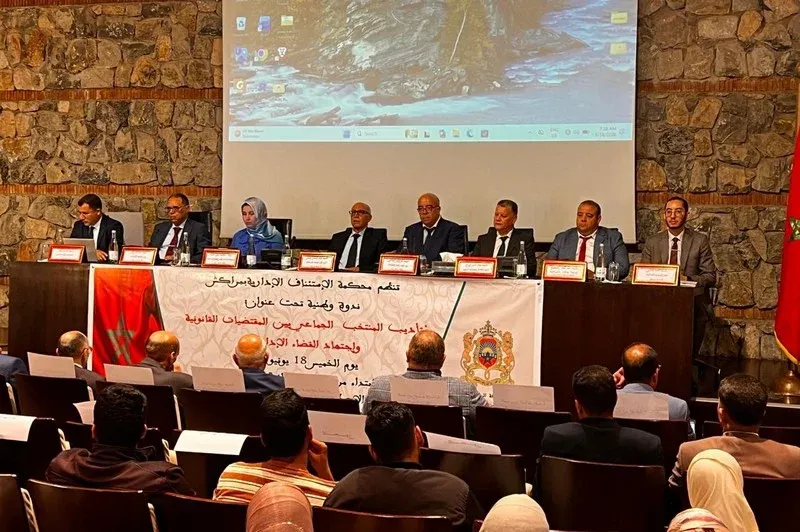
On June 19, 2026, a national scientific conference was held by the Administrative Court of Appeal in Marrakech, focusing on the pressing issue of disciplining local elected officials. The participants underscored the importance of continuing both academic and judicial discussions surrounding this topic, which is seen as crucial for establishing good governance and fostering trust in elected institutions. The conference highlighted that enhancing judicial interpretations and refining the legal framework governing the discipline of elected officials are essential steps towards protecting public funds, promoting ethical public life, and reinforcing the principles of good governance.
The Role of Administrative Judiciary in Reform Initiatives
During the conference, various speakers emphasized the pivotal role that administrative judiciary now plays in supporting Morocco's institutional reform efforts. They noted the judiciary's contributions to establishing the rule of law, safeguarding public assets, and enhancing public ethics, all while embedding good governance principles and strengthening local democracy. Abdessalam Naâni, the president of the Administrative Court of Appeal in Marrakech, elaborated on the Moroccan legislator's commitment to building a comprehensive disciplinary and oversight system aimed at protecting public services and ensuring sound management of public funds. This system is designed to balance the autonomy of elected councils in managing local affairs with the necessity of holding them legally accountable whenever breaches of duty or misconduct occur.
In his opening remarks, Naâni highlighted how the Moroccan constitutional framework has established the principle of free management for local communities as a significant aspect of advanced decentralization. It also includes effective legal and judicial mechanisms to ensure compliance with legality and to hold officials accountable, which is a cornerstone for promoting ethical public administration and protecting the principle of free management for local authorities.
The first scientific session of the conference addressed several legal issues relating to the oversight of local elected officials by financial courts, distinguishing between managerial errors and the crimes of misappropriation and embezzlement of public funds. It also focused on holding local officials accountable for financial management violations and the impact of disciplinary penalties on local governance and public administration quality. Participants discussed the evolution of judicial oversight in the disciplinary matters concerning local elected officials, alongside examining the legal guarantees available to heads of local councils when faced with various oversight and disciplinary measures.
Furthermore, the second scientific session delved into legal and practical complexities associated with the dismissal and deprivation of membership from local councils. It involved an analytical review of judicial interpretations issued by administrative courts and the Court of Cassation. The session's agenda included discussions on dismissal from delegated tasks due to conflicts of interest, deprivation of leadership and membership in local councils, and the implications of dismissal and removal decisions on electoral eligibility and candidacy for upcoming elections. Legal frameworks governing the dissolution of local councils and the removal of elected officials were also thoroughly examined.
This scientific initiative aligns with the ongoing transformations within Morocco's decentralization system and the challenges associated with local governance. It emphasizes the need for transparency, integrity, and accountability, especially in light of the expanding responsibilities of local authorities, which necessitate the development of legal and judicial oversight mechanisms over the actions of elected officials.
As reported by hespress.com.