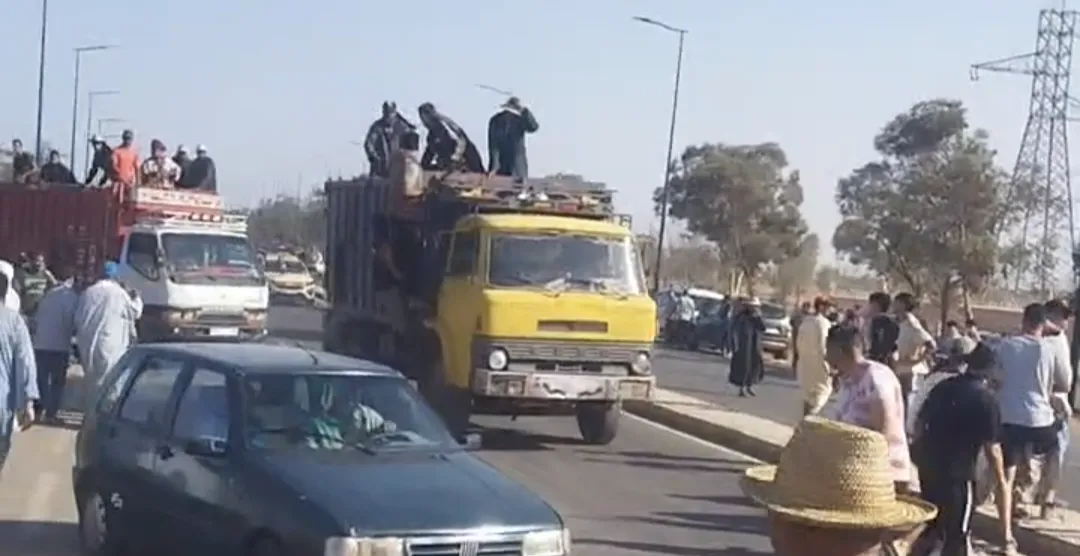
Unprecedented Social Tensions in Marrakech's Livestock Market
On May 26th, a chaotic scene unfolded at the "Dar Tunis Awlad Karan" market on the outskirts of Marrakech, revealing the intense social unrest that has engulfed this year's sacrificial animal markets. The morning was marked by heated verbal exchanges between frustrated citizens and intermediaries, escalating into stone-throwing amidst an unprecedented atmosphere of agitation caused by soaring sheep prices and a severe shortage in supply. This turmoil reflects a broader sentiment among many Moroccan families, particularly in Marrakech and its vicinity, who find themselves increasingly disheartened and unable to afford a sacrificial animal for the upcoming Eid celebrations. Most markets have become almost devoid of sheep, while prices have reached what many are calling "astronomical" levels, far exceeding the purchasing power of average and low-income families.
In recent days, hundreds of citizens have scoured markets in Rahamna, Qalaat Seraghna, Chichaoua, and Al-Haouz in search of reasonably priced sacrificial animals, yet the majority returned empty-handed due to the combination of low supply and unprecedented price hikes. This has deepened feelings of dissatisfaction and frustration among citizens who are confronted with a reality that starkly contrasts the official statements made prior to the opening of the sacrificial markets. The current situation brings to light remarks made by the Minister of Agriculture about a week before the markets opened, where he assured the public that sheep would be available at prices around 1,000 dirhams, as part of government assurances regarding the abundance of the national flock. However, the on-ground reality today presents a completely different picture, where finding a sheep at that price has become nearly impossible, while the prices of several animals have surpassed record levels.
Public Concerns Over Livestock Availability and Government Support
Growing questions circulate among the Moroccan public regarding the veracity of the figures promoted in recent months, particularly claims about the availability of around 40 million sheep. In stark contrast, the markets of Marrakech and several other major cities are experiencing what can only be described as an "exceptional" situation characterized by low supply, high prices, and widespread chaos and unrest. Observers argue that the financial support and customs and tax exemptions provided by the government for sheep importers have not translated into favorable selling prices for the average Moroccan consumer. Instead, they contend that this support has become "opaque," benefiting middlemen and speculators far more than ordinary families, amidst a lack of stringent oversight on distribution channels and pricing.
Many citizens and stakeholders are calling for an urgent and transparent investigation to clarify the state of the national livestock, reveal the fate of public subsidies directed towards the sheep importation sector, and to hold accountable those responsible for the discrepancies that have ignited an unprecedented wave of anger within Morocco's sacrificial animal markets.
As reported by jamaalfnapress.ma.