Recently, the political landscape in Morocco has witnessed notable movements among opposition leftist parties, aiming for electoral and political coordination. This initiative marks a new attempt at uniting the left, whose history has often been characterized by fragmentation rather than cohesion. In a significant development, the "Democratic Left Federation," the Unified Socialist Party, and the Democratic Way Party convened their political bureaus on May 22, where they agreed to launch joint grassroots initiatives in the upcoming phase. These efforts will kick off with a national festival focused on the issue of political imprisonment, demanding the release of all political detainees and those imprisoned for their opinions, as well as an end to politically motivated prosecutions and respect for fundamental rights and freedoms, coinciding with the anniversary of the June 20, 1981 uprising in Casablanca.
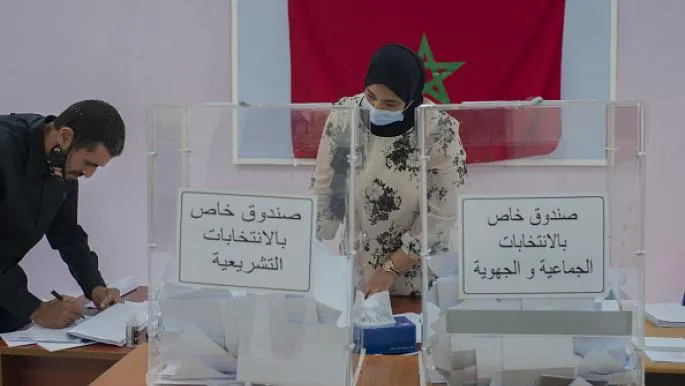
For years, the Moroccan left has struggled with fragmentation and weakness. The three parties have renewed their call for all democratic, rights-based, and civil forces to engage in a broad unifying struggle in defense of public freedoms and rights, with a particular emphasis on the Moroccan people's right to freedom, dignity, democracy, social justice, and genuine equality. The recent meeting, which occurred after nearly two decades, underscores the three parties' determination to pursue a unified struggle against corruption and authoritarianism. This initiative follows the announcement of an electoral alliance between the "Democratic Left Federation" and the Unified Socialist Party on May 12, in preparation for Morocco's upcoming legislative elections scheduled for September 23. This alliance could potentially enhance the left's prospects in the forthcoming parliamentary landscape.
Symbolic Significance and Challenges Ahead
The announcement of coordination among the "Democratic Left Federation," the Unified Socialist Party, and the Democratic Way Party (which is not represented in parliament) raises numerous questions regarding the implications of this step, especially given past experiences that ended in failure. In this context, political and rights activist Mohamed Al-Ghafri noted that the tripartite meeting represents significant political and symbolic meaning, particularly as it comes at a politically and socially sensitive time in Morocco. He explained that the gathering transcends temporary coordination or fleeting party activities, raising the pressing question of unity and collective action among the Moroccan left as a national necessity imposed by the nature of the current phase and its multiple challenges.
Al-Ghafri emphasized that the timing of this meeting coincides with increasing rights and social regressions, a continued crackdown on public freedoms, a rise in political prosecutions, and deteriorating living conditions for large segments of the population due to rising costs of living, alongside growing economic instability and widening social gaps. These circumstances make it more urgent than ever to unify democratic and progressive efforts. He further highlighted the importance of expanding this dynamic to include the social extensions of the three parties within human rights, labor, cultural, student, and women's movements, as well as various progressive networks advocating for rights and freedoms. Al-Ghafri asserted that the true value of this initiative lies not only in the content of the joint statement but also in the political message conveyed by this historic meeting after years of distance within the leftist scene.
A True Test for the Left
Additionally, Rashid Lazrak, president of the North African Center for Studies and Research on Public Policy Evaluation in Morocco, remarked that the left's current plight is not only about its electoral alliances but also about its ability to transform those alliances into a clear political and social project capable of addressing society in a new, convincing language. Lazrak indicated that the left faces a real test of its capacity to reclaim its role as a force of proposal and resistance, presenting itself as a third option between social conservatism, which hinders modern transformation, and rampant capitalism, which reduces citizens to mere market and consumption logic.
Lazrak asserted the continuing necessity for a democratic, social, modern left that favors popular classes, a need that has become even more urgent in light of expanding social disparities, declining trust in politics, and weakened party mediation. He emphasized that what is required today is a renewal of language, leadership, methods of operation, and mechanisms for engaging with citizens, along with the development of a concrete program that addresses issues such as employment, health, education, housing, social justice, and dignity. Citizens are not merely seeking a party to protest on their behalf; they are looking for a political force that offers understandable and executable solutions that connect critique with proposals, and ethical stances with political effectiveness.
Thus, the left's challenge in the upcoming phase lies not merely in announcing alliances but in transforming them into a broad societal dynamic. Lazrak argued that emerging from this crisis requires not only organizational unity but also rebuilding trust with popular classes, linking everyday leftist discourse with the lived experiences of people, and transforming the alliance from a mere electoral arrangement into a political horizon that re-establishes the significance of politics as a defense of justice, freedom, and dignity.
As reported by alaraby.co.uk.