Morocco's Strategic Acquisition of Akinci Drones
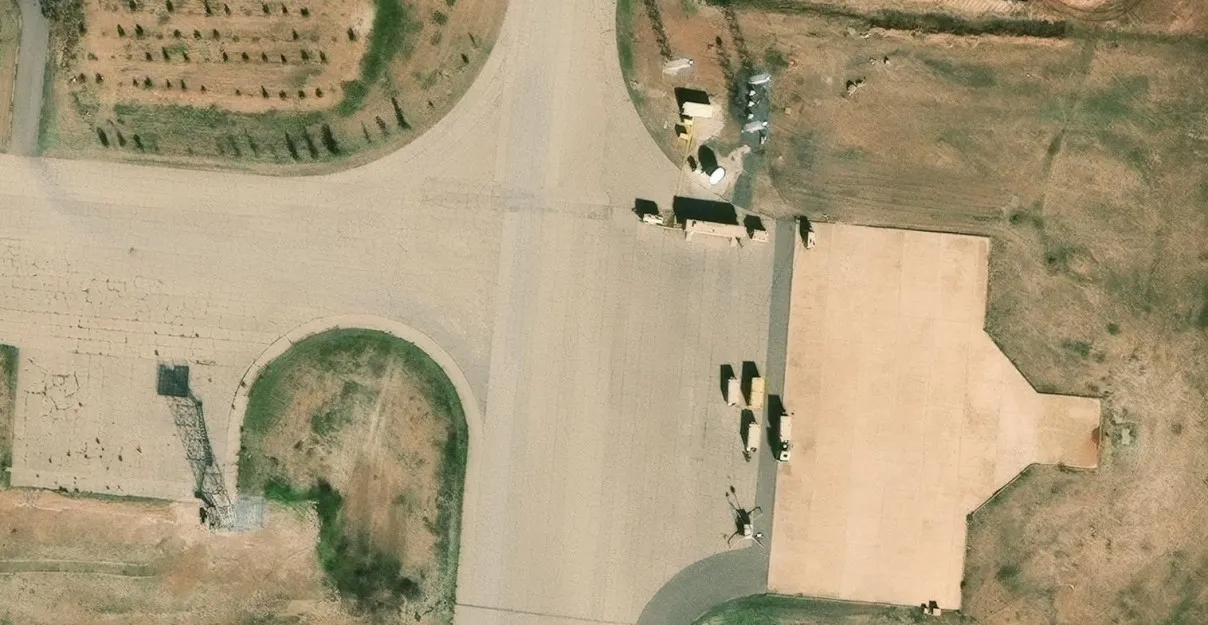
Recent satellite imagery has confirmed earlier reports regarding Morocco's acquisition of the Turkish Akinci drone manufactured by Baykar, showcasing their deployment at the Sixth Air Base in Ben Guerir, which also houses Morocco's fleet of F-16 Block 52+ fighters. These visuals verify that Morocco received these drones at the beginning of the previous year and subsequently integrated them into operational service at the base alongside the Bayraktar TB2 drones. The images further indicate the establishment of necessary infrastructure to support these systems, including integrated ground equipment that ensures high operational readiness. This marks a significant new phase in military cooperation between Rabat and Ankara, aligning with Morocco's strategy to bolster its military arsenal and modernize its defense capabilities.
The development of Moroccan-Turkish military cooperation in the realm of unmanned aerial vehicles (UAVs) reflects a structured and timely planning process. The initial deliveries of Bayraktar TB2 drones commenced in September 2021, and satellite images confirm that the first operational system of these aircraft was put into service at the Ben Guerir base that same month. Reports further suggest that the first deliveries of the Akinci drones began in late February 2025, with satellite imagery confirming their deployment at the same base between March and April 2025. Currently, Morocco boasts a significant arsenal of Bayraktar TB2 drones; it initially ordered 13 units in April 2021, a number that later increased with additional orders to exceed 20 units, all delivered by 2024. The deployment of these systems at the Ben Guerir base indicates it may serve as the primary logistical maintenance hub and ongoing training site.
Strategic Implications and Future Developments
While the satellite images do not display the drones themselves, they reveal components and ground equipment designated for control management, communications, and logistical support. The imagery clearly shows the ground data station, equipped with high-frequency communication and tracking antennas for line-of-sight (LOS) operations, along with two distinctive mobile ground control stations that manage the operations of both the TB2 and Akinci drones. Additionally, the images feature mobile power generation units and logistical support trailers, which are deemed essential for sustaining field operations. A critical component highlighted in this context is the satellite communications (SATCOM) station. These satellite communication antennas are vital for operating the Akinci drone and controlling it beyond visual line of sight (BLOS), enabling Morocco to conduct intelligence and strike missions across vast geographic areas, ensuring comprehensive coverage of its southern borders and extensive desert regions without requiring operators to approach threat zones.
One of the most notable developments accompanying the global operational entry of the Akinci drone is its capacity to engage aerial targets, a milestone recently documented in Sudan. A video captured an Akinci drone (presumably Ethiopian or Emirati) being filmed by another Sudanese Akinci drone, from which air-to-air munitions were launched, resulting in the downing of the hostile drone. This munition is likely the EREN, a high-speed loitering munition manufactured by the Turkish company Roketsan, boasting a range of over 100 kilometers and capable of being launched from both air and ground platforms. Its guidance system integrates mid-course navigation via GNSS/INS with an infrared image seeker (IIR) and automatic target recognition technology using artificial intelligence algorithms, allowing the operator to search, confirm identification, abort, or repeat the attack. This incident represents the first documented case of one drone downing another using guided munitions, indicating that Morocco's drone fleet is evolving beyond merely targeting ground objectives to include active air defense capabilities, thereby fundamentally altering modern engagement rules.
Looking ahead, there are plans to equip the Akinci drone with an AESA radar model MURAD 100-A, developed by the Turkish company Aselsan, which will enable the UAV to conduct precision strikes against aerial, terrestrial, and maritime targets. The operational impact of this radar is amplified when integrated with short-range air-to-air missiles such as BOZDOĞAN, which have a range exceeding 25 kilometers, and the GÖKDOĞAN missile, designed for beyond-visual-range (BVR) combat with a range greater than 100 kilometers. The integration of this radar into the Akinci will significantly enhance its intelligence and attack capabilities beyond what has recently been observed in Sudan with the EREN munitions, further strengthening Morocco's deterrence capabilities. Additionally, these drones are likely to be equipped with Turkish electro-optical systems such as the ASELFLIR-500, capable of detecting targets at distances exceeding 80 kilometers and laser-designating them from at least 20 kilometers away. While it remains unconfirmed whether Morocco has opted for the Canadian MX-20 system or the Turkish ASELFLIR-500 (exported to 14 countries, including Azerbaijan and Croatia), both systems offer exceptional precision observation capabilities.
The Akinci drone is distinguished by its ability to fly continuously for 24 hours at altitudes exceeding 12 kilometers, placing it outside the reach of most short-range air defense systems. Furthermore, it possesses an offensive payload capacity of up to 1.5 tons, which in the future may include cruise missiles such as Çakır and SOM, with a range of up to 250 kilometers; it can currently launch supersonic ballistic missiles like the IHA-230, boasting a range exceeding 150 kilometers, in addition to laser-guided smart bombs of the MAM-L and MAM-T models.
Morocco's defense relationship with Turkey extends beyond merely importing high-tech systems. It also encompasses the establishment of a joint defense industrial platform in the Benslimane region in collaboration with Turkish company Baykar. This initiative aims to reduce dependence on imports and strengthen Morocco's national defense industry through the Atlas Defense company, which is partnered with Baykar. Announced in late 2024, this venture is set to specialize in the design, manufacturing, development, and maintenance of UAVs and related defense systems, seeking to expand its presence in the Moroccan market in the face of Israeli competition. This strategic orientation provides Morocco with a long-term advantage, establishing a local technological base capable of maintaining, developing, and manufacturing components for these systems in the future, rather than merely serving as a consumer.
The adoption of the Akinci system by Morocco carries multifaceted strategic dimensions. On one hand, it enhances the country’s ability to monitor its southern borders along Mauritania and the desert areas where security challenges are increasing; on the other hand, it serves as a deterrent against potential military movements amid regional tensions with Algeria and the Polisario Front. This advancement comes at a time when Morocco seeks to intensify intelligence cooperation with its NATO allies, providing precise data obtained through next-generation cameras and radars. The Akinci represents a qualitative leap in the realm of unmanned aerial vehicles, combining intelligence, surveillance, and reconnaissance (ISR) capabilities with the ability to execute precision strikes from safe distances outside of air defense reach, thereby increasing the flexibility and effectiveness of military operations.
In conclusion, all indications point to the integration of Akinci drones into the Moroccan Armed Forces representing a new phase in the modernization of national defense, which will likely continue with even more advanced systems, such as the Bayraktar KIZILELMA, an unmanned combat aircraft with a radar cross-section design aimed at reducing detectability. While this development highlights the advancements in technological capabilities acquired by Morocco, economic and technical challenges remain, particularly concerning the long-term sustainability of these systems and the need to reduce external dependency in the future. Nonetheless, the current trajectory, focused on combining the acquisition of advanced systems with the localization of military industries, suggests that Morocco aims to establish a robust deterrent capability in a changing regional and international environment. As reported by defensa.com.