
The Transformative Approach of Morocco in the Western Sahara Conflict
The dispute over the Moroccan Sahara has emerged as one of the most enduring territorial conflicts in the realm of postcolonial international relations. In the past two decades, however, Morocco has dramatically shifted its methodology concerning this contentious issue. Rather than merely leaning on historical claims or legal arguments, the Moroccan government has embraced a multifaceted approach that intertwines diplomacy, economic development, governance, security collaboration, and the building of international coalitions. This strategic evolution highlights Morocco's adeptness at navigating complex geopolitical landscapes while reinforcing its national interests.
This analysis posits that Morocco's approach to the Western Sahara conflict epitomizes contemporary statecraft, wherein foreign policy objectives are pursued through a sophisticated amalgamation of domestic governance and international diplomacy. By exploring various theoretical perspectives such as realism, constructivism, and foreign policy analysis, it becomes evident how Morocco has transitioned the global dialogue from a focus on decolonization to a more nuanced conversation centered on autonomy, regional stability, and pragmatic geopolitics. The findings suggest that Morocco's increasing diplomatic accomplishments stem not only from external geopolitical shifts but also from its capacity to harmonize internal political legitimacy, economic growth, and global partnerships into a cohesive long-term strategy.
Strategic Statecraft: Realism and Constructivism in Moroccan Foreign Policy
Few issues have shaped Moroccan foreign policy as profoundly as the Western Sahara conflict. Following Spain's withdrawal from the territory in 1975, this dispute has become central to Morocco's diplomatic efforts and national identity, influencing relations with neighboring Algeria and shaping its alliances with Western powers. While traditional analyses often view the conflict through a purely legal or territorial lens, such interpretations fail to recognize the strategic complexities involved. Over the past two decades, Morocco has transformed its conflict management approach, moving beyond mere sovereignty defense to creating political, economic, and diplomatic conditions that enhance the credibility and acceptability of its proposed solutions on the international stage.
From a realist perspective, Morocco's strategy underscores its prioritization of national security and political stability, viewing territorial integrity as a core element of survival in a chaotic international landscape. The Moroccan government perceives control over the Sahara not merely as a national symbol but as a strategic necessity, given the region's geopolitical significance. Concurrently, constructivist insights reveal that Morocco actively seeks to shape international perceptions through a narrative emphasizing historical legitimacy, national unity, and regional stability. By framing the Western Sahara issue as one of territorial integrity rather than self-determination, Morocco endeavors to establish a political legitimacy narrative within foreign institutions and international policy circles.
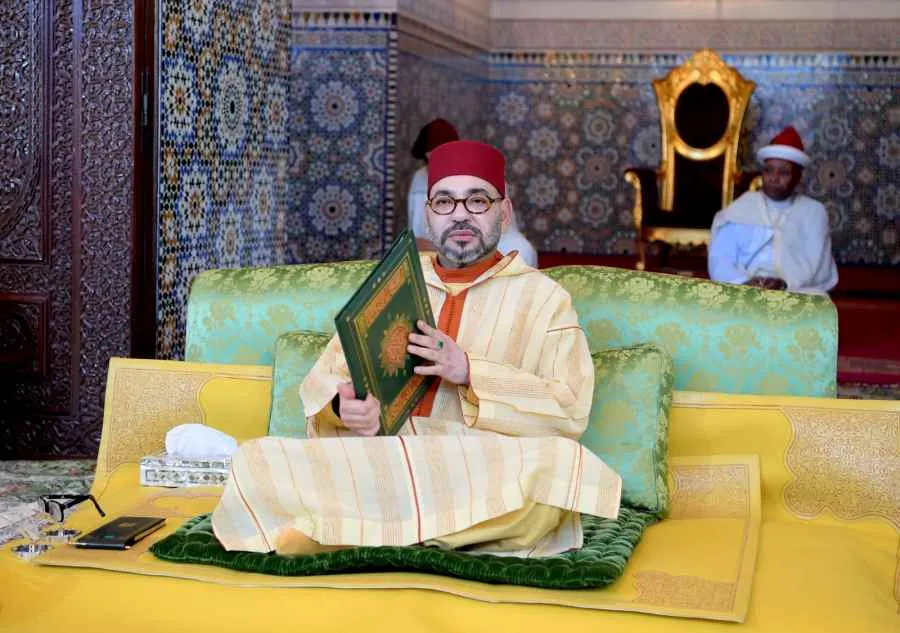
Moreover, an analysis of Moroccan foreign policy reveals that domestic political structures significantly influence the nation's external behavior. The Moroccan monarchy plays a pivotal role in maintaining a consistent foreign policy regarding the Sahara issue, demonstrating a remarkable degree of coherence across various governmental institutions and diplomatic networks. This institutional stability has enabled Morocco to implement a long-term strategy that effectively marries domestic and foreign policy objectives. The shift from a defensive to a proactive diplomatic stance, particularly evident in the 2007 Autonomy Initiative, marks a significant evolution in Morocco's foreign policy. This initiative not only introduced a concrete political framework for negotiations but also redefined the parameters of the dialogue surrounding the Sahara issue.
In conclusion, Morocco's evolving strategy towards the Western Sahara dispute serves as an exemplary case of how contemporary statecraft is increasingly shaped by the integration of governance capacity, economic development, and narrative construction. By effectively combining material power with political persuasion and domestic legitimacy with international engagement, Morocco has forged a dynamic political framework that seeks to influence international perceptions and reshape diplomatic realities. While the ultimate resolution of the conflict remains uncertain, Morocco's approach provides valuable insights into how middle powers can leverage strategic diplomacy to navigate complex global challenges.
As reported by moderndiplomacy.eu.