
Exploring the Historical Richness of Smara
The Smara region boasts a rich and diverse heritage, reflected in numerous material testimonies left by various human groups that have inhabited the area since its early settlement. This heritage encapsulates a wealth of knowledge about the civilizations that once thrived here. Among the most significant regions in Morocco, Smara is home to a multitude of historical landmarks and archaeological sites, particularly known for its rock engravings and paintings. These sites serve as visual records of prehistoric life in the area, acting as open-air museums that showcase hundreds of engravings created by successive human populations from the Stone Age to the present day.
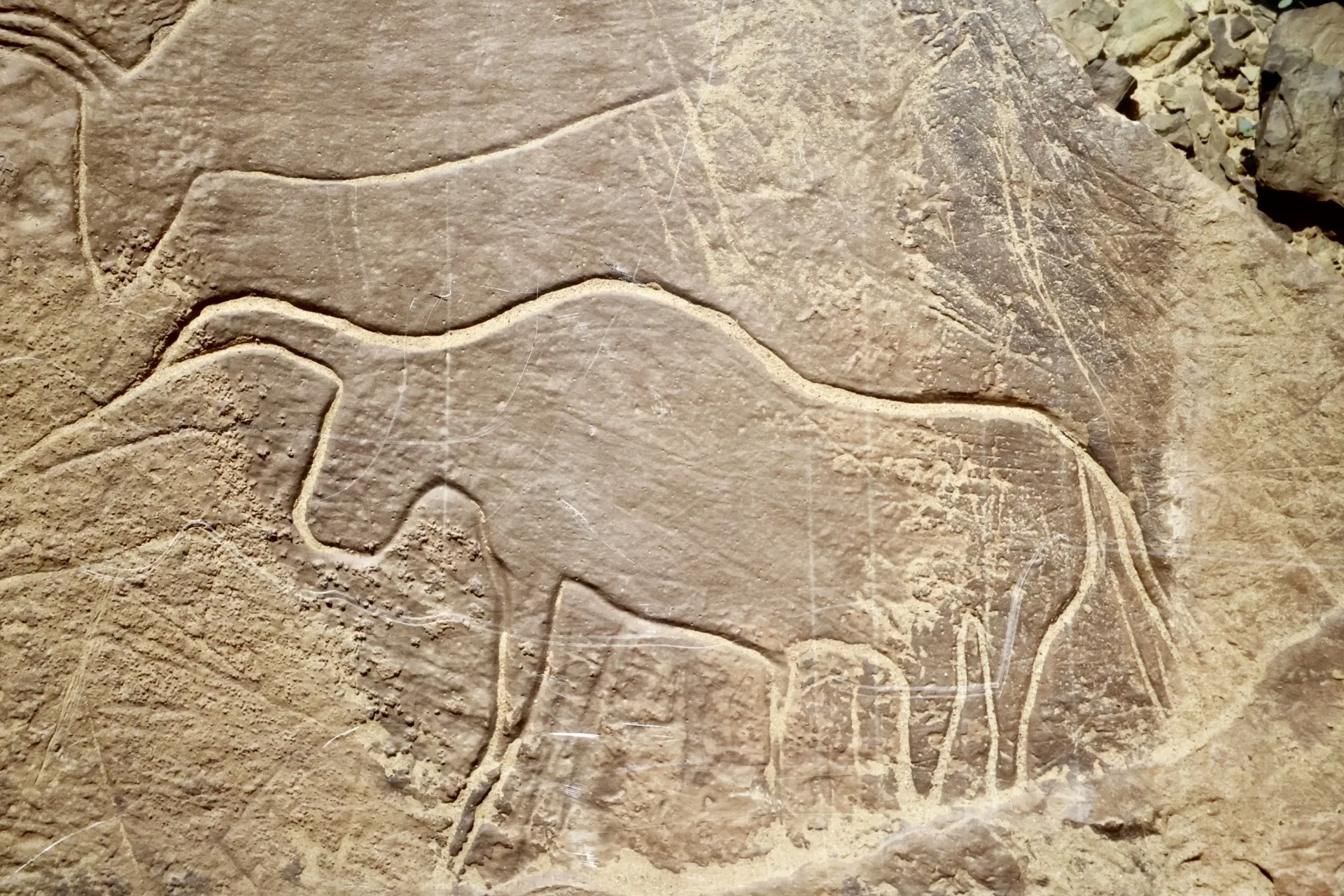
Scattered across the valleys and slopes of the region, hundreds of rock art panels can be found, with notable sites such as the "Al-Asli Boukrash," recognized for its unique and intricate engravings, and the "Tigert and Qasabi" valley, rich in engraved rock faces that narrate the daily lives of early pastoral groups. The environment around the "Saqiya Al-Hamra" basin, an ancient water reservoir, attracted significant human settlement throughout the ages. These engravings, etched into resilient rocks that have withstood erosion, depict an ancient environment vastly different from the current desert landscape, showcasing themes of wildlife—featuring large animals such as elephants, giraffes, antelopes, and even cattle, all illustrated in a refined 'Tazina' style. This artistic representation confirms that the area was once characterized by green slopes and moist savannas, complemented by human activities depicted in hunting scenes and group rituals that reflect the social organization of ancient nomadic tribes, along with astronomical symbols that illustrate the ancient inhabitants' interest in celestial observations.
Preserving the Cultural Legacy
The production of stone tools represents the oldest remnants of this heritage, with some dating back to the Lower Paleolithic era, continuing chronologically into the Neolithic period through the Middle Stone Age. Rock art is divided into two main categories: pigment-based paintings that utilize color and paint, and engravings that involve carving or sculpting the stone surface. This art form is viewed as one of the earliest manifestations of collective memory, predating the invention of writing, and provides researchers with a window into understanding the social, religious, economic, and cultural aspects of ancient human life.
The archaeological, natural sites, and historical landmarks serve as a beacon for a promising cultural tourism path in the Laayoune-Sakia El Hamra region, noted for its rich archaeological heritage, particularly the Saquia El Hamra basin, which is home to many significant rock engraving sites in North Africa's epigraphy. Recent archaeological projects have revealed that many of these engravings and paintings date back between eight thousand and four thousand years before Christ, blending archaeological research with the documentation of the Saquia El Hamra heritage to outline a promising cultural tourism trajectory in the region.
In recent years, several inventory and documentation campaigns have led to the discovery and cataloging of new archaeological sites, with potential for further expansion, especially since the region has not undergone comprehensive surveys like other areas of the kingdom. In this context, Abdelilah Oughnane, an inspector of historical monuments and sites at the regional culture directorate for Laayoune-Sakia El Hamra, emphasized that Smara is among the most important regions in the country, rich in historical landmarks and archaeological sites, particularly rock art and paintings. He indicated that efforts to recognize and protect these sites have led to the registration of 22 rock engraving and painting sites, including the historical site of "Dar Houza," in the national heritage list. Additionally, technical files have been prepared for six new sites in preparation for their registration, alongside various enhancement measures, including the establishment of four archaeological site preserves, the restoration of "Dar Houza," and the organization of cultural activities and educational visits for students and researchers, aimed at raising awareness about this heritage and ensuring its preservation, which will contribute to sustainable development in the region.
Moreover, Biba Mohamed Mouloud, a representative of the National Center for Rock Heritage and conservator at the culture directorate in Smara, noted that this heritage acts as a living bridge connecting the past to the present, simultaneously embodying the cultural identity and uniqueness of the region. He added that Smara is home to over 175 rock engraving sites and 25 painting sites, with the ancient engravings revealing profound transformations in the lifestyles of communities in the area, from hunting and gathering to pastoralism and migration, reflecting successive human phases that articulated their relationship with the land and environment. The rock art displays simplified geometric shapes, where parts of the drawing form angles resembling the letter "V," often lacking intricate details, yet retaining the general features of the depicted elements, thus expressing the living patterns in various environmental conditions.
These engravings represent an ancient intellectual expression, offering invaluable information about anthropology, history, art, ancient environmental interactions, economy, technology, as well as social and spiritual life. Experts in epigraphy recognize that each engraving carries meaning and purpose, serving as vocal documents of a distant past. Furthermore, rock art can be categorized into two types, alongside pre-Islamic funerary monuments, with the first being engravings that include two styles: carving and polishing, found in many sites. The second type encompasses painting art, characterized by wall and rock paintings, which are rare due to their vulnerability to destruction and erosion. This style involves organic materials in the pigments used, which can precisely determine the historical period of these paintings in laboratories, with notable sites like "Al-Farisia" being prominent in the region.
Additionally, this archaeological wealth includes several pre-Islamic burial monuments, particularly tumulus graves, representing another facet of the region's archaeological heritage, attesting to the funerary practices that were prevalent among the inhabitants of the Moroccan desert in ancient times.
As reported by agadirinfo.ma.