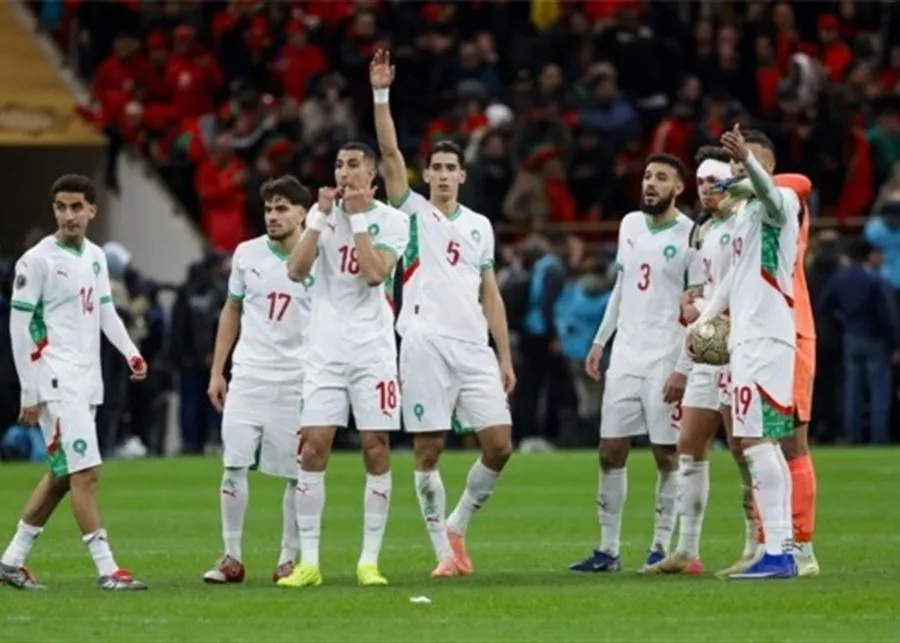
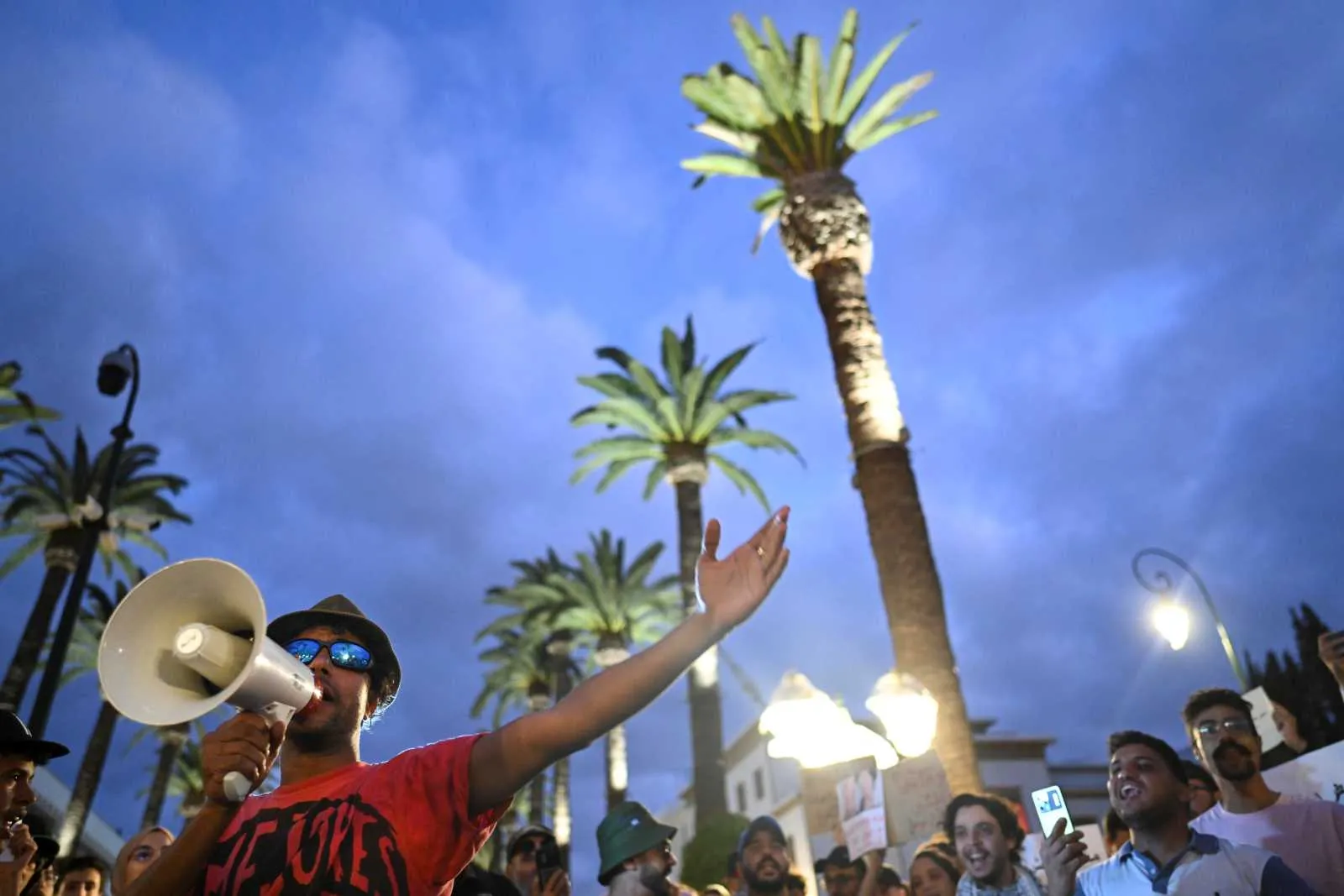
The seeds of discontent that began with anonymous online discussions have blossomed into intense political protests across multiple cities in Morocco as of September 2025. The movement, dubbed "GenZ 212"—named after the country’s international dialing code +212—addresses fundamental societal issues such as inequality, public services, and the true meaning of "national progress" for Morocco. Young demonstrators have expressed significant frustration regarding the disparity between Morocco's ambitious international aspirations and the often harsh realities of daily life for its citizens. They are questioning the priorities that guide government spending, particularly criticizing the hefty investments allocated for major football events such as the Africa Cup of Nations (AFCON), scheduled to take place in Morocco from December 2025 to January 2026, and the FIFA World Cup in 2030, where Morocco will co-host with Portugal and Spain.
Simultaneously, the nation’s education and healthcare systems are severely underfunded, lacking in essential medical equipment and qualified personnel. The recent tragic deaths of eight women following cesarean sections in a hospital in Agadir sparked a wave of outrage among the populace. Like many other Gen-Z protest movements, GenZ 212 is loosely organized within the digital realm, with platforms like Discord attracting hundreds of thousands of users. This new generation has articulated its political and social demands online and brought them into the streets, rallying around slogans such as “Clinics before stadiums, health before sports.”
In stark contrast, the government has heralded AFCON 2025 as a success story—a symbol of Morocco's growing regional influence. According to official sources, the tournament is projected to generate approximately €1.5 billion and cover 80% of the infrastructure costs for the upcoming World Cup. However, what message do these massive investments in sports infrastructure send to the youth, many of whom describe their future as increasingly uncertain? According to the Moroccan High Commission for Planning (HCP), 2.9 million Moroccans aged 15 to 29 are neither employed nor enrolled in education or training, with youth unemployment rates varying regionally between 28% and 40%. For this generation, the AFCON feels less like a celebration and more like an emblem of a distorted reality.
Achraf, a 22-year-old engineering student from Rabat, voices a poignant sentiment, stating, “We are not troublemakers. We merely wanted to demand our basic rights. We are not against football or major events, but not while women are still dying in hospitals, not while the healthcare system is chaotic, and not while the education system continues to decline.” He points to the societal imbalance as a source of his frustration, expressing a desire for a Morocco where all individuals are treated equally. “It’s strange that in 2026 we still have to ask for such basic rights while billions are spent on international events,” he laments. Achraf also recalls how many young protestors have been arrested and convicted simply for questioning their own country’s policies, criticizing the demolition of homes in Rabat and Casablanca in the lead-up to the AFCON and the World Cup.
Asmae, a 25-year-old from Casablanca, shares a similar narrative, emphasizing a disconnect between Morocco's international ambitions and everyday realities. “What we are asking for is balance,” she asserts. “With the same determination with which stadiums are built, hospitals, schools, and local infrastructure should also be developed.” She highlights that the problem is not merely economic but also geographical, noting that essential services are concentrated in a few major cities. “When you need medical treatment, you often have to travel to Rabat or Casablanca. In emergencies, that’s not always feasible.” For Asmae, GenZ 212 is not rejecting national development or large-scale projects; rather, they are attempting to redefine what belonging means in the context of equitable opportunity. “We demand fairness, transparency, and dignity,” she states emphatically. “Education, healthcare, and opportunities should not be luxuries—they are rights.”
According to lawyer and human rights activist Sara Soujar, the current wave of Gen-Z protests represents a continuation of a longer struggle for civil liberties in Morocco. This struggle has evolved from the pro-democracy "February 20 Movement" during the Arab Spring in 2011, through protests in the Rif region in 2016/2017, to present-day mobilizations. She argues that the underlying dynamics remain largely unchanged and sees the Gen-Z movement as a "natural extension of Morocco's protest history." Soujar believes that years of officially announced reforms have not translated into expanded public space. Instead, there remains a persistent pattern of restricting freedom of expression, organization, and peaceful assembly. "Both public spaces and civil society spaces continue to face various forms of limitation," she critiques.
Furthermore, Soujar asserts that the Gen-Z protests fall under the constitutionally guaranteed rights of freedom of expression and assembly. “The debate should focus on ensuring respect for fundamental rights and restoring trust between the state and society,” she emphasizes. The Moroccan Association for Human Rights (AMDH) has documented numerous human rights violations associated with the GenZ 212 protests, reporting that over 2,000 young people, including minors, have been arrested—often arbitrarily. More than 1,400 individuals are facing prosecution. AMDH President and lawyer Souad Brahma points out that documented violations include excessive repression, arbitrary arrests, and restrictions on freedom of expression and assembly. Witnesses have reported severe psychological violence during detention, and media coverage of the protests has been limited. Overall, the AMDH criticizes Moroccan authorities for opting for containment and control in dealing with public criticism rather than addressing the social demands being raised.
Economist Najib Akesbi views the wave of protests as a culmination of decades of accumulated imbalances stemming from persistent economic and social distortions. He noted during a conference last year that, seventy years after Morocco's independence in 1956, the per capita GDP stands at around $4,000, which he labels insufficient. Morocco currently ranks 120th out of 192 in the Human Development Index. Akesbi highlights that the current protests are characterized by a sense of generational awareness and a digital identity. Young people are not speaking as isolated social groups but as a collective generation with a shared vision for the future. “The same pattern repeats itself each time,” Akesbi explains regarding protests in Morocco since the 1960s. “Social frustration builds up, people protest, and the response is more about control than reform.”
At the core, Akesbi identifies a crisis of trust. Successive governments have repeatedly promised reforms in education, healthcare, and governance without implementing substantial changes. The system has not evolved significantly. He describes Morocco's economic model as fragile, stating, “We depend on things we cannot control—rain, tourism, foreign investments. That’s not sovereignty.” Critically addressing youth issues, Akesbi points out that the economy is not creating enough jobs. “So you have a generation that is educated but excluded,” he remarks. The protests of autumn 2025 have illustrated the potential consequences of this lack of perspective. With the AFCON now concluded, Morocco is preparing for the World Cup. The Moroccan Institute for Policy Analysis (MIPA) characterizes this as a “massive financial undertaking and a significant opportunity for economic revival.” However, how substantial this revival will be remains to be seen, with costs estimated between $5 billion and $6 billion for Morocco.
While Morocco's football infrastructure continues to improve, the fundamental demands of the younger generation for enhancements in education and healthcare remain unfulfilled. The question now is: where will this trajectory lead? What is clear is that young Moroccans yearn not so much for sporting spectacles, but for dignity, equality, and a viable future.
As reported by dandc.eu.