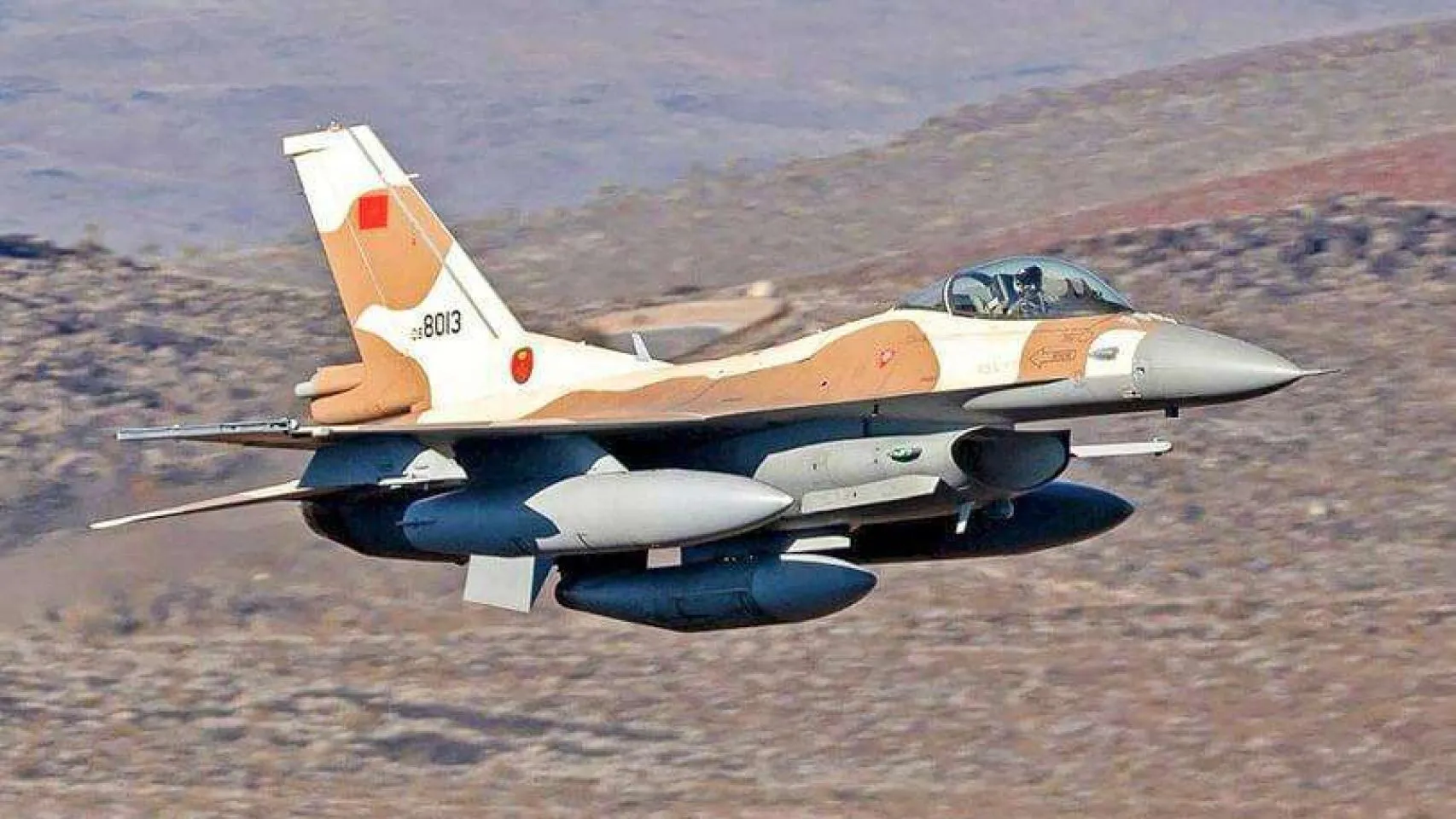
In a significant move to bolster its military capabilities, Morocco has ramped up its defense budget to $6.3 billion for the year 2025, reflecting a 6.6% increase from the previous year and accounting for 3.5% of its Gross Domestic Product (GDP). This financial commitment underscores Morocco's ambition to modernize its armed forces, positioning itself as a crucial logistical hub in the region while simultaneously enhancing its defense posture against Algeria. The North African nation has been actively acquiring advanced military systems, including the Israeli Spyder air defense system, F-16 fighter jets, Apache helicopters, and M1A2 Abrams tanks. Furthermore, Morocco has secured agreements to access cutting-edge U.S. military technology, including the highly sought-after F-35 aircraft.
Morocco’s strategic military modernization focuses on three primary objectives: ensuring airspace defense, strengthening ground forces, and safeguarding critical infrastructure. The integration of systems such as the Israeli Spyder, which boasts interception capabilities of up to 80 kilometers, alongside advanced radar detection systems, forms a multi-layered air defense architecture. Additionally, Morocco has enhanced its missile capabilities with the acquisition of French-made Harpoon Block II missiles and expanded its fleet of F-16s with the addition of 25 Block 70/72 'Viper' variants. The recent delivery of six AH-64E Apache attack helicopters from the United States further solidifies Morocco's military prowess, bringing its total to twelve units.
With approximately 200,000 active military personnel and 150,000 reservists, Morocco’s armed forces are among the largest in Africa, although they remain smaller than Algeria's estimated 610,000 personnel. The evolving security landscape in the region, characterized by Algeria's military advancements, prompts Morocco to adapt its defense strategies to maintain a competitive edge. According to the Stockholm International Peace Research Institute (SIPRI), Morocco stands as the second-largest arms importer in Africa, trailing only Egypt, and has accelerated its military procurement efforts to reinforce its territorial defense amid ongoing tensions with Algeria.
Experts suggest that Morocco's rearmament policy reflects a deliberate adaptation to new geoeconomic orientations and the shifting geopolitical and security environment. This includes enhancing protection for critical logistic, energy, and digital infrastructure as Morocco aims to solidify its position as a strategic platform connecting Africa with Europe and the rest of the world. The military acquisitions are not solely for expansion but also focus on improving operational effectiveness, response capability, and strategic credibility.
In light of the persistent tensions over Western Sahara and the rivalry with Algeria, Morocco's military strategy also aims to reinforce surveillance capabilities in buffer zones, allowing for remote monitoring and engagement without violating ceasefire agreements. As Morocco continues to modernize its military capabilities, it faces ongoing challenges from Algeria, which is enhancing its air force with new aircraft designed for operations in heavily defended environments.
In conclusion, Morocco’s military modernization efforts represent a calculated response to regional dynamics, underlining its commitment to securing its national interests and reinforcing its strategic position in North Africa.
As reported by elespanol.com.