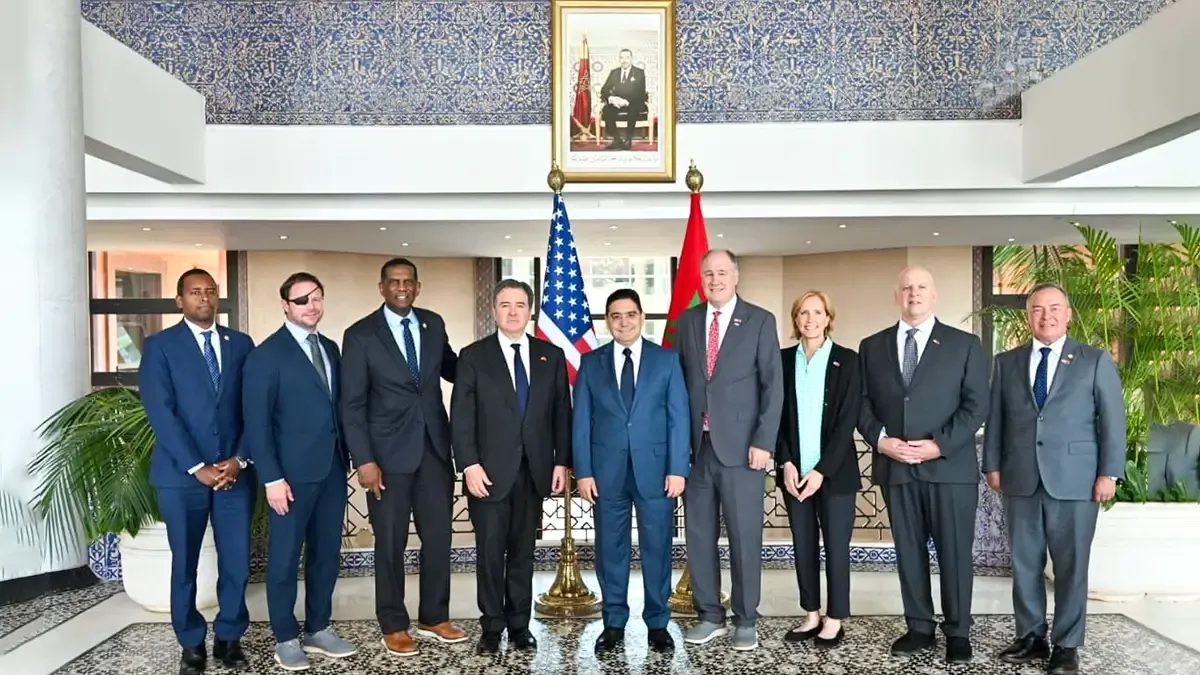
In a seemingly routine photograph from Morocco's hectic diplomatic agenda in recent weeks, smiles and handshakes marked a formal meeting in Rabat between Moroccan Foreign Minister Nasser Bourita and a U.S. congressional delegation led by Trent Kelly. This visit was not just another diplomatic encounter; it served as a platform for the Republican congressman to publicly reiterate his endorsement of Morocco's autonomy plan for the Sahara, a statement that Rabat promptly disseminated through its diplomatic channels and government-affiliated media.
While the meeting did not culminate in any groundbreaking announcements or signed agreements, and there was no lengthy joint press conference, in the realm of diplomacy, sometimes a single well-chosen phrase can outweigh an entire communiqué. Kelly was meticulous in his choice of words during his post-meeting comments, explicitly linking his support to United Nations Security Council Resolution 2797, adopted the previous year. This detail did not go unnoticed; it was reiterated throughout Morocco's official communications regarding the meeting. Rabat regards this resolution as significant because it reinforces the notion of the Moroccan autonomy proposal as a serious and realistic basis for resolving the conflict.
For months, Moroccan diplomacy has been striving to solidify this narrative internationally: to present the Autonomy Plan not merely as a Moroccan initiative but as the option garnering increasing international support within institutions and among Western allies. Although diplomatic sources have not disclosed the full content of the closed-door conversations, nor the complete agenda of the U.S. delegation, the setting was carefully orchestrated. A video released by Moroccan diplomacy showcased the official reception in Rabat and the cordial atmosphere between both parties, each element meticulously planned to convey a clear political signal both domestically and internationally.
Additionally, Kelly emphasized the “long-standing friendship” between Morocco and the United States, recalling that the kingdom was among the first to recognize American independence. This historical reference is customary during such visits, but in this context, it takes on a strategic interpretation. Although the official U.S. position on the Sahara has not changed following this meeting, Morocco achieves something significant through these visits: it keeps political support active among influential sectors of the U.S. Congress. This explains the importance Rabat placed on the meeting despite the absence of concrete announcements.
As Morocco intensifies its diplomatic efforts regarding the Sahara issue, any gesture from Washington carries substantial political weight, especially when accompanied by public statements and direct references to the United Nations. Beyond the meeting itself, Morocco aimed to project an image of growing international support for its proposal, underscoring that Washington remains a central piece in this diplomatic strategy.
As reported by atalayar.com.