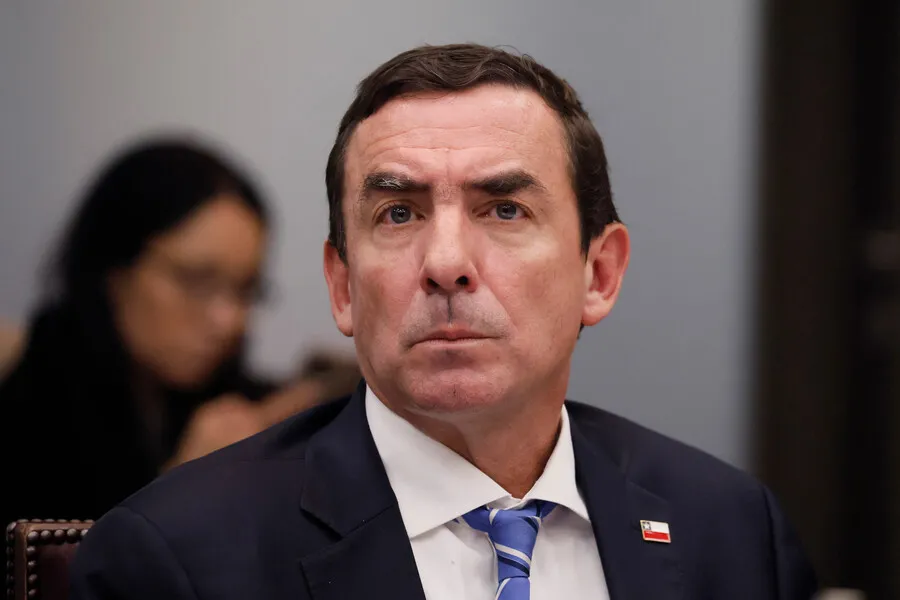
The Chilean Minister of Justice, Fernando Rabat, recently addressed the potential presidential pardons that could be granted by President José Antonio Kast. He emphasized that each request for clemency is meticulously evaluated based on the "particular circumstances" surrounding the case, which may include instances involving individuals convicted of crimes such as child abuse or violations of human rights. During a recent interview with CNN Chile, Rabat reiterated the importance of reviewing each pardon request on its own merits, stating, "Every request for clemency will be assessed according to its merits. That’s all there is to it.”
On Friday morning, Rabat was pressed on his previous remarks regarding the potential pardoning of individuals convicted of child abuse. He urged a careful reconsideration of his statements, asserting that a violent crime against a minor is undoubtedly serious, and each clemency request is evaluated based on the details presented in the case file. "There is no doubt that child abuse is a serious crime. A clemency request is assessed according to the information presented in the file," he affirmed.
Analyzing the Conditions Surrounding Clemency Requests
During his conversation with CNN, Rabat clarified that the power of pardon rests with the President of the Republic, who has the discretion to grant it personally or delegate it through the Minister of Justice. When discussing whether certain crimes should never be eligible for pardons, he noted, "The circumstances of the case will determine the response, as it is not solely about the crime itself. The clemency process does not involve reviewing a judicial sentence, as that is prohibited by the Constitution; rather, it focuses on the specific circumstances and the merits of the evidence in the respective case file."
When asked about the possibility of pardoning individuals convicted of human rights violations, Rabat stated that it would depend on the specific circumstances of the case, particularly regarding the individual requesting clemency and the merits of the information in the file. He further explained that, while sexual crimes against minors are inherently severe, the context surrounding the individual's situation at the time of the request could influence the decision. "Per se, it is a very serious crime, but if the circumstances of the case present certain information that leads you to think differently, then it must be duly considered," he remarked.
Rabat elaborated that, being a presidential grace, the clemency must be grounded in the specific circumstances of each case, and the information used to evaluate these requests could include reports from Gendarmería, health issues, social peace considerations, or the aim to prevent societal conflicts.
Responses from Human Rights Advocates and Politicians
In response to Rabat's statements, Alicia Lira, president of the Group of Relatives of Political Executions, expressed deep concern during a segment on Radio Universidad de Chile's program "Semáforo." She characterized the Minister's comments as alarmingly significant and highlighted a stark contrast between previous administrations and the current government, which she described as “an extreme right government where human values are not prioritized.” Lira condemned Rabat's remarks as "reprehensible" and warned of the potential risk they pose to human rights, stating, "This is the most concerning risk we have faced in over 30 years, as it constitutes an attack on human rights. It does not matter whether the victim is a woman, child, adolescent, or man.”
She criticized the focus on punitive measures instead of preventive strategies, arguing that the government should prioritize understanding the needs of today's youth rather than creating punitive laws. Lira also called upon the international community, particularly the United Nations, to advocate for the protection of adolescents, noting the lack of outcry from the Chilean extreme right regarding atrocities committed in Palestine, where numerous children and adolescents lost their lives.
Diego Schalper, the head of the National Renewal party's parliamentary group, also criticized Rabat's comments, asserting that discussions surrounding presidential pardons have strayed from their intended purpose. He maintained that pardons should be reserved for extraordinary circumstances, primarily related to health, particularly for individuals who are unaware of their surroundings or lack a grasp of time and space. Schalper emphasized that the primary goals of imprisonment are to penalize conduct contrary to the law and facilitate rehabilitation, stating that individuals who do not understand where they are cannot fulfill these objectives. He proposed a more restrictive approach to clemency, advocating that it should be limited to humanitarian and health-related situations.
As reported by radio.uchile.cl.