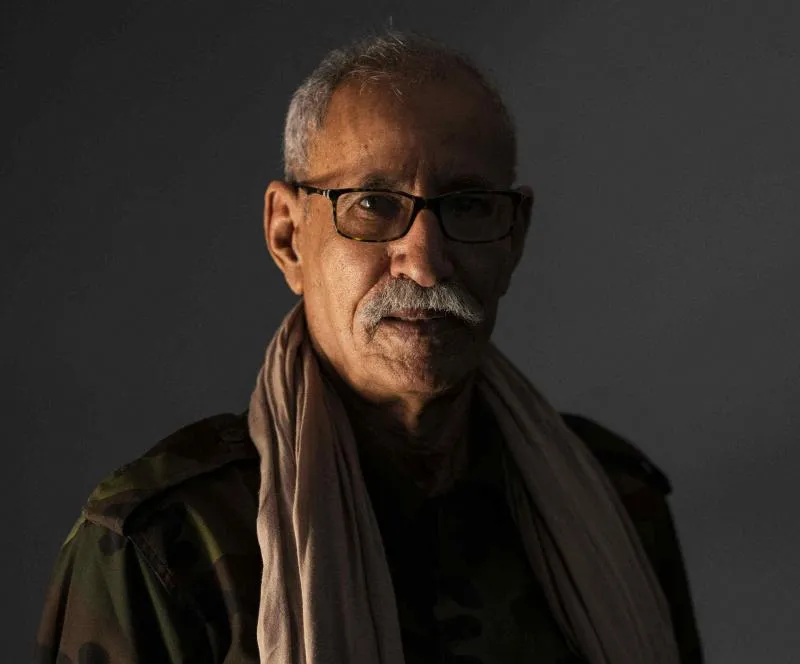
In a significant diplomatic move, UN envoy Staffan de Mistura has embarked on a visit to Algeria to engage in discussions regarding the political dynamics surrounding the contentious issue of the Moroccan Sahara. As this dialogue unfolds, Brahim Ghali, the leader of the Polisario Front, has strategically positioned himself to appeal to Spain’s right-wing political factions, amidst what analysts describe as increasing pressure on the separatist movement. In an interview with the conservative Spanish daily ABC, Ghali underscored the potential dangers of what he termed "Moroccan expansionism," particularly concerning Spain's sovereignty over its North African enclaves of Ceuta and Melilla, should the Sahara dispute conclude in favor of Rabat.
Ghali's rhetoric notably mirrors the positions espoused by various right-wing and far-right political parties in Spain, as he seeks to exploit the prevailing sentiments among these groups regarding Morocco. Hicham Moatadhid, a researcher specializing in strategic affairs, pointed out that the Polisario Front has leveraged the stances of Spain's Popular Party (PP), the Socialist Workers’ Party (PSOE), and Vox to further its narrative, although this approach has not resonated widely across the political landscape. While the PP and PSOE are typically perceived as advocating for a pragmatic relationship with Morocco, Vox remains the least inclined to adopt what many analysts consider a moderate perspective on Spain's southern neighbor.
Moatadhid elaborated that the relationship between Spanish political parties and Morocco is predominantly influenced by strategic interests and regional power dynamics. He suggested that the Polisario Front aims to capitalize on the apprehensions of certain Spanish politicians who are hesitant to acknowledge Morocco's emergence as a formidable political entity capable of reshaping regional security and economic landscapes. Echoing sentiments often articulated by Spanish right-wing parties, Ghali cautioned that Spanish authorities may be underestimating Morocco’s expanding regional influence, stating, "Moroccan expansionist ambitions appear to know no limits. Morocco’s neighbors have been victims of this policy." Despite their efforts, supporters of the Polisario in Spain have struggled to sway the increasingly robust ties between Madrid and Rabat. In past communications, Ghali has utilized media channels aligned with Spain’s conservative factions to reach right-wing audiences, as evidenced by his May 2022 interview with Telecinco, where he presented similar arguments.
In a bid to strengthen its position, the Polisario Front has consistently highlighted the issue of Ceuta and Melilla in its communications directed at Spanish public opinion, striving to garner support from segments of the political establishment. Concurrently, the separatist movement has addressed a letter to Leonor Zalabata Torres, Colombia’s permanent representative to the United Nations and current president of the UN Security Council, denouncing what it described as “Moroccan attacks against civilians” in the Sahara's buffer zones. This correspondence referenced claims of civilian casualties among Sahrawis as well as citizens from Algeria, Mauritania, and other nations resulting from Moroccan drone strikes in these areas.
Moatadhid remarked that the Polisario Front's outreach to both the United Nations and Spanish right-wing parties has unveiled contradictions in its approach since 2020, the year it proclaimed an end to the ceasefire and adopted a strategy characterized by unilateral military escalation. He contended that the movement selectively invokes principles of international law to craft a political narrative while often neglecting the operational context that initiated the conflict. He stated, “Returning to the Security Council to denounce civilian casualties after announcing the end of the ceasefire reveals a desperate attempt to separate the consequences of military escalation from its impact on civilians.” This stance, he argued, does not uphold the principles of international humanitarian law, which cannot be applied selectively. A party that has declared its withdrawal from ceasefire arrangements cannot simultaneously retain all the rhetorical advantages associated with non-violence when these serve its political interests.
The unfolding developments coincide with de Mistura's visit to Algeria, where he was welcomed on Monday by Algerian Foreign Minister Ahmed Attaf. A statement from Algeria’s foreign ministry indicated that the meeting focused on ongoing efforts to advance negotiations regarding the Sahara issue, aiming for a political solution that is acceptable to both parties in accordance with the UN Charter and international legitimacy. Moatadhid noted that the United Nations has increasingly adopted what he referred to as a language of political realism, having concluded that the persistent deadlock is primarily attributed to the separatist side’s unwillingness to engage constructively. He further highlighted that the latest Security Council resolution not only reaffirmed the importance of Morocco’s autonomy initiative but also bolstered Rabat’s position as a credible international actor capable of proposing a realistic political solution that garners widespread support.
As reported by thearabweekly.com.