Establishment of the Territorial Health Group in Souss-Massa
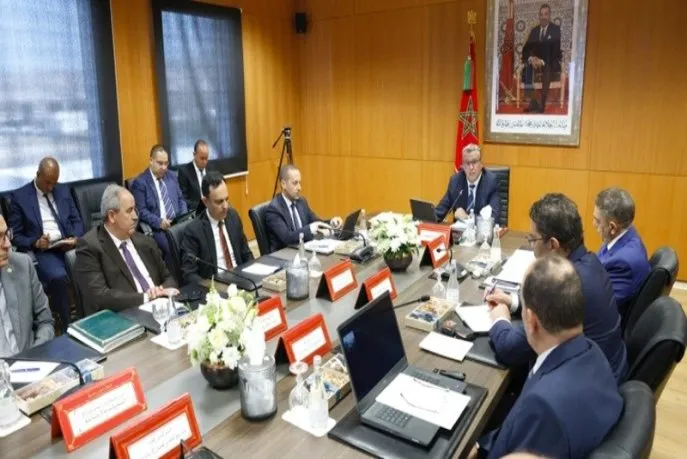
Aziz Akhannouch, the head of the Moroccan government, recently chaired the inaugural Board of Directors meeting for the Territorial Health Group (GST) in the Souss-Massa region, held in Agadir. This meeting was pivotal as it approved essential governance instruments for the newly established structure, which include the budget for 2026, the action plan for 2026-2027, the organizational chart, and the standardized regulations for healthcare professionals. The official launch of the group is slated for August 2026, marking a significant milestone in the ongoing healthcare reforms within Morocco.
A New Framework for Regional Healthcare Management
The establishment of the Territorial Health Group is a critical step in reforming the national healthcare system, building on prior experiences in the regions of Tangier-Tétouan-Al Hoceïma and Rabat-Salé-Kénitra. The government’s efforts are aimed at progressively implementing this new governance model designed to reorganize healthcare delivery at the regional level. During the meeting led by Akhannouch, board members validated key documents necessary for the GST's operation, including the 2026 budget and the action program for 2026 and 2027, as well as the organizational structure and the regulatory framework governing healthcare professionals within this new framework.
The vision for the Territorial Health Group is to foster a more integrated management approach to regional health systems, enhancing coordination among various facilities while addressing the specific needs of local populations and the unique realities of their territories. In his address, Akhannouch emphasized that the rollout of Territorial Health Groups aligns with a comprehensive national healthcare reform initiative. This initiative seeks to enhance service organization, improve care quality, and streamline the therapeutic journey for patients.
He highlighted that the region's role is central to this new framework, transforming each territory into a cohesive unit for planning, implementing, and evaluating health policies. In this context, healthcare facilities are expected to operate as interconnected components of a coordinated care pathway rather than as isolated institutions. The reform also aims to ensure a more equitable distribution of resources, enhancing access to care across the board, and allowing for better-tailored healthcare responses to local needs, in line with the goals of advanced regionalization.
The meeting underscored the growing significance of the Souss-Massa region within the national healthcare landscape. Driven by a robust demographic and economic momentum, the region is now strategically positioned for the expansion of healthcare services. Officials highlighted the role of the Mohammed VI University Hospital in Agadir, which commenced operations in 2025 and features a capacity of 867 beds, serving nearly three million residents of Souss-Massa and neighboring areas. The hospital is also recognized as a technological leader, equipped with a robotic surgery system that facilitates minimally invasive procedures guided by three-dimensional imaging.
Additionally, authorities announced plans to initiate the reconstruction and modernization of the Hassan II Regional Hospital in Agadir before the year's end, with the facility ultimately expected to house 450 beds, further bolstering the region's healthcare infrastructure. The General Director of the Territorial Health Group, Tarik El Harti, presented key organizational and financial orientations for the new structure, emphasizing the critical role of medical governance in ensuring the success of this institutional transformation.
As part of this initiative, the regional medical program will now serve as the reference framework for planning healthcare services, organizing therapeutic pathways, and coordinating care across different levels, whether primary, hospital-based, or academic. Family medicine is being prioritized as the entry point into the healthcare system, aiming to improve patient orientation, reduce inappropriate hospital visits, and streamline access to medical specialties. The importance of human resource development was also highlighted, with priorities including continuous training, enhancing the attractiveness of regions for healthcare professionals, and retaining skilled personnel.
Finally, the meeting stressed the urgent need to expedite the implementation of an integrated health information system, viewing digital tools as essential for improving patient follow-up, strengthening governance capabilities, and optimizing resource management. With the anticipated launch of the Territorial Health Group in August 2026, the Souss-Massa region is poised to embark on a new organization of public health based on service integration, coordination among stakeholders, and a regionalized approach to healthcare management.
As reported by quid.ma.